
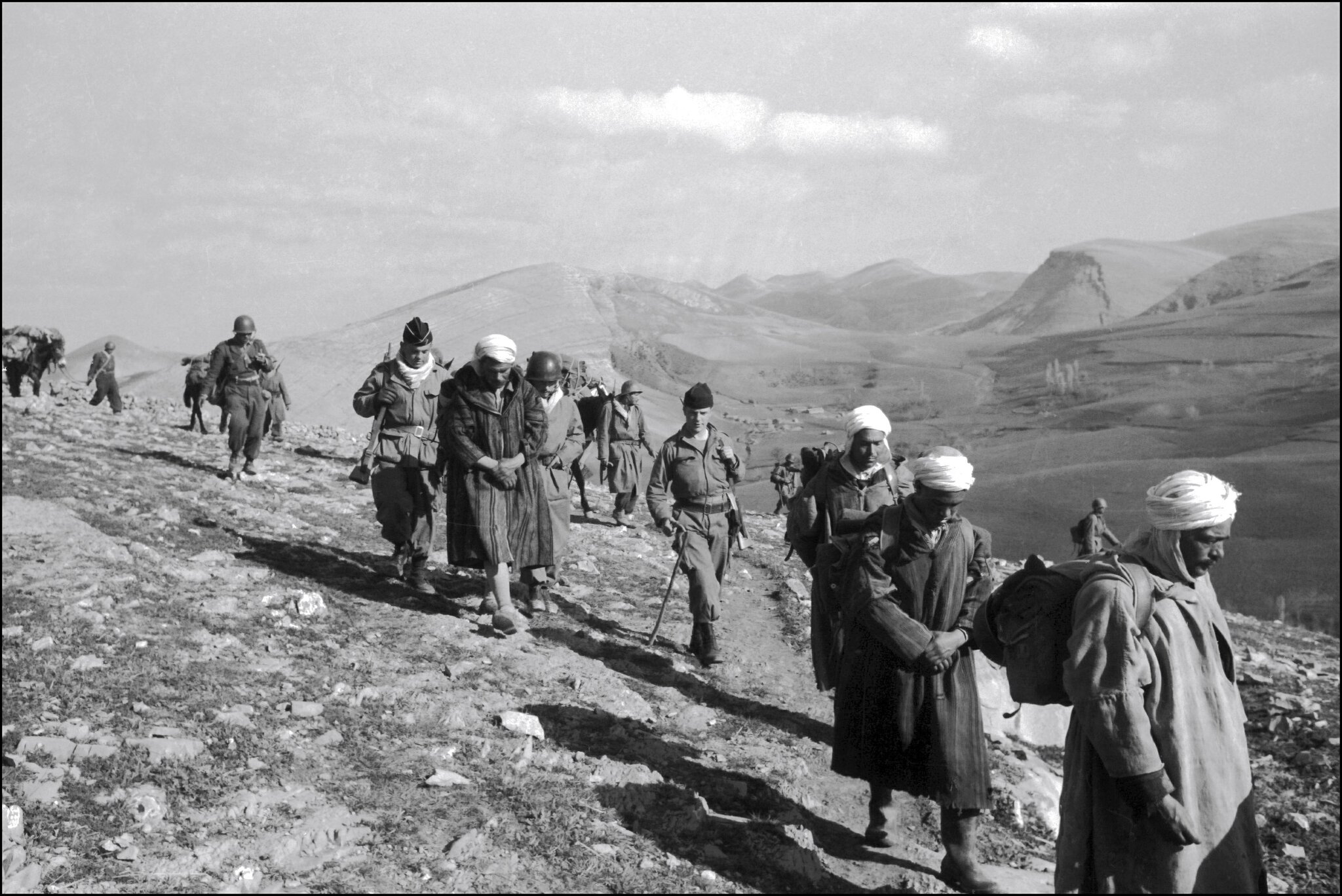
ALGIERS, ALGERIA—In a historic session that has effectively severed the remaining diplomatic bridges with Paris, the Algerian parliament on Wednesday unanimously approved a landmark law declaring France’s 132-year occupation a “state crime.” The legislation, which demands both a formal apology and systemic reparations, marks the most aggressive attempt yet by the North African nation to legally weaponize its colonial memory.
As the final vote was tallied, lawmakers in the People’s National Assembly stood draped in the colors of the national flag, chanting “Long live Algeria!” The air in the chamber was thick with the weight of 1830 to 1962—a period the new law now officially defines not merely as an occupation, but as an era of “systematic annihilation.”
A ‘Juridical Iron Curtain’
Parliament Speaker Brahim Boughali described the law as a “supreme act of sovereignty.” While French President Emmanuel Macron has previously referred to colonialism as a “crime against humanity,” the Algerian law goes significantly further by codifying specific atrocities into the national legal framework.
- The 27 Crimes: The legislation lists 27 distinct categories of colonial crimes, including extrajudicial killings, psychological torture, and the “systematic plundering” of resources.
- The Nuclear Legacy: A primary clause focuses on the French nuclear tests in the Sahara during the 1960s. The law mandates that France provide contaminated site maps, decontaminate the desert, and pay “inalienable” reparations to victims of radiation.
- Criminalizing ‘Glorification’: In a move that mirrors “memory laws” elsewhere, the act introduces harsh penalties—including up to 10 years in prison—for anyone in Algeria who justifies or “glorifies” the colonial past in media, books, or public discourse.
‘Memory is Not Negotiable’
The timing of the law is seen by analysts as a calculated rupture. Relations between Algiers and Paris have reached a “breaking point” over the last year, fueled by disputes over immigration, the arrest of high-profile writers, and France’s pivot toward Morocco in the Western Sahara conflict.
“This is a message that Algeria’s national memory is neither erasable nor negotiable,” Boughali told the state news agency APS. “It is based on the principle that crimes against humanity do not expire with time.”
In Paris, the reaction has been one of cold distance. A French Foreign Ministry spokesperson labeled the move “hostile” and counterproductive to years of attempts to establish a joint commission of historians. While the law has no international jurisdiction and cannot force the French treasury to pay out, it creates a permanent legal barrier to normalized relations.
The Pivot to the East
Beyond the historical grievances, the law signals a deeper geopolitical shift. As Algeria burns its bridges with the Francosphere, it is rapidly reorienting its future:
- The Language Shift: The government has accelerated a “scorched-earth” campaign against the French language, replacing it with English in universities to sever ties with the former colonial education system.
- New Alliances: In December 2025 alone, Algeria signed strategic space and technology agreements with China and conducted joint military exercises with Russia, positioning itself as a “fortress state” on the Mediterranean’s southern rim.
For the Algerian people, the law is a validation of a century of struggle. For the world, it is a stark reminder that in the Maghreb, the ghosts of the 19th century still dictate the alliances of the 21st.