
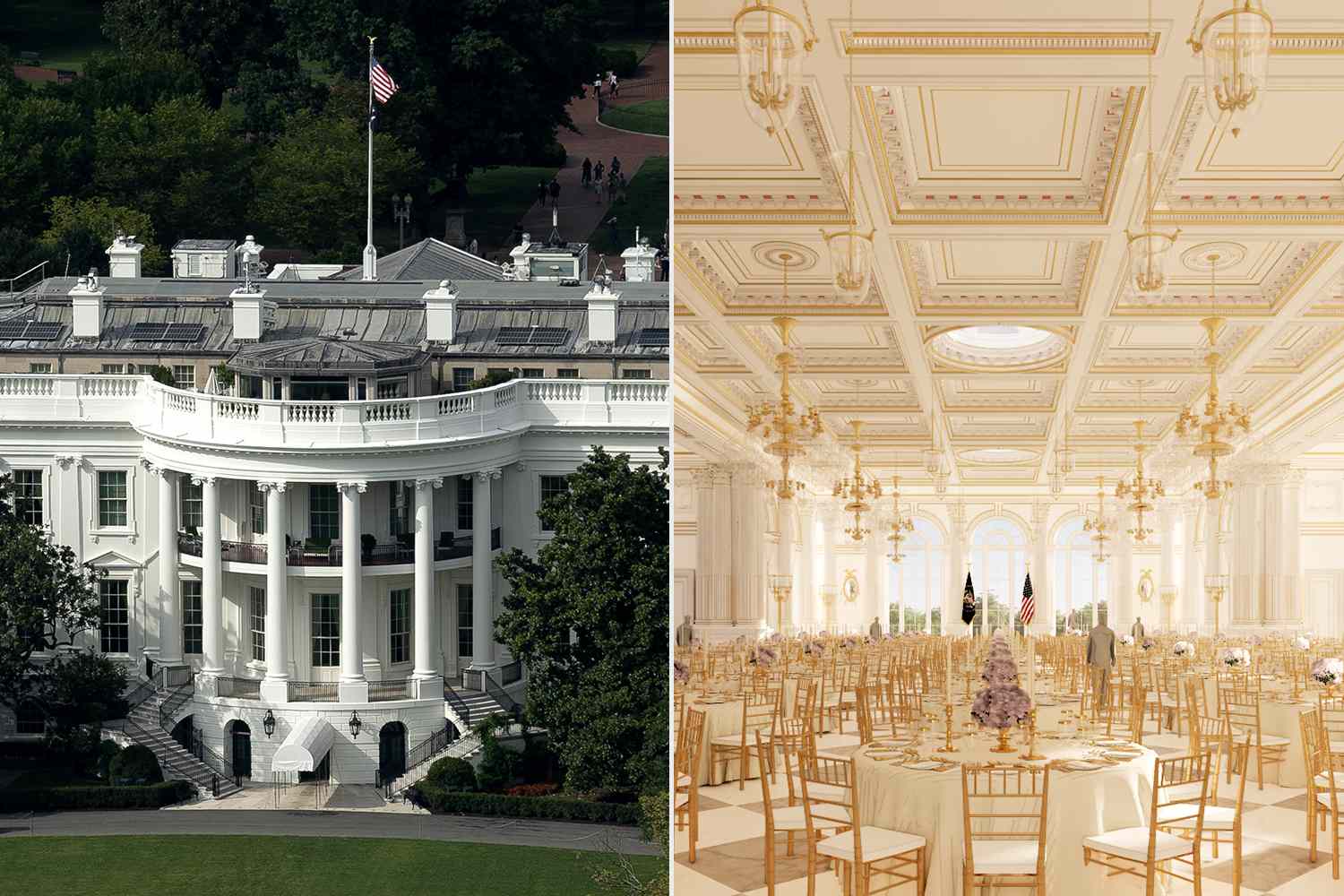
President Donald Trump has brought in a new lead architect for his ambitious, and highly controversial, $300 million White House ballroom project, replacing the original designer amid reported disagreements over the massive expansion’s scope and size.
Shalom Baranes, a prominent Washington D.C.-based architect known for his work on major federal buildings, has been hired to guide the project, which has already involved the complete demolition of the historic East Wing. The move comes as the White House prepares to submit its construction plans for the new, 90,000-square-foot structure to federal planning commissions this month.
The Clashes Over Scale
The shift follows weeks of internal friction between President Trump and the initially contracted architect, James McCrery II, a specialist in classical design. While the White House insists McCrery will remain involved as a “valuable consultant,” sources familiar with the effort confirmed to media outlets that the dispute centered on the President’s desire to exponentially increase the ballroom’s size.
- Original Vision: The initial design called for a ballroom capable of seating around 650 guests.
- Trump’s Expansion: The updated design, for which Trump reportedly demanded a much grander structure, is now estimated to accommodate close to 1,000 people, pushing the project’s cost estimate from $200 million to approximately **$300 million**, all funded by private donors.
- The Divide: The conflict reportedly reflected a stylistic divide, with McCrery arguing that the proposed size would visually overshadow the original White House structure, a concern shared by architectural preservationists.
White House spokesperson Davis Ingle praised the new appointment, stating that Baranes’ expertise will be vital to executing the President’s vision for what will be “the greatest addition to the White House since the Oval Office.”
Baranes: A Veteran of DC Federal Projects
The choice of Shalom Baranes, whose firm has decades of experience working on federal commissions, signals a transition to a firm with the operational capacity to handle the logistics of the mammoth project.
Baranes’ impressive portfolio includes the modernization of the U.S. Treasury building near the White House and significant post-9/11 reconstruction work at the Pentagon. His firm’s capacity for large-scale governmental commissions contrasts with McCrery’s smaller, boutique firm, a factor that reportedly contributed to the change.
The Path Forward: Oversight and Opposition
The replacement of the lead architect marks a pivot point as the project moves from site preparation—which has already included the controversial demolition of the East Wing and the removal of historic magnolia trees—to the formal construction phase.
- Regulatory Review: White House officials confirmed that the final construction plans for the ballroom will be submitted this month to the National Capital Planning Commission (NCPC), the independent federal body responsible for reviewing federal projects in the capital region.
- Congressional Scrutiny: The project has faced staunch opposition from Democrats, who argue that the President violated protocol by moving ahead with the demolition without prior federal approval. Senator Richard Blumenthal (D-Conn.) recently introduced the “No Palaces Act,” which would require NCPC review before any further demolition and mandate Congressional approval for privately-funded White House construction projects.
Despite the political and procedural headwinds—and complaints from First Lady Melania Trump about the constant construction noise—President Trump has repeatedly stated his belief that the completed ballroom will be a masterpiece and a necessary addition to the Executive Residence.