
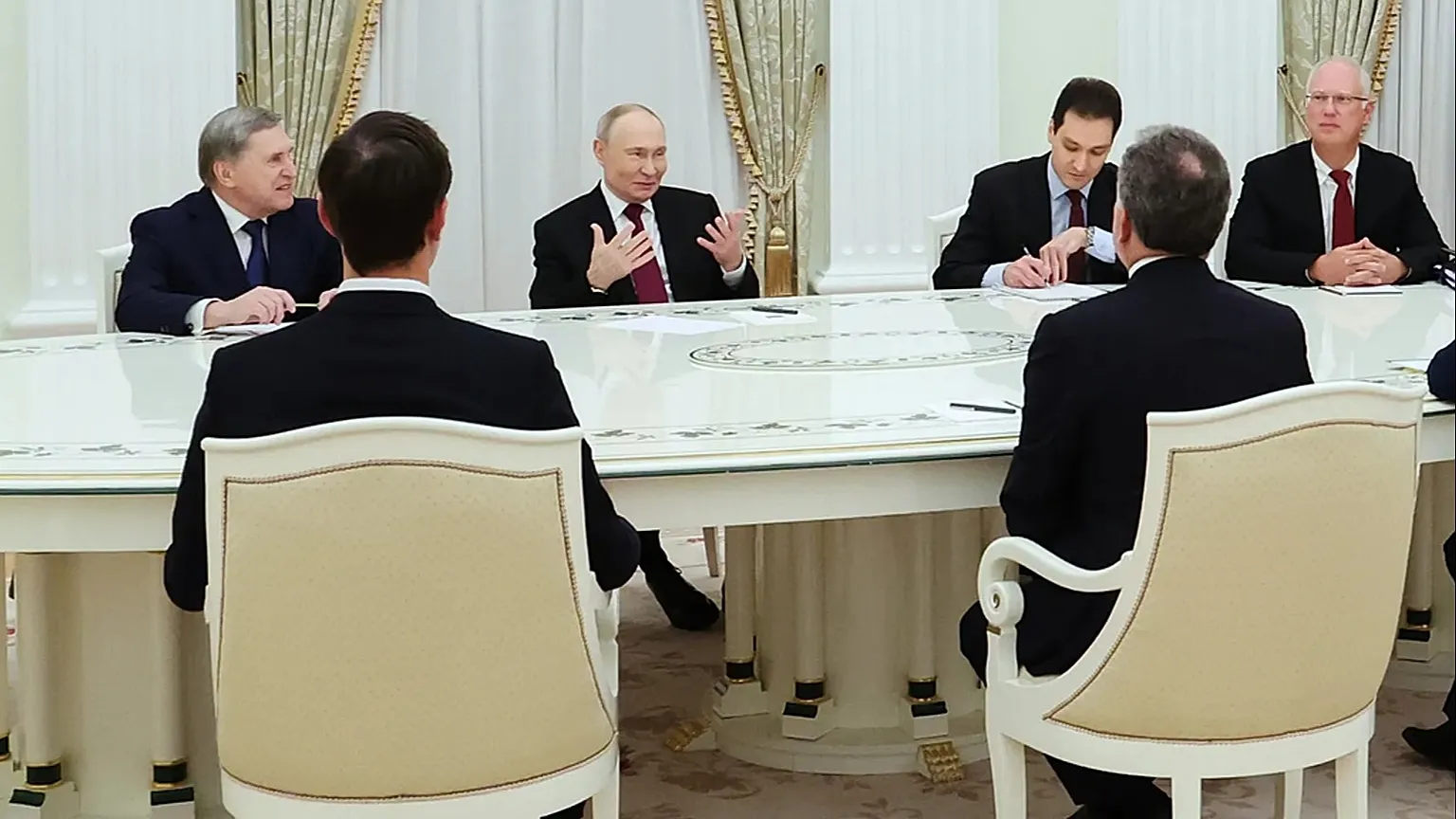
MOSCOW, RUSSIA—The latest round of high-stakes, U.S.-brokered peace talks between Moscow and Washington has offered a chillingly clear glimpse into the mind of Russian President Vladimir Putin: a conviction of military superiority, an uncompromising belief in the illegitimacy of Kyiv’s government, and an unshakeable adherence to maximalist demands that leave little room for true negotiation.
Just ahead of the meeting with U.S. envoy Steve Witkoff and Jared Kushner, Putin delivered a series of remarks that effectively set the bar for peace so high that most analysts believe the talks were designed to fail, or at least to extract the maximum possible concessions from the West.
The Unyielding Red Line: Full Territorial Surrender
The clearest window into the Russian leader’s current thinking is his non-negotiable demand for Ukraine to unconditionally withdraw from all territory that Moscow illegally claims to have annexed.
- The Ultimatum: Putin explicitly stated that Russia would only cease hostilities if Ukrainian troops immediately pull back from the four partially occupied oblasts—Donetsk, Luhansk, Kherson, and Zaporizhzhia—as well as the full recognition of Russian rule over the entire Donbas region and Crimea.
- Military Confidence: His subsequent warning—”If they don’t withdraw, we will achieve this through military force”—underscores a core belief that Russia is currently winning the war and can afford to simply wait for Ukrainian resources, and Western political will, to run out. According to analysts, Putin feels more confident than ever about the battlefield situation.
This hardline position suggests that Moscow views the U.S.-backed peace proposal—even a version reportedly favorable to Russia—not as a compromise document, but as a starting point from which to secure even greater gains.
Undermining Kyiv: The ‘Illegitimacy’ Play
A second key revelation is Putin’s consistent, public questioning of the legitimacy of Ukrainian President Volodymyr Zelensky’s government, a strategic move that fundamentally undermines the entire diplomatic process.
Putin has repeatedly claimed that because Ukraine postponed its elections due to martial law (a constitutional requirement), the Ukrainian leadership is now “illegitimate.”
- The Goal: By framing the government as illegitimate, Putin serves two critical purposes:
- He argues that any agreement signed by Zelensky would not be legally binding, justifying future disregard for the terms.
- He signals that the only acceptable outcome is an effective capitulation by Kyiv to Russia’s terms, or the installation of a new, friendly regime.
This rhetorical strategy suggests that even if a comprehensive deal were drafted, Putin has already prepared an escape clause to reject it.
The European Wedge
Finally, Putin’s recent statements reveal a psychological tactic aimed at sowing dissension within the Western alliance. Moments before the U.S. delegation arrived, he publicly accused European leaders of sabotaging the peace process.
- Accusations: Putin claimed that European officials amended the original U.S. plan with “demands that are absolutely unacceptable to Russia,” adding that they “don’t have a peace agenda, they’re on the side of the war.”
- Political Maneuver: This deflects any blame for the lack of progress from Moscow onto Brussels and Berlin, while simultaneously attempting to fracture the united front between the Trump administration (which champions the peace plan) and its European allies.
In sum, the latest peace talks have done less to advance a resolution and more to confirm that President Putin is operating from a state of imperial conviction. He believes time is on his side, his military goals are non-negotiable, and he is determined to achieve a settlement that is tantamount to Ukrainian surrender, rather than a negotiated peace.