
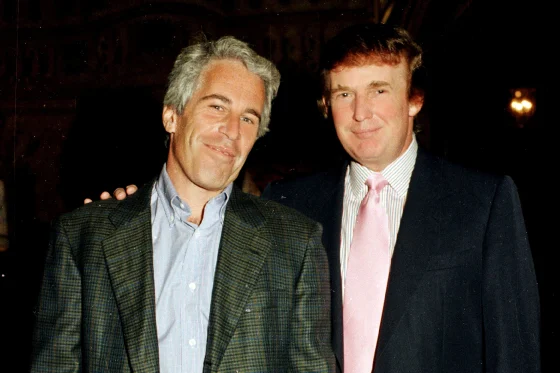
President Donald Trump on Wednesday signed into law a bill directing the Justice Department to publicly release all unclassified files related to the sprawling investigation into convicted sex offender Jeffrey Epstein, ending months of political resistance and bowing to immense pressure from both Democrats and a powerful populist flank of his own Republican base.
The signing of the Epstein Files Transparency Act sets a firm 30-day countdown for Attorney General Pam Bondi to produce a massive collection of documents that could shed light on Epstein’s high-profile associates, the scope of his crimes, and the federal government’s handling of the case.
The U-Turn Under Duress
The President’s signature marks a stunning reversal of his stance. For months, Mr. Trump had dismissed the effort to force disclosure of the files as a “Democratic hoax” and resisted public pressure, despite having the authority to release the materials himself.
The political dynamics shifted rapidly this week as the measure gained overwhelming, bipartisan momentum in Congress:
- House Revolt: The House of Representatives passed the bill by a near-unanimous vote of 427-1 on Tuesday, with many Republican loyalists—including figures like Representative Marjorie Taylor Greene—breaking ranks to support the measure.
- Senate Clearance: The Senate swiftly followed, passing the bill by unanimous consent on Wednesday, signaling a definitive command from the legislative branch that could no longer be ignored.
Announcing the signing on social media, Mr. Trump sought to pivot the narrative, writing: “I HAVE JUST SIGNED THE BILL TO RELEASE THE EPSTEIN FILES!” He then immediately accused Democrats of using the issue to “distract from our AMAZING Victories,” reinforcing his long-standing claim that Epstein’s social circle was primarily linked to the Democratic Party.

What the Bill Mandates and What it Allows
The newly signed law is far-reaching, specifically compelling the Justice Department to release records related to:
- All Investigations: Documents and communications concerning the federal investigations into Epstein and his associate Ghislaine Maxwell.
- Associates and Entities: Individuals named or referenced in connection with Epstein’s criminal activities, as well as entities with alleged ties to his trafficking or financial networks.
- Internal Memos: Internal DOJ communications concerning decisions to charge, or not charge, Epstein or his associates.
- Flight and Death Records: Flight logs, travel records, and documentation related to Epstein’s 2019 death by apparent suicide in a federal jail cell.
Crucially, the legislation explicitly states that information cannot be withheld on the basis of “embarrassment, reputational harm, or political sensitivity” to any government official, public figure, or foreign dignitary.
However, the law does provide specific carve-outs, creating a potential battleground for the scope of the release:
- Victim Protection: The department may redact the personally identifying information of victims.
- Ongoing Cases: Material can be withheld if its release would “jeopardize an active federal investigation or ongoing prosecution.”
This final exception has created considerable concern among proponents of the bill, who fear the administration might use its recently ordered investigation into Epstein’s ties to certain prominent Democrats as a shield to block the release of a significant portion of the files.
For the survivors of Epstein’s abuse, who had fiercely advocated for the bill’s passage, the signing represents a momentous step toward a transparency that has been denied to them for years. The clock is now ticking for the Justice Department to comply with the new law, with the files expected to become public on or around December 19, 2025.