
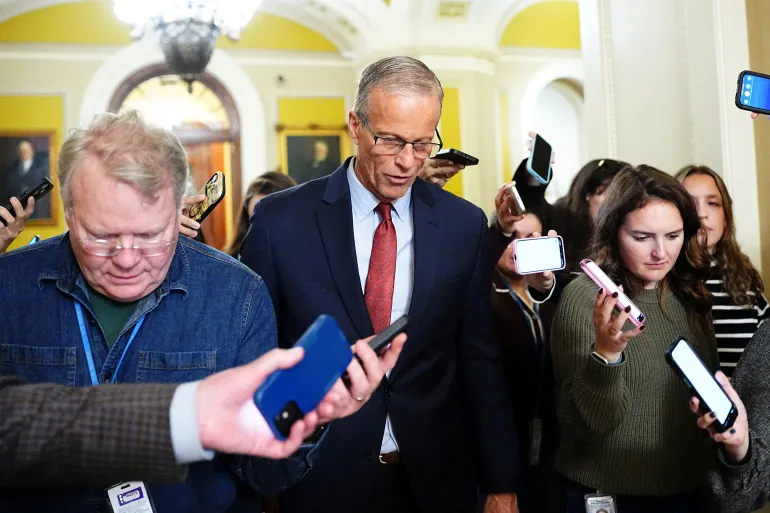
The longest federal government shutdown in U.S. history is finally on the verge of collapse after a bipartisan group of senators, led by moderate Democrats, voted late Sunday to advance a compromise funding bill, setting in motion a series of votes expected to reopen the government by the end of the week.
The procedural vote, which passed 60-40, marked a dramatic capitulation by the Democratic leadership and ended a 40-day legislative deadlock that had paralyzed federal services and led to the grounding of thousands of commercial flights nationwide.
The Deal That Broke the Stalemate
The breakthrough came after intense, weekend negotiations between a handful of centrist Democrats—primarily from states with large federal workforces—and Republican leadership. The final agreement, incorporated into an amendment to a House-passed continuing resolution, includes several key provisions:
- Funding Extension: The compromise would immediately reopen the government and extend funding for most departments until January 30, 2026.
- Full-Year Funding: The measure includes three full-year appropriations bills for essential services, including the Department of Veterans Affairs (VA), the Department of Agriculture/FDA, and the Legislative Branch.
- Worker Protection: Critically, the deal guarantees back pay for all furloughed and unpaid federal workers, reverses the mass layoffs initiated by the Trump administration during the shutdown, and prohibits future workforce reductions until the end of January.
- The Health Care Sticking Point: The compromise omits the core Democratic demand: a guaranteed extension of the expanded Affordable Care Act (ACA) premium tax credits, which are set to expire at year’s end. Instead, Senate Majority Leader John Thune (R-S.D.) offered a commitment for a separate, up-or-down vote on the subsidies in December.
Democrats Split Over the Compromise
The vote revealed a profound rift within the Democratic caucus. Seven Democrats—Senators Dick Durbin (D-Ill.), Jeanne Shaheen (D-N.H.), Maggie Hassan (D-N.H.), John Fetterman (D-Pa.), Catherine Cortez Masto (D-Nev.), Jacky Rosen (D-Nev.), and Tim Kaine (D-Va.)—and Independent Senator Angus King (I-Maine) broke ranks to provide the 60 votes needed to move the bill forward.
Senate Minority Leader Chuck Schumer (D-N.Y.) led the opposition to the deal, arguing that the promise of a future vote on the ACA tax credits was an insufficient guarantee for the millions of Americans facing rising health care premiums.
“This health care crisis is so severe, so urgent, so devastating for families back home, that I cannot in good faith support this [resolution] that fails to address the health care crisis,” Schumer stated on the Senate floor.
However, Senator Jeanne Shaheen (D-N.H.), a negotiator of the deal, defended her vote: “Waiting another week or another month wouldn’t deliver a better outcome. This was the only deal on the table.“
The Path to Reopening
The vote on Sunday was merely procedural, invoking “cloture” to limit debate and allow the amendment to be formally incorporated into the final bill. The Senate still faces several subsequent votes, a process that could consume up to 30 hours of debate time.
Once passed by the Senate, the compromise bill must then return to the House of Representatives, where its fate remains uncertain. House Speaker Mike Johnson (R-La.) has been non-committal on the deal, and House Minority Leader Hakeem Jeffries (D-N.Y.) has dismissed the Senate compromise as a “terrible mistake” that relies on “a pinky promise from Republicans.”
Despite the remaining hurdles, the Senate’s action provides the clearest path yet toward ending the longest shutdown in U.S. history, a crisis that has severely impacted food aid, federal law enforcement, and, most visibly, air travel across the nation.