
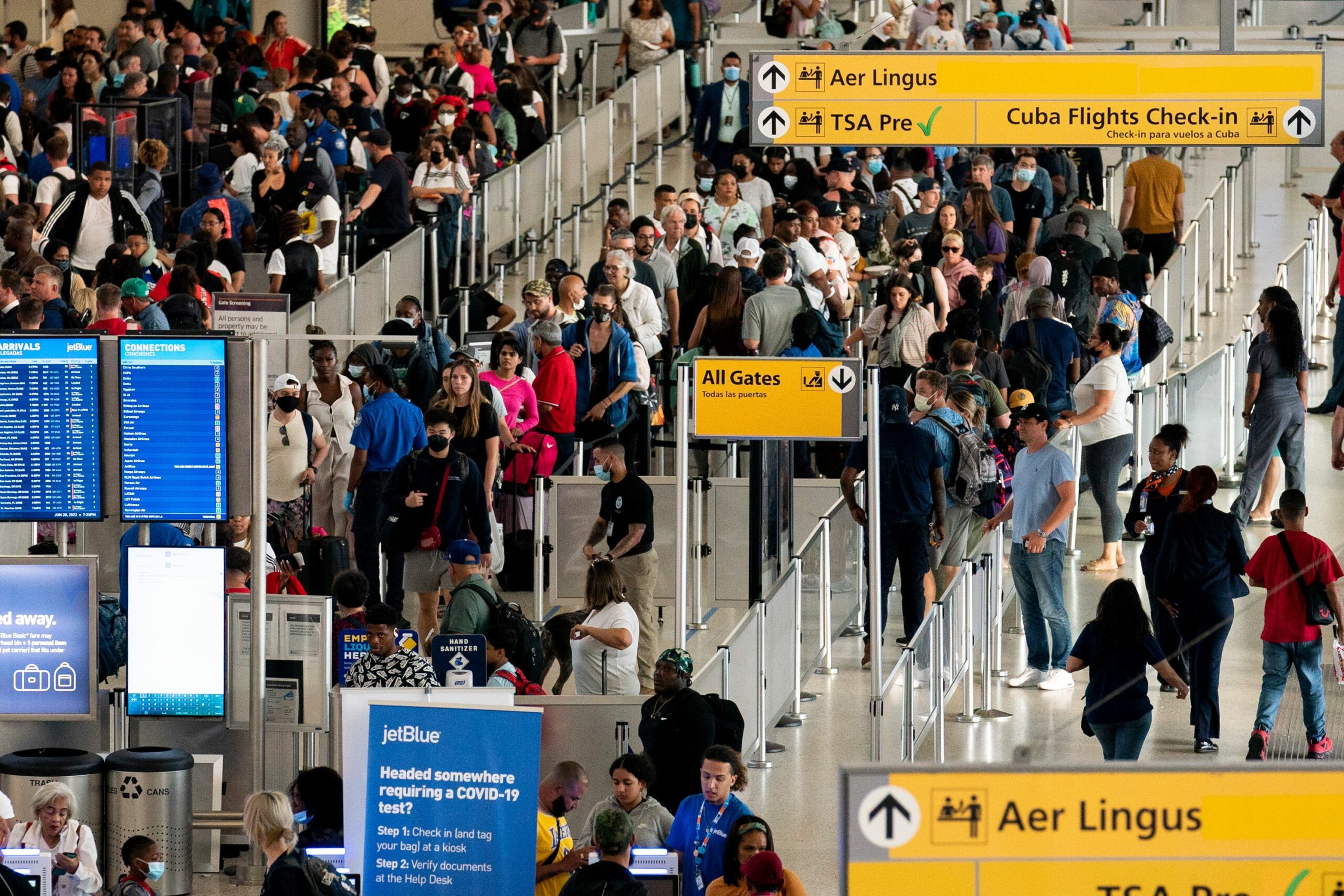
The U.S. government shutdown has finally reached a critical breaking point, directly grounding the nation’s air travel system and transforming a political standoff into a national logistical crisis.
Hundreds of flights were canceled and thousands more were severely delayed Friday across the country’s busiest airports as a mandatory capacity reduction took effect, ordered by the Federal Aviation Administration (FAA) to manage safety concerns caused by surging absenteeism among unpaid air traffic controllers.
The action represents the most significant operational disruption to the U.S. air travel system since the September 11 attacks.
The FAA’s Safety Mandate
Facing data showing an alarming rise in air traffic controller call-outs and reports of increased near-misses (or “airspace breaches”), Transportation Secretary Sean Duffy and the FAA implemented an unprecedented order to reduce air traffic at 40 of the nation’s largest airports.
- Capacity Cuts: The FAA instructed airlines to cut 4% of flights at the 40 targeted airports on Friday, with the reduction scheduled to climb incrementally to 10% by November 14th if the government shutdown continues.
- Safety Over Convenience: “This isn’t about politics—it’s about assessing the data and alleviating building risk in the system as controllers continue to work without pay,” Secretary Duffy stated, warning that the agency would not hesitate to move to 15% or 20% cuts if the situation deteriorates further.
- Strain on Personnel: Over 13,000 air traffic controllers have been working mandatory overtime, often on six-day work weeks, with no pay since the shutdown began over a month ago. Many are now reportedly missing work due to financial strain, exhaustion, or taking on temporary side jobs to cover bills.
Travelers Grounded: The Immediate Fallout
Airlines scrambled throughout the day to comply with the FAA’s order, leading to widespread disruption for millions of travelers just weeks before the busy Thanksgiving travel period.
- Mass Cancellations: More than 1,000 flights were canceled nationwide by Friday afternoon—five times the typical daily average—with major carriers like American, United, and Delta shouldering the bulk of the cuts, often consolidating or eliminating regional routes.
- Hardest-Hit Hubs: High-volume connecting airports like Atlanta (ATL), Dallas/Fort Worth (DFW), Denver (DEN), and Charlotte (CLT), along with all three major New York and Washington, D.C. area airports, were among the 40 facilities forced to reduce their schedules.
- The Waiting Game: Even flights that weren’t canceled faced significant delays. Long, stagnant security lines were reported at major hubs as thousands of unpaid Transportation Security Administration (TSA) officers also dealt with high absenteeism.
The cuts are expected to impact as many as 268,000 passengers daily once the full 10% reduction is reached.
Political Pressure Reaches Tipping Point
The chaos in the skies has escalated the political pressure on Capitol Hill, where Republicans and Democrats remain locked in a partisan standoff over federal funding.
The Trump administration has been accused by critics of weaponizing the national airspace to force Democrats to yield, a claim the White House strongly denies. Democratic leaders, meanwhile, pointed to the grounding of air traffic as proof that the shutdown is no longer an abstract political debate, but a dangerous failure of governance.
With air traffic controllers set to miss a second full paycheck next week, aviation officials predict the staffing crisis will only deepen, raising the specter of what Secretary Duffy warned could become “mass chaos” if Congress fails to act immediately.