
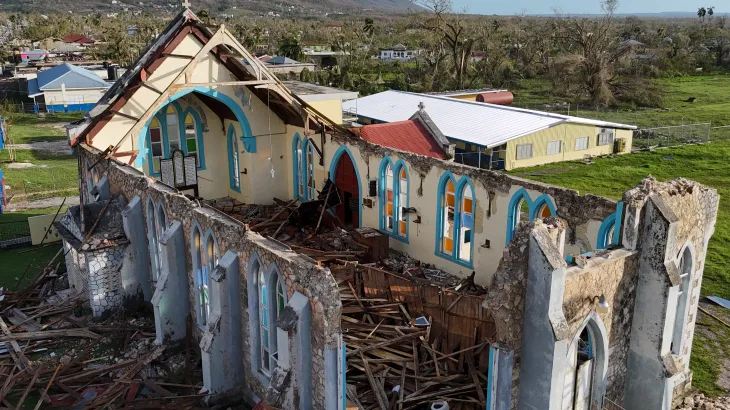
BLACK RIVER, JAMAICA—In the coastal town of Black River, a community now reduced to a wreck of splintered wood and sodden rubble, a new, chilling reality has taken root in the wake of Category 5 Hurricane Melissa: desperate hunger.
With aid delivery stalled and infrastructure annihilated, residents of the southwestern parish of St. Elizabeth—dubbed Jamaica’s “breadbasket”—are being forced into the streets to scavenge for survival.
The catastrophic storm, one of the most powerful Atlantic hurricanes on record, made landfall days ago, ripping roofs from homes, destroying critical water and power infrastructure, and wiping out crops. Now, the aftermath has given way to a palpable humanitarian emergency, where the search for a meal has become a daily, perilous fight.
The New Normal: Searching the Rubble
In the heart of what was once a bustling parish capital, the town center is unrecognizable—a grim demolition site littered with debris, zinc sheets, and silt. Yet, amongst the ruins, an unsettling activity is underway.
Families, including children, can be seen wading through the wreckage, scouring the detritus of collapsed businesses and homes for anything edible. This descent into scavenging underscores the devastating slowness of the relief effort in this hard-hit “ground zero” community.
“We need food, we need water, we need shelter, we need everything to survive, because if we don’t get all of things we will suffer in Jamaica,” one desperate woman in Black River told a news correspondent, choking back tears after losing everything. “We are fighting to survive.”
Roads leading to Black River are an obstacle course of uprooted trees, landslides, and floodwater, turning the journey for aid convoys into a monumental task. The isolation of these communities is not just a logistical problem; it is a life-or-death scenario for those cut off from the capital.
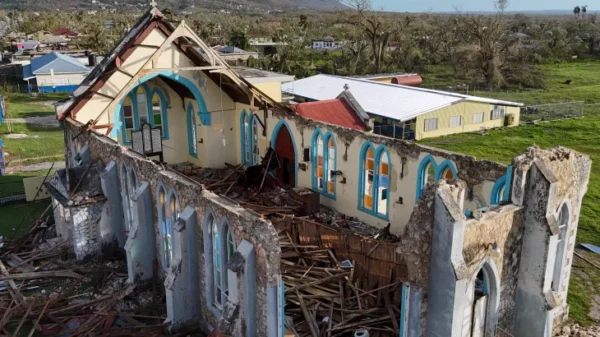
The Collapse of the ‘Breadbasket’
The food scarcity crisis is being fueled by twin disasters: the failure of immediate relief to reach remote areas, and the systemic devastation of the country’s main agricultural region.
- Livelihoods Wiped Out: St. Elizabeth is the engine of Jamaica’s domestic food supply. The hurricane’s ferocious winds and catastrophic flooding have destroyed crops and farming infrastructure, delivering a devastating, long-term blow to national food security.
- A “Second Disaster” Looms: With water systems contaminated and food supplies lost, health experts warn of a “second disaster”—the potential for outbreaks of waterborne diseases like cholera and dengue, further compounding the nutritional deficits faced by vulnerable populations, especially children. UNICEF estimates that over 284,000 children are in urgent need of humanitarian assistance island-wide.
The immense scale of the destruction means the immediate crisis is rapidly morphing into a sustained recovery challenge that will demand “billions upon billions” to rebuild, according to local teachers assessing the damage.
A Race Against Time for Aid
While the World Food Programme (WFP) and other UN agencies have pre-positioned emergency food kits and are coordinating sea-lift operations, the sheer magnitude of the logistical challenge is stalling relief from reaching the most desperate.
The government, which declared the country a disaster area, is struggling to restore power to the majority of the island, and with communication networks largely down, the full scale of human suffering remains tragically obscured.
For the residents of Black River, however, the devastation is all too clear. The sight of people rooting for scraps in the streets is a stark, heart-wrenching image—a desperate plea to the world that the time for emergency assistance is not tomorrow, but now.