
The economic relationship between the United States and Canada plunged into a fresh crisis over the weekend, as President Donald Trump announced an immediate, additional 10% tariff on Canadian imports, citing a political advertisement as a “hostile act.”
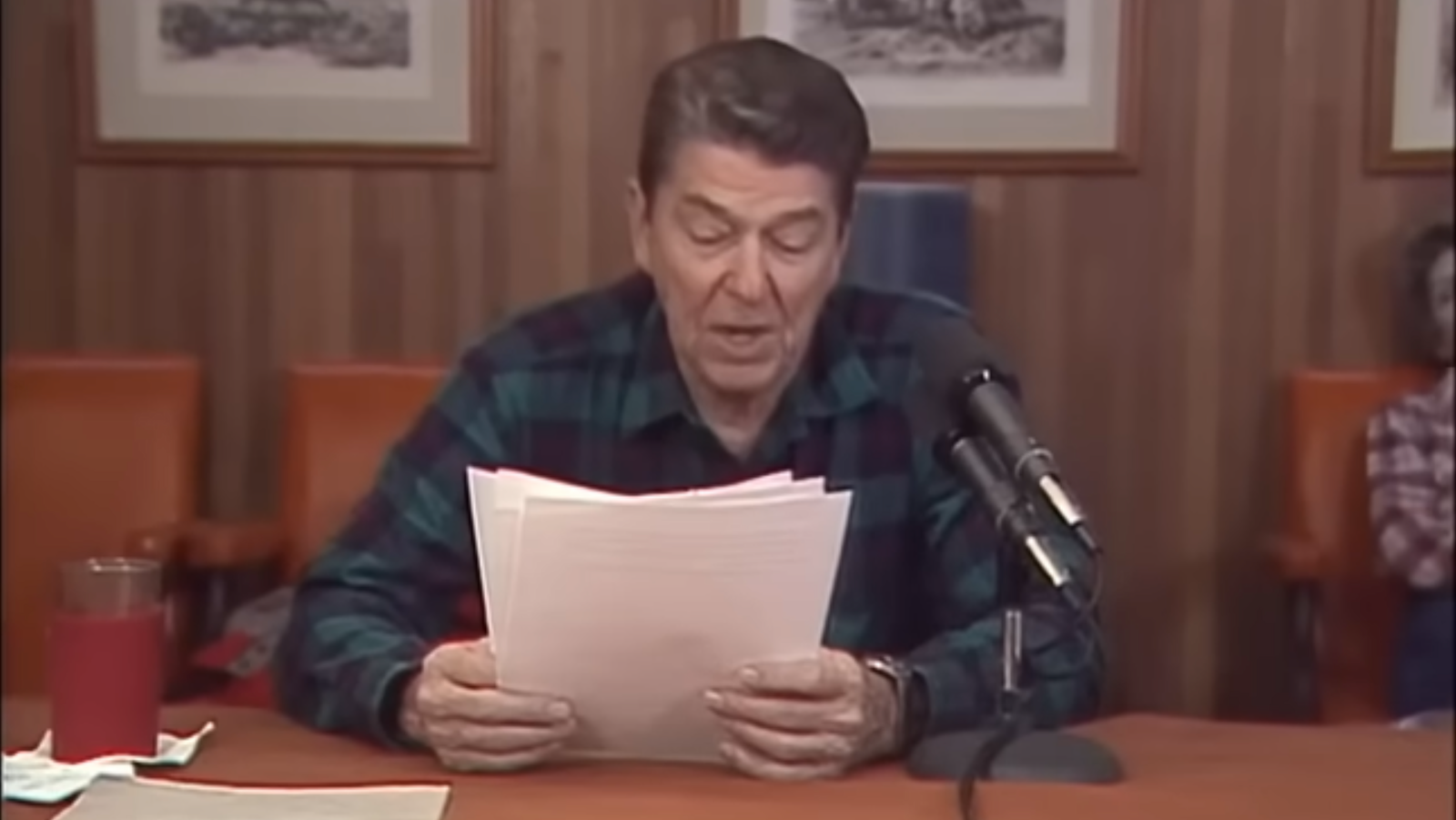
The unprecedented escalation was sparked by a television commercial, paid for by the Canadian province of Ontario, which featured a 1987 speech by former Republican icon Ronald Reagan criticizing the economic damage caused by tariffs.
In a fiery post on his Truth Social platform late Saturday, President Trump confirmed the new levy, which is to be applied “over and above what they’re paying now.” The move comes just two days after the President abruptly “ended all trade negotiations” with Ottawa over the same ad.
The Airing of Grievances
The contentious commercial, broadcast on major US networks and reportedly aired during the World Series baseball championship, used excerpts from a Reagan radio address where the former President warned that trade barriers “hurt every American worker and consumer” and risk triggering “fierce trade wars.”
President Trump reacted with palpable fury, accusing the Canadian side of a “serious misrepresentation of the facts” and calling the ad a “FRAUD.”
“Their Advertisement was to be taken down, IMMEDIATELY, but they let it run last night during the World Series, knowing that it was a FRAUD,” the President wrote. He further alleged the ad’s “sole purpose” was to sway the ongoing US Supreme Court review of his administration’s tariff authority.
The Ronald Reagan Presidential Foundation and Institute also weighed in earlier this week, claiming the Ontario government used “selective audio and video” without permission, a statement that the President quickly weaponized in his critique.
An Alliance Under Attack
The tariff hike immediately sent shockwaves through the North American trade landscape. It is not yet clear precisely which Canadian goods the additional 10% will target, but it promises to further strain a trade relationship already under duress from existing US levies on Canadian steel, aluminum, and autos.
While the majority of cross-border trade remains tariff-free under the USMCA trade agreement, the new duties add another layer of volatility for manufacturers and consumers in both countries.
The Premier of Ontario, Doug Ford, whose government paid for the commercial, had previously announced the ad would be suspended starting Monday to allow trade talks to resume. However, its airing during the high-profile World Series—even after the initial backlash—was clearly interpreted by the White House as an act of diplomatic defiance, directly resulting in the punitive tariff escalation.
Canadian Prime Minister Mark Carney, who had expressed a readiness to resume constructive discussions, offered a measured response, stating that Canada must remain focused on trade diversification. “We cannot control the trade policy of the United States,” he said, emphasizing that his government remains prepared to re-engage when American officials are ready.
Yet, as the US-Canada relationship is now openly dictated by public opinion and political messaging—even the ghost of a Republican predecessor—the immediate future of North American commerce remains entirely beholden to the whims of presidential irritation. The latest tariff volley confirms that, in the current climate, even a one-minute commercial can become the equivalent of an act of economic war.