
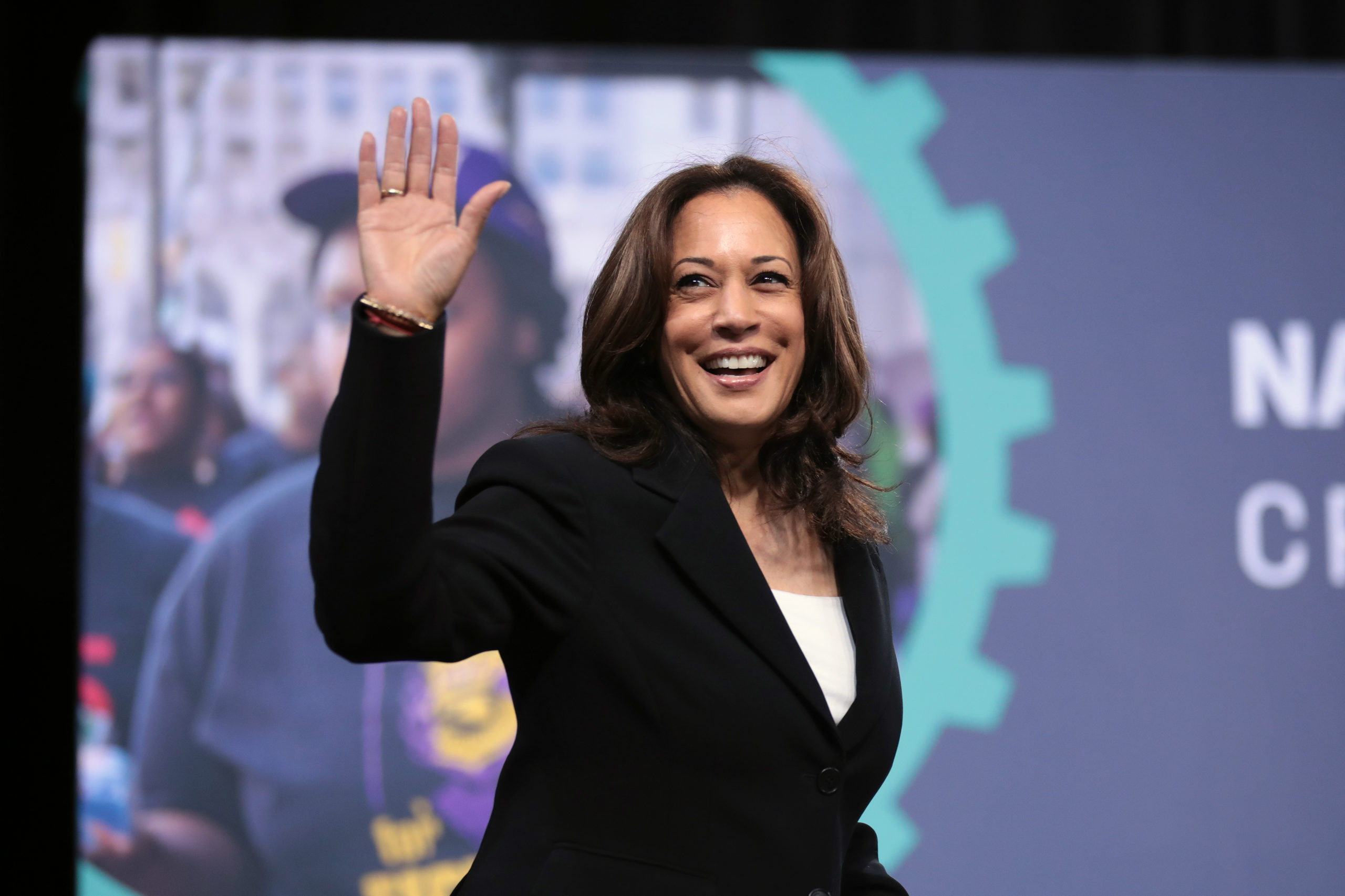
Former Vice President Kamala Harris has dropped the strongest hint yet of a third bid for the White House, declaring, “I am not done,” as she enters a new phase of political life following her 2024 defeat.
In a highly anticipated interview with the BBC on her international book tour, Harris left the door deliberately ajar for a 2028 presidential run, setting the stage for what is expected to be a wide-open, and potentially brutal, Democratic primary contest.
Asked if her grandnieces would see a woman president in their lifetime, Harris was unequivocal: “In their lifetime, for sure.” When pressed on whether that woman could be her, she simply replied: “Possibly.”
The comments confirm that, despite her loss in the last election, the former Vice President views herself as a central—if not the defining—figure in the Democratic Party’s post-Trump future.
The Path Through the Polls
Harris’s latest remarks arrive amidst the launch of her memoir, 107 Days, a candid account of her abbreviated 2024 campaign. The book tour has provided her with a crucial platform to reintroduce herself to the public, clarify her role in the circumstances that led to her nomination, and, crucially, signal her next move.
She was quick to dismiss early polls for the 2028 primary, which currently place her behind several potential rivals, including California Governor Gavin Newsom and even some unexpected celebrity names.
“I have never listened to polls,” Harris shot back. “If I listened to polls I would have not run for my first office, or my second office – and I certainly wouldn’t be sitting here.”
This defiance is a necessary shield. Within the Democratic base, the conversation about her future is complex. While her historic role as the first female Vice President is undeniable, the party has yet to conduct a full, unifying post-mortem on the 2024 loss, and many are eager for a clean break from the past. Harris, therefore, represents both the potential ceiling of the party’s progressive ambitions and the weight of its recent electoral disappointments.
The Looming Primary Battle
The former Vice President’s hint of a 2028 run officially draws a line in the sand for a rapidly coalescing field of Democratic contenders.
Harris’s decision earlier this year to forego a run for Governor of California had already cleared her calendar for a national effort, passing up a near-certain victory in her home state to keep her White House ambitions alive.
She is now poised to face a formidable challenge from within her own party. Governor Newsom, a rival with a high national profile, has been aggressively testing the waters and building a network of support. Other prominent figures, including term-limited state leaders and young Congressional stars, are also maneuvering for position.
The 2028 primary is shaping up to be an ideological and generational debate over the Democratic Party’s identity, and Harris—the former prosecutor and centrist-progressive—will have to prove she can unite its disparate wings and articulate a compelling vision that moves beyond the trauma of the previous cycle. Her current book tour is the opening volley in a campaign that may already be underway, a direct challenge to any Democrat who might believe her time is past.
As the former Vice President makes clear, she may have lost the last battle, but she has no intention of ceding the war.