
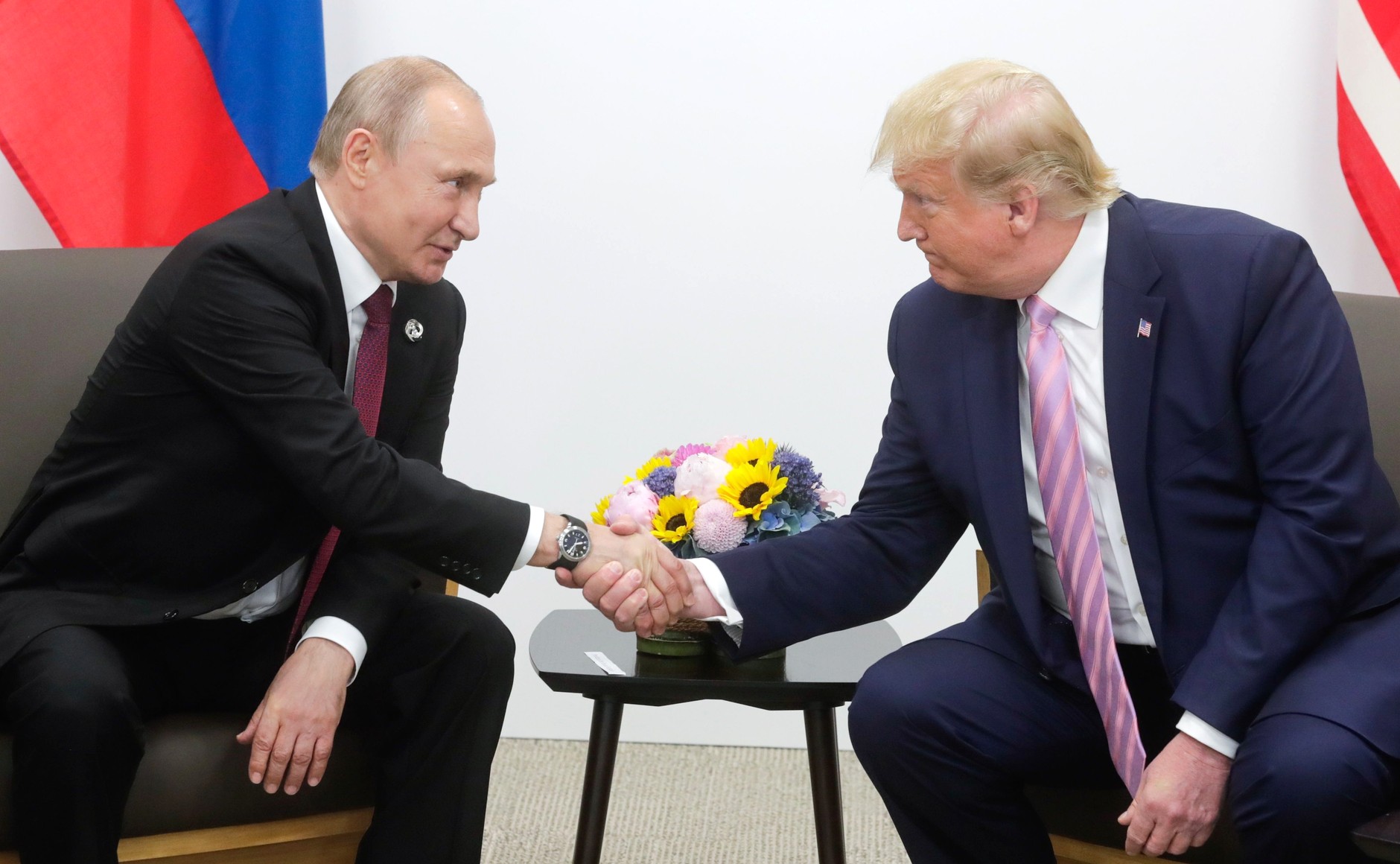
A high-stakes summit between President Donald Trump and Russian President Vladimir Putin in Budapest, proposed just days ago, has been shelved, signaling a significant roadblock in the latest diplomatic push to end the war in Ukraine. The White House confirmed there are now “no plans” for the two leaders to meet “in the immediate future,” after a flurry of diplomatic activity failed to bridge the gap between Moscow’s maximalist demands and the unified position of Kyiv and its European allies.
The Diplomatic Whirlwind and its Collapse
The idea for the Budapest summit emerged last Thursday following a phone call between Trump and Putin. The US President then announced plans to meet his Russian counterpart in the Hungarian capital within two weeks to discuss peace. This move was immediately followed by an apparently tense meeting in Washington between Trump and Ukrainian President Volodymyr Zelensky on Friday.
Initial reports suggested the two envoys, U.S. Secretary of State Marco Rubio and Russian Foreign Minister Sergei Lavrov, would hold a preparatory meeting this week. However, following a phone call between the two top diplomats on Monday, the White House declared the contact “productive” but stated a physical meeting was no longer “necessary,” effectively putting the brakes on the summit.
The core reason for the stall appears to be Russia’s unwavering negotiating position. Minister Lavrov publicly confirmed that Russia’s stance remained unchanged from previous talks, indicating Moscow is not interested in a simple ceasefire along the current front lines, a position recently endorsed by a joint statement from Zelenskyy and several European leaders.
Territorial Tangle Undermines Talks
Russia’s maximalist approach—which calls for addressing the “root causes of the conflict,” Kremlin shorthand for recognizing full Russian sovereignty over the annexed Donbas region and the demilitarization of Ukraine—is a non-starter for Kyiv.
The diplomatic collapse was further cemented by a brief but telling shift in President Trump’s own position over the weekend. Following the call with Putin, who reportedly floated a proposal to swap some occupied territory for control over all of Donetsk, Trump initially seemed to consider the possibility of Ukraine making territorial concessions. However, by Sunday, he publicly rejected the idea of complex swaps, stating the conflict should simply “cut the way it is” at the battle line—a position closer to Ukraine’s desire for a ceasefire along the current contact line.
This short-lived diplomatic cycle highlighted the key pressure point for Moscow: the potential supply of long-range Tomahawk missiles to Kyiv. Ukrainian President Zelensky noted that the possibility of these powerful weapons, capable of striking deep into Russia, was the only thing that forced Putin to engage in last week’s unscheduled call with Trump. With the missile issue still unresolved, Russia seemingly felt little need to rush to the negotiating table.
Relief in Europe, Uncertainty in Kyiv
The decision to shelf the summit is likely to be met with relief by European leaders, who had expressed serious reservations about a major peace agreement being decided in a meeting where Ukraine’s interests risked being sidelined. Many European capitals had publicly rejected any push for Ukraine to surrender land captured by Russian forces.
For Ukraine, however, the shelving of the summit leaves the path to a broader peace deal unclear. While the focus has shifted back to a ceasefire along the current contact line, the fundamental disagreements remain: Kyiv will not relinquish its sovereign territory, and Moscow will not agree to a peace that does not meet its core, imperialistic demands. The postponement is a stark indicator that the path to peace remains a marathon of entrenched positions, not a short sprint to a summit.