
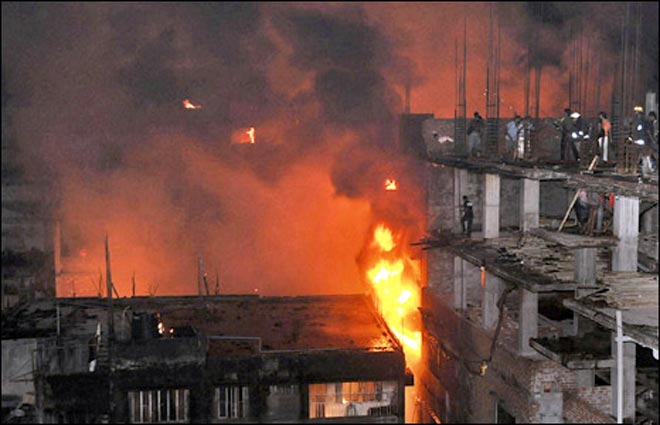
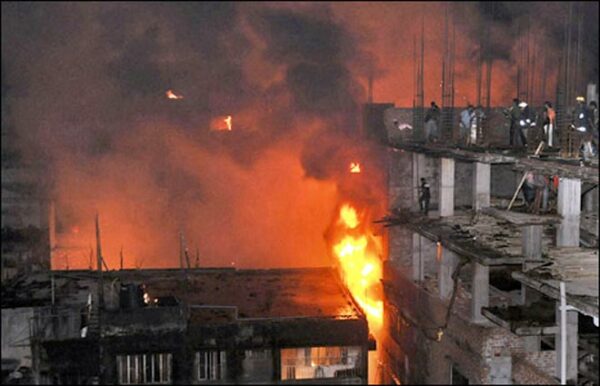
Another deadly disaster has exposed the perilous conditions plaguing Bangladesh’s vast industrial sector, with a ferocious fire at a garment factory and adjoining chemical warehouse in the capital, Dhaka, claiming the lives of at least 16 people and critically injuring several others.
The blaze, which erupted on Tuesday in the Mirpur area, quickly engulfed a multi-storey building that housed the textile facility. Officials report that many of the victims perished not from burns, but from inhaling toxic fumes produced by chemicals stored in the adjacent warehouse.
The Deadly Combination of Chemicals and a Locked Door
Fire service officials on Wednesday pointed to a lethal combination of hazardous materials and critical safety failures as the primary reason for the high death toll.
- Toxic Gas Inhalation: The fire quickly spread to a nearby chemical warehouse, reportedly containing highly flammable substances like bleaching powder and hydrogen peroxide. The resulting toxic smoke blanketed the factory, overpowering workers before they could escape.
- Locked Exit: Fire official Talha Bin Jashim stated that a locked door barring access to the roof was a major factor in trapping workers. “The victims could not escape because the roof door was locked,” Jashim told reporters, noting that most of the dead were recovered from the garment factory’s second and third floors.
The cause of the initial blaze, which witnesses say started on the third floor of the seven-story garment building, remains under investigation. Authorities have launched an inquiry, but the tragedy immediately shifts the global spotlight back to the persistent safety lapses in the world’s second-largest apparel exporting nation.
Grief and Scrutiny
Distraught relatives gathered outside the blackened, smoking ruins, some desperately clutching photographs of missing loved ones. The bodies, many burned beyond recognition, will require DNA testing for identification.
The incident underscores the long-standing risks inherent in an industry that employs roughly 4 million people, mostly women, and generates about $40 billion annually from exports, primarily to the United States and Europe.
While international pressure following the 2013 Rana Plaza collapse (which killed over 1,100 workers) and the 2012 Tazreen Fashions fire led to significant safety improvements in many major export-oriented facilities, smaller factories and those operating outside formal oversight—like the one impacted in Mirpur—frequently remain vulnerable to dangerous working conditions, poor building codes, and inadequate fire prevention measures.
Authorities have temporarily shut down surrounding factories due to lingering toxic fumes, as they work to track down the owners of the buildings, who reportedly lacked proper fire safety clearances.