
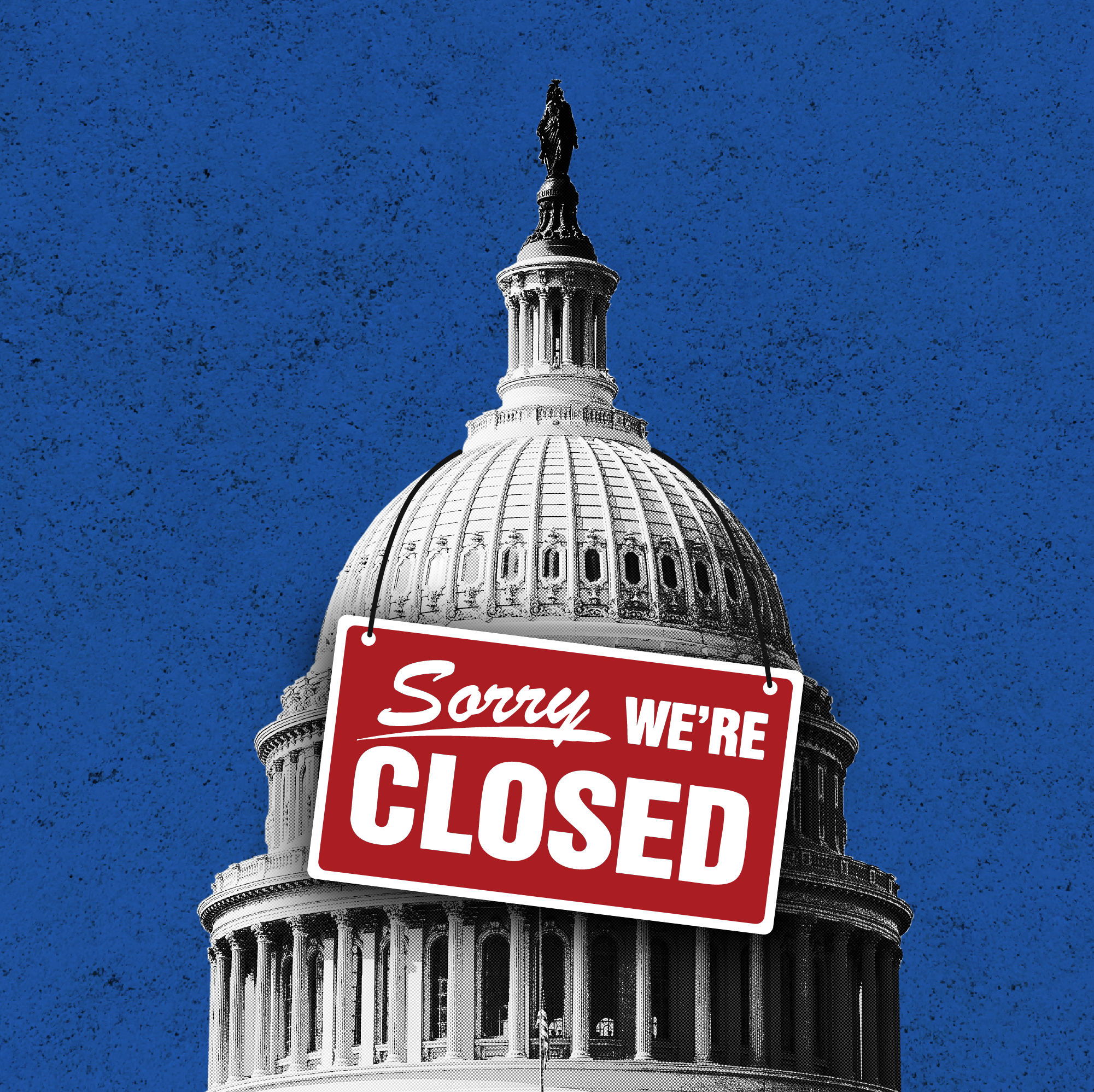
As the federal government shutdown bleeds into its third week, forcing hundreds of thousands of public servants to work without pay, the Trump administration has launched a frantic, legally fraught search for non-appropriated funds to ensure federal law enforcement officers receive their paychecks.
The effort comes on the heels of President Donald Trump’s controversial move to unilaterally guarantee pay for military service members, and it underscores the escalating pressure on the White House to mitigate the public safety and political fallout of the deepening funding impasse.
Federal law enforcement—including critical agencies like the FBI, U.S. Border Patrol, ICE, and the DEA—are deemed “excepted” or “essential” personnel. This classification means agents and officers remain on the job, enforcing laws and protecting the nation’s security, even as their pay lapses. The prospect of these frontline heroes missing their first full pay cycle has sent the Office of Management and Budget (OMB) into a high-stakes scavenger hunt for money.
The Search for the Legal Loophole
The administration’s playbook appears to be a direct extension of the strategy used to pay the military: reallocating unobligated funds from accounts that do not require new Congressional appropriations.
Last weekend, President Trump directed the Pentagon to use “all available funds” from defense research and development accounts to pay U.S. troops. Now, that same intense legal and budgetary scrutiny is being applied to the sprawling Department of Homeland Security (DHS) and Department of Justice (DOJ).
Homeland Security Secretary Kristi Noem has already suggested her department found an “innovative” path to pay the U.S. Coast Guard, which falls under DHS during peacetime. However, the question of whether this short-term fix can be scaled to cover the tens of thousands of agents across all law enforcement agencies—and whether such reallocations are legally permissible under the Antideficiency Act—remains hotly debated on Capitol Hill.
“This is not a sustainable budget policy; it’s an emergency maneuver,” noted a senior Congressional aide, who spoke on condition of anonymity. “The administration is trying to pick winners and losers in a fiscal standoff, but the money has to come from somewhere, and that somewhere usually has a legal purpose.”
The Political Pressure Cooker
The crisis over pay has become the sharpest point of political conflict in the shutdown drama. While the Government Employee Fair Treatment Act of 2019 generally guarantees back pay for all federal workers once the government reopens, the administration’s new interpretation, suggesting Congress must explicitly appropriate those back pay funds, has caused widespread anxiety among the federal workforce.
By prioritizing military and now attempting to prioritize law enforcement pay, the White House seeks to blunt the image of a government failure by ensuring the nation’s most visible security personnel are not the first casualties of the political gridlock.
Yet, this action draws a stark contrast with the estimated 750,000 non-essential federal workers who have been furloughed, some of whom have reportedly begun receiving layoff notices as the administration ratchets up pressure on Congressional Democrats.
As the shutdown drags on and the fiscal strain on thousands of American families grows, the White House’s scrambling effort to pay the “essential” officers is a high-wire act of executive power, balancing public safety imperatives against the fundamental constitutional requirement that all government spending be authorized by Congress. The fate of the nation’s security forces, and the long-term integrity of the federal budget process, now hangs in the balance.