
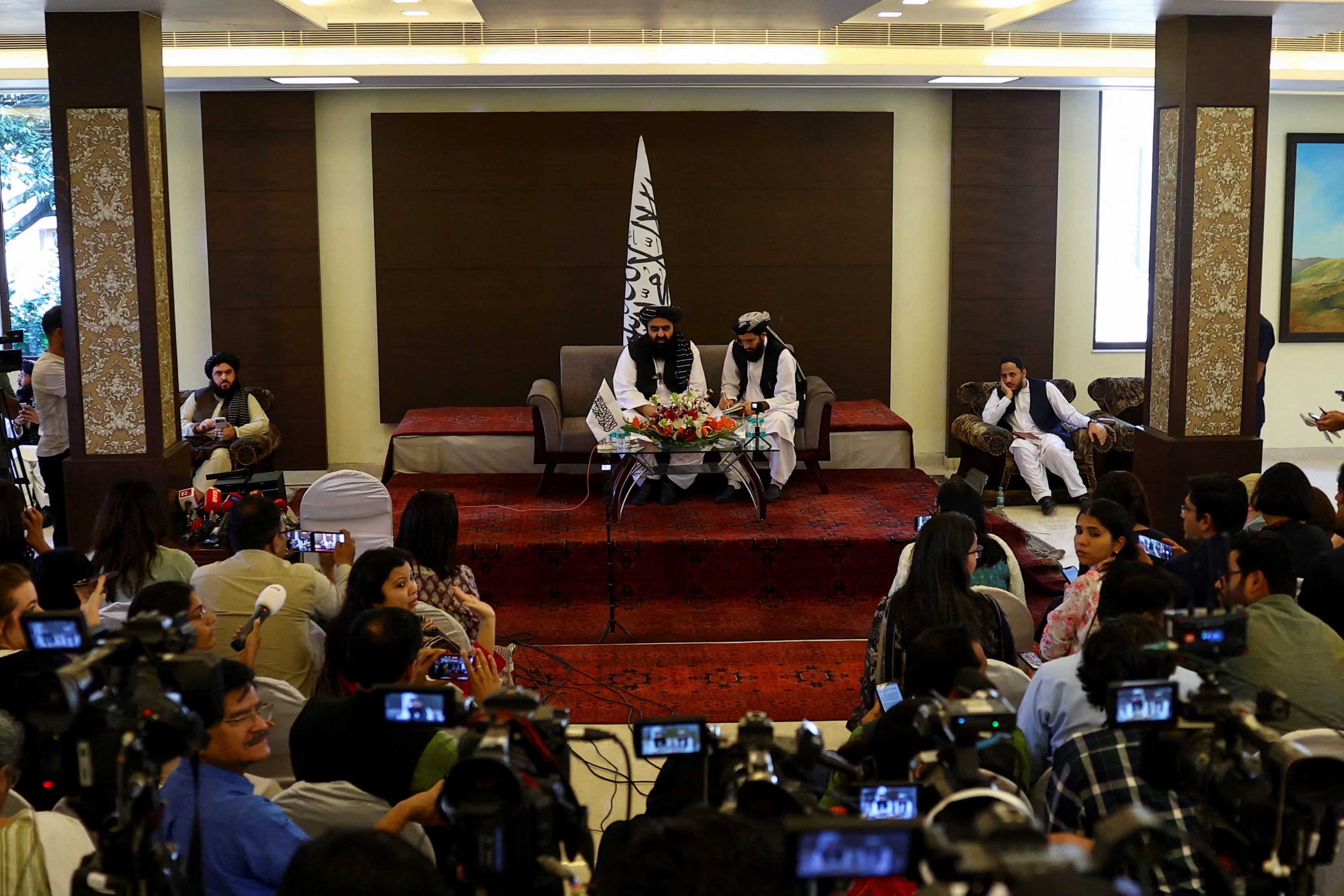
NEW DELHI— A diplomatic visit intended to signal a thawing relationship between New Delhi and Kabul has instead ignited a furious national debate over gender rights and sovereignty, after Afghanistan’s Foreign Minister, Amir Khan Muttaqi, initially excluded Indian female journalists from a press conference on Indian soil.
The controversy centers on two separate media interactions held during Muttaqi’s high-profile, six-day visit—the first by a senior Taliban minister to India since the group seized power four years ago.
The Exclusion that Echoed Kabul
On Friday, following official bilateral talks with India’s External Affairs Minister, S. Jaishankar, the press conference organized by the Afghan Embassy at its New Delhi premises featured a conspicuous absence: not a single woman journalist was allowed into the room. Reporters gathered outside were reportedly denied entry by security staff, a move that starkly mirrored the systematic suppression of women’s public life under the Taliban regime in Afghanistan.
The “men-only” event drew immediate and fierce condemnation from across the Indian political spectrum and media bodies.
The Editors Guild of India and the Indian Women Press Corps (IWPC) issued sharp statements, labeling the exclusion as “blatantly discriminatory” and an “affront to press freedom and women’s rights.” Opposition leaders were equally vocal.
“The government has dishonoured every single Indian woman by allowing the Taliban minister to exclude women journalists from the presser,” stated Trinamool Congress MP Mahua Moitra. Meanwhile, Congress leader Rahul Gandhi challenged the Prime Minister’s commitment to women’s empowerment, saying, “Your silence in the face of such discrimination exposes the emptiness of your slogans on Nari Shakti.”
A Quick, Contested Redo
Facing mounting pressure, both domestically and on social media, the Afghan side organized a second, hastily arranged press interaction on Sunday—this time, explicitly inviting women journalists.
In the second presser, Foreign Minister Muttaqi addressed the uproar, attempting to dismiss the Friday incident as merely a “technical issue.”
“It was on short notice and a short list of journalists was decided,” Muttaqi claimed. “It was neither a technical issue nor any deliberate exclusion. It was not intended.”
The explanation, however, has failed to satisfy critics, who see the “technical issue” defense as a flimsy attempt to whitewash the Taliban’s known gender policies. When questioned on the plight of women in Afghanistan—who are barred from education, most public jobs, and even parks—Muttaqi deflected, insisting that “every country has its own customs, laws, and principles, and there should be respect for them.”
New Delhi Distances Itself
Amid the firestorm, the Indian Ministry of External Affairs (MEA) moved to distance itself from the controversy, clarifying that it had “no involvement” in the press conference held at the Afghan Embassy. The MEA noted that the decision on which journalists to invite was made solely by the Taliban officials accompanying the Foreign Minister.
Despite the Indian government’s move to de-link itself from the organization of the event, the incident has highlighted the delicate tightrope New Delhi is walking. While India is attempting to upgrade its “Technical Mission” in Kabul to a full embassy—a critical diplomatic step to counter security concerns and humanitarian needs—it is being forced to confront the harsh reality of dealing with a non-recognized, hardline regime whose ideology is fundamentally at odds with India’s democratic values.
The twin press conferences have left an indelible mark on the visit: the diplomatic necessity of engaging the Taliban may be unavoidable, but the price of that pragmatism, in the eyes of many, should not include tacit acceptance of gender apartheid on Indian soil. The exclusion of Indian women journalists has turned a routine diplomatic encounter into a profound test of national principle.