
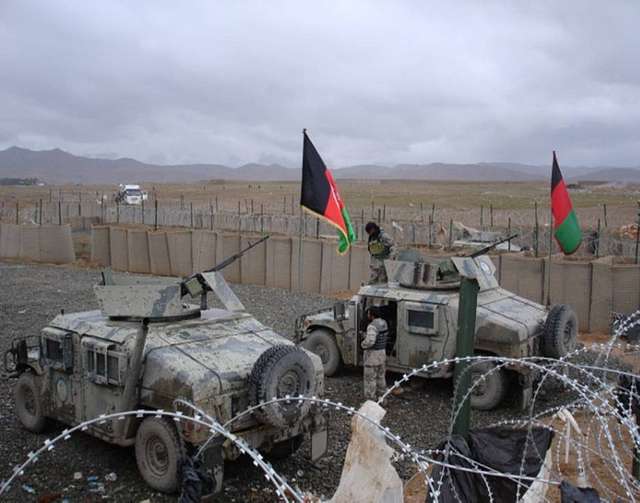
KABUL/ISLAMABAD – The uneasy calm along the volatile Durand Line shattered this weekend as the Afghan Taliban government confirmed its forces launched “retaliatory and successful operations” against Pakistani military posts, marking a dangerous escalation in the long-simmering feud between the two neighbors.
The coordinated assaults across multiple provinces—from Kunar to Helmand—were launched in direct response to what the Taliban claimed were unacknowledged Pakistani airstrikes on Afghan soil earlier in the week, including reported explosions in the capital, Kabul.
An Eye for an Airstrike
The current flare-up stems from a core dispute that has poisoned relations since the Taliban’s 2021 takeover. On Thursday, explosions were reported in Kabul and the eastern province of Paktika. Though Islamabad never officially claimed responsibility for the strikes, the Taliban-run Defence Ministry quickly blamed Pakistan for violating its sovereignty. Pakistani security officials, however, reportedly confirmed that the strikes were aimed at eliminating high-value targets within the Tehreek-i-Taliban Pakistan (TTP), or Pakistani Taliban, a group Islamabad accuses Kabul of harboring.
The TTP, a separate but ideologically aligned militant group, has intensified its insurgency against Pakistani security forces, a campaign that has seen hundreds of Pakistani soldiers killed since 2021. For months, Pakistan has demanded that the Afghan Taliban either expel the TTP or neutralize their cross-border threat.
The weekend’s clashes represent the Afghan Taliban’s most aggressive response to date.
“In retaliation for the air strikes by Pakistani forces,” a statement from the Afghan military read, Taliban border forces “engaged in heavy clashes against Pakistani forces’ posts in various border areas.”
War on Multiple Fronts
The fighting has been fierce, with both sides claiming to have inflicted significant damage. Afghan state media reported a “revenge operation” in Helmand province resulted in the deaths of over a dozen Pakistani soldiers and the capture of several military outposts—claims Pakistan has not officially confirmed.
Pakistani security sources, speaking on condition of anonymity, acknowledged the exchanges of fire at key posts, including Angoor Adda and Kurram, but insisted they were responding with “full force” to “unprovoked” attacks, destroying multiple Afghan posts and militant formations in their counter-offensive.
The Interior Minister of Pakistan, Mohsin Naqvi, condemned the Afghan attacks, warning that Pakistani forces were giving a “prompt and effective response that no provocation will be tolerated.”
The violence has already translated to humanitarian and economic costs, with officials reporting the closure of major trade routes, including the crucial Torkham border crossing, stranding both pedestrian traffic and essential goods.
The Looming Instability
The current crisis underscores the profound geopolitical paradox of the region: Pakistan, long accused of supporting the Afghan Taliban, now finds itself locked in a military confrontation with its former allies over the TTP threat.
“Intensifying cross-border attacks on Pakistani forces, unusually intense Pakistani strikes in Afghanistan, and Taliban retaliations have created a perfect storm for trouble,” noted one South Asia analyst.
As the two nuclear-armed neighbors exchange fire along their disputed border—a border the Afghan Taliban refuse to recognize—the potential for the conflict to spiral remains a major concern for regional and international powers. Global leaders, including Saudi Arabia, Iran, and Qatar, have already publicly called for “restraint, avoidance of escalation, and the adoption of dialogue.”
For now, the heavy weaponry has momentarily fallen silent after the Taliban claimed their “successful” operations concluded at midnight, but the warning issued by their Defence Ministry remains stark: “If the opposing side again violates Afghanistan’s territorial integrity, our armed forces are fully prepared to defend the nation’s borders and will deliver a strong response.” The Durand Line, an arbitrary colonial scar, has once again become the trigger point for a devastating new chapter of instability in South Asia.