
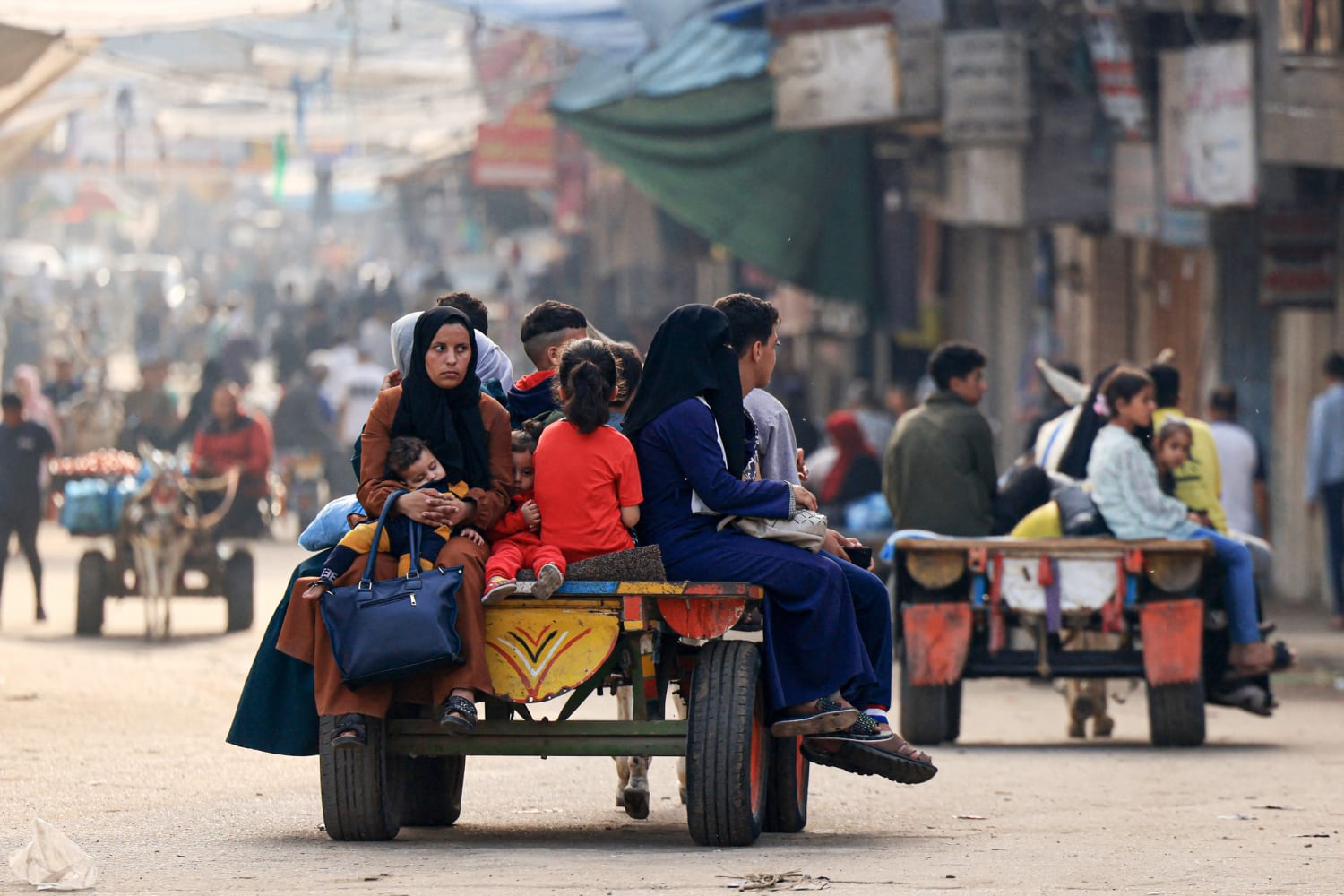
GAZA STRIP — A fragile quiet settled over the Gaza Strip on Friday as a U.S.-brokered ceasefire took effect, instantly igniting a massive, poignant migration as tens of thousands of Palestinians began the harrowing trek back to the north—the area devastated by two years of conflict.
The movement, a desperate pilgrimage over rubble-choked roads and past the ghosts of razed neighborhoods, is the most tangible immediate sign that the newly approved truce is holding. Displaced families, having endured months in overcrowded southern camps, loaded scant belongings onto carts, trucks, and their backs, heading toward what, for many, will be the unrecognizable ruins of their former homes in Gaza City and its surroundings.
“Even if it’s rubble, we will pitch a tent and we’ll live. It’s better than being displaced,” Wael Al-Najjar, 55, told reporters as he waited for safe passage on the coastal road, an artery that witnessed mass displacement and tragedy in the months prior.
Netanyahu Hails Trump’s ‘Extraordinary Help’
The ceasefire—the first phase of a broader peace plan advanced by the U.S. and mediated by Egypt and Qatar—was approved by the Israeli cabinet in the early hours of Friday. The agreement includes a cessation of hostilities, a partial withdrawal of Israeli forces to new lines, a massive surge of humanitarian aid, and a phased exchange of the remaining Israeli hostages for a large number of Palestinian prisoners.
In a defiant address shortly after the deal’s activation, Israeli Prime Minister Benjamin Netanyahu claimed the breakthrough was a result of a combination of “heavy military pressure, combined with heavy diplomatic pressure.”
Crucially, he singled out President Donald Trump for his direct intervention, stating, “We couldn’t have achieved it without the extraordinary help of President Trump and his team. They worked tirelessly… for the benefit of Israel and the U.S., and for decent people everywhere.”
Netanyahu’s public gratitude underscores the pivotal role of the U.S. President, whose envoys, including son-in-law Jared Kushner, led an intense diplomatic push in recent weeks that ultimately forced the agreement across the finish line after months of stalled talks.

A Fragile Peace, Massive Challenges
While the return to the north offers a moment of hope, the road ahead is fraught with immense challenges and lingering uncertainty. The ceasefire’s first phase mandates an Israeli troop withdrawal from much of Gaza City and other urban centers, allowing the flow of both returning civilians and desperately needed aid. UN officials are scrambling to scale up aid deliveries of food and medical supplies to combat widespread famine and the near-total collapse of the healthcare system.
However, the more contentious issues of the peace plan remain unresolved. Chief among them are the permanent demilitarization of Hamas, a full withdrawal of all Israeli forces, and the question of who will govern the devastated enclave. Netanyahu, even while celebrating the deal, reiterated his uncompromising stance, vowing that Hamas would be disarmed and Gaza demilitarized, whether “the easy way… or the hard way.”
For the thousands walking back to the unrecognizable wreckage of the north, those long-term political questions are secondary to the immediate relief of a stopped war. The hope, mixed with the fear of discovering what remains, marks a cautious pivot from a two-year nightmare toward a colossal reconstruction effort.
As the sun set on the first day of the truce, the columns of families moving north represented the collective will of a population desperate to reclaim a semblance of life amidst the ruins—a fragile but profound testament to the power of a ceasefire to temporarily halt the bloodshed.