
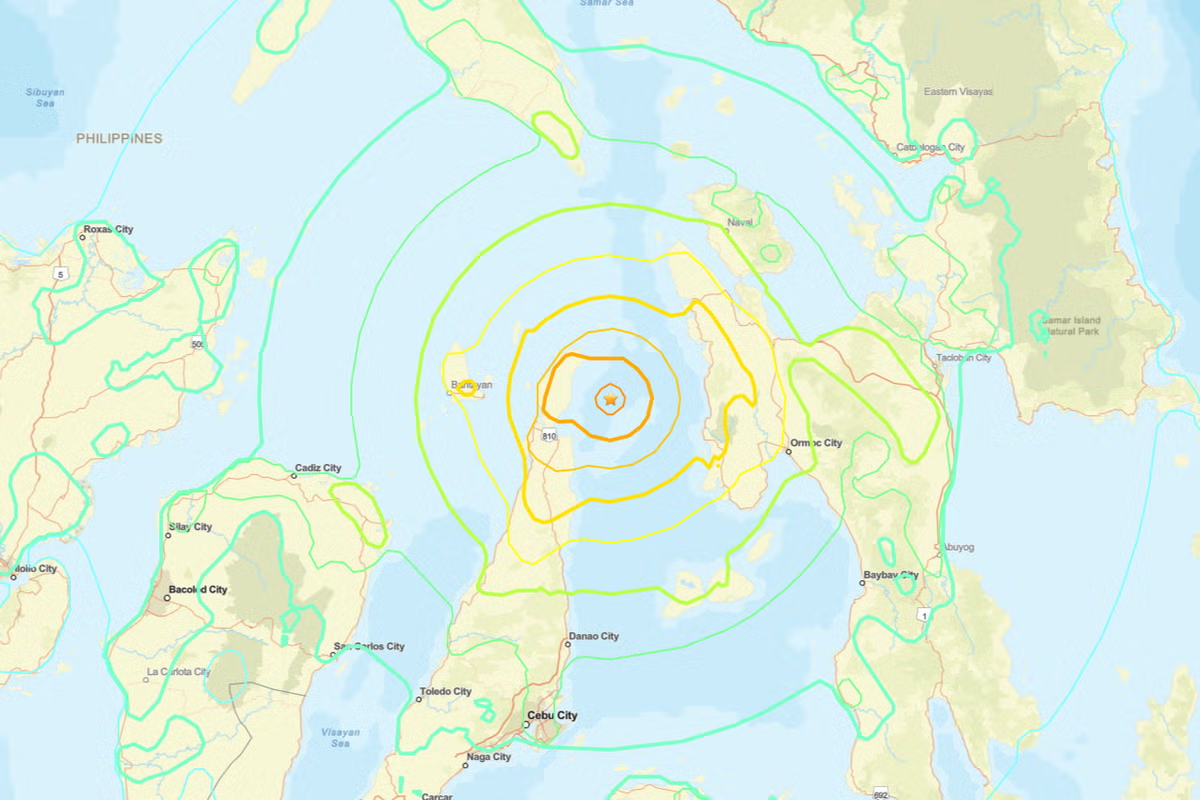
CEBU, Philippines — A powerful and shallow magnitude 6.9 earthquake tore through the central Philippines late Tuesday night, killing at least 69 people and unleashing a fresh wave of devastation on a province still reeling from a deadly tropical storm.
The tremors, which struck near 10:00 p.m. local time, sent terrified residents scrambling into the dark as buildings collapsed, roads cracked, and power grids failed across the island of Cebu. In the wake of the catastrophe, officials have placed the entire province under a “State of Calamity” to unlock emergency funds for what is quickly becoming a massive, urgent relief operation.
The death toll, which authorities from the Office of Civil Defense (OCD) warn is “very fluid” and expected to climb, has exposed the region’s vulnerability, with the devastation centered on northern Cebu. The quake’s epicenter was traced to a dangerously shallow depth of just five kilometers, approximately 19 kilometers northeast of the coastal city of Bogo, which has reported the highest number of casualties.
The Human Cost and Desperate Search
The majority of victims were reportedly crushed by collapsing walls and ceilings as the quake hit while most were either sleeping or retiring for the night. Harrowing details have emerged from towns closest to the epicenter:
- Bogo City saw roughly 30 deaths, with search-and-rescue efforts hampered in one mountain village where a landslide buried a cluster of shanties.
- In San Remigio, at least 22 fatalities included uniformed personnel—three Coast Guard officers and a firefighter—who were killed by falling debris while attempting to flee a sports complex where a basketball game was interrupted by the shaking.
- In the town of Medellin, at least ten residents died after their homes gave way.
With over 147 people reported injured and rescue teams struggling to navigate cracked highways and damaged infrastructure, officials have stressed they are still within the critical “golden hour” for finding survivors trapped beneath the wreckage.
A Devastating Double Blow
The disaster represents a heartbreaking double blow for the central Visayas region, which was only days earlier lashed by a tropical storm that left at least 27 people dead and caused widespread power outages.
The declaration of a State of Calamity by the Cebu Provincial Board is a crucial step that enables local government units to impose price freezes on essential goods and quickly access the calamity fund for aid, relief, and rehabilitation.
Initial assessments paint a picture of widespread destruction: two seaports are non-operational, water systems in towns like San Remigio are damaged, and essential services remain severed in multiple municipalities. Historic structures, including a centuries-old Catholic church in Daanbantayan, have also sustained significant damage, a painful loss of cultural heritage alongside the human tragedy.
As aftershocks continue to rattle the island, thousands of traumatized residents have spent the night huddled in open fields, too terrified to return to what remains of their homes. The tremor serves as a stark, violent reminder of the Philippines’ position on the Pacific’s volatile “Ring of Fire,” forcing a national reckoning with infrastructure safety and disaster preparedness in one of the world’s most seismically active regions. The nation now watches and waits as the toll of the latest natural disaster continues to rise.