
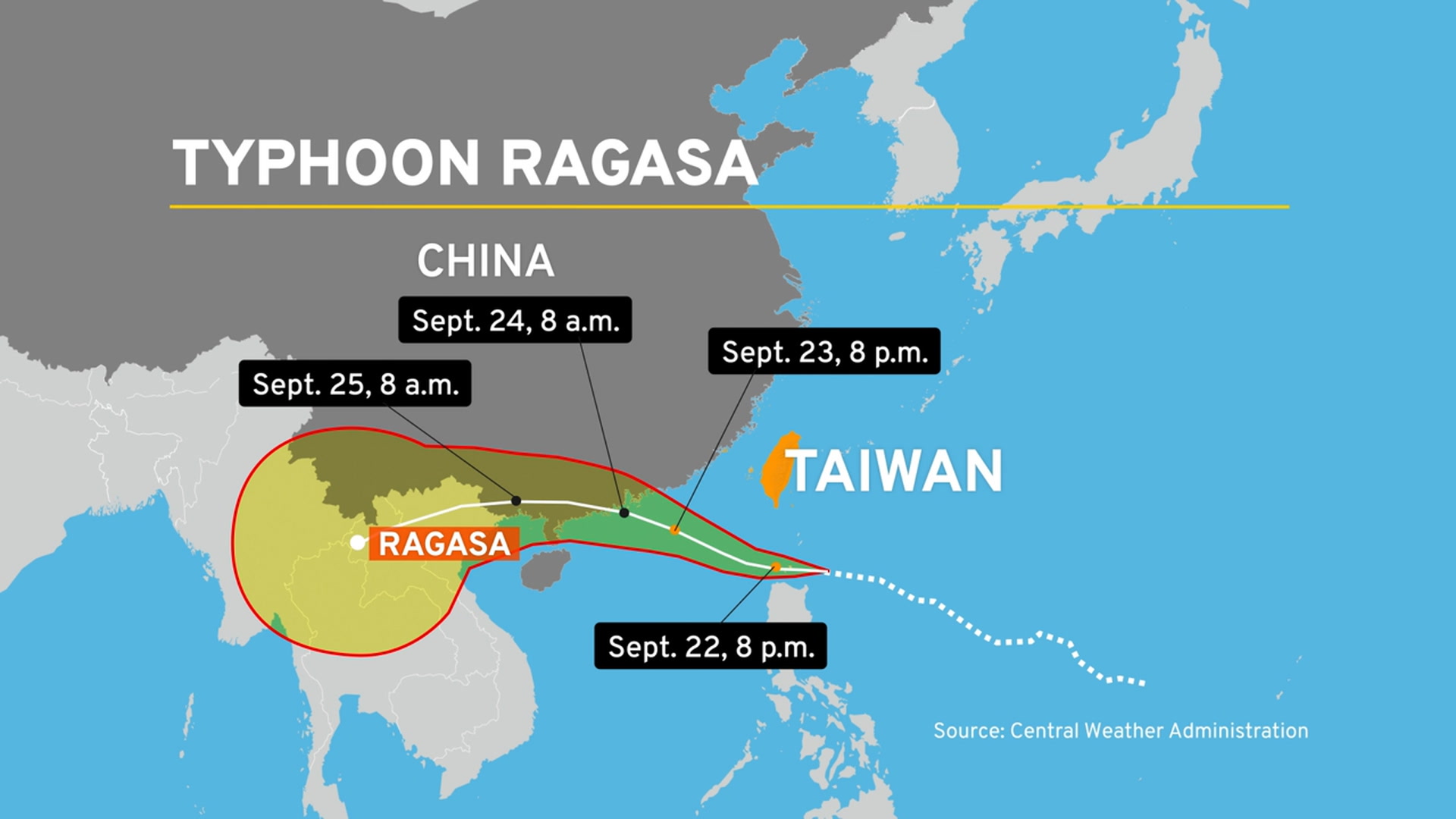
TAIPEI — In a tragic display of a super typhoon’s destructive power, a decades-old barrier lake in eastern Taiwan has burst its banks, unleashing a torrent of floodwaters that left at least two people dead and dozens missing. The powerful storm, named Ragasa, is now barreling towards China, where authorities are bracing for what is being called the strongest storm to hit the mainland in a decade.
The catastrophe unfolded in Taiwan’s Hualien County, where torrential rains from the outer bands of Super Typhoon Ragasa caused the Mataian Creek barrier lake to overflow. The surge of water was so powerful it washed away a bridge and submerged the nearby town of Guangfu, with water levels reaching the second floor of some homes. Rescuers are now in a frantic search for the missing, and over 260 people were trapped on higher ground.
Typhoon Ragasa, which has been described as the most powerful storm of the year, has already left a trail of destruction across the Philippines, where it has killed at least three people. Now, with sustained winds of 220 kilometers per hour (137 mph), it is on a direct path towards southern China’s densely populated Guangdong province. Authorities in Hong Kong, a global financial hub in the storm’s path, have issued their highest storm warning, comparing the approaching threat to some of the most destructive storms in the city’s recent history.
In response, China has launched a massive, coordinated effort to prepare for the storm’s arrival. Over 400,000 residents in Guangdong province, particularly those in low-lying and flood-prone areas, are being relocated to safety. Schools and businesses have been shuttered, and flights and train services have been canceled. The measures underscore the immense scale of the threat and the government’s resolve to minimize casualties.
The storm’s fury in Taiwan and its looming presence in China serve as a grim reminder of the increasing intensity of extreme weather events. While the people of Taiwan begin the long process of recovery, China is facing a monumental challenge that will test its infrastructure and emergency response capabilities in a way not seen in years.