
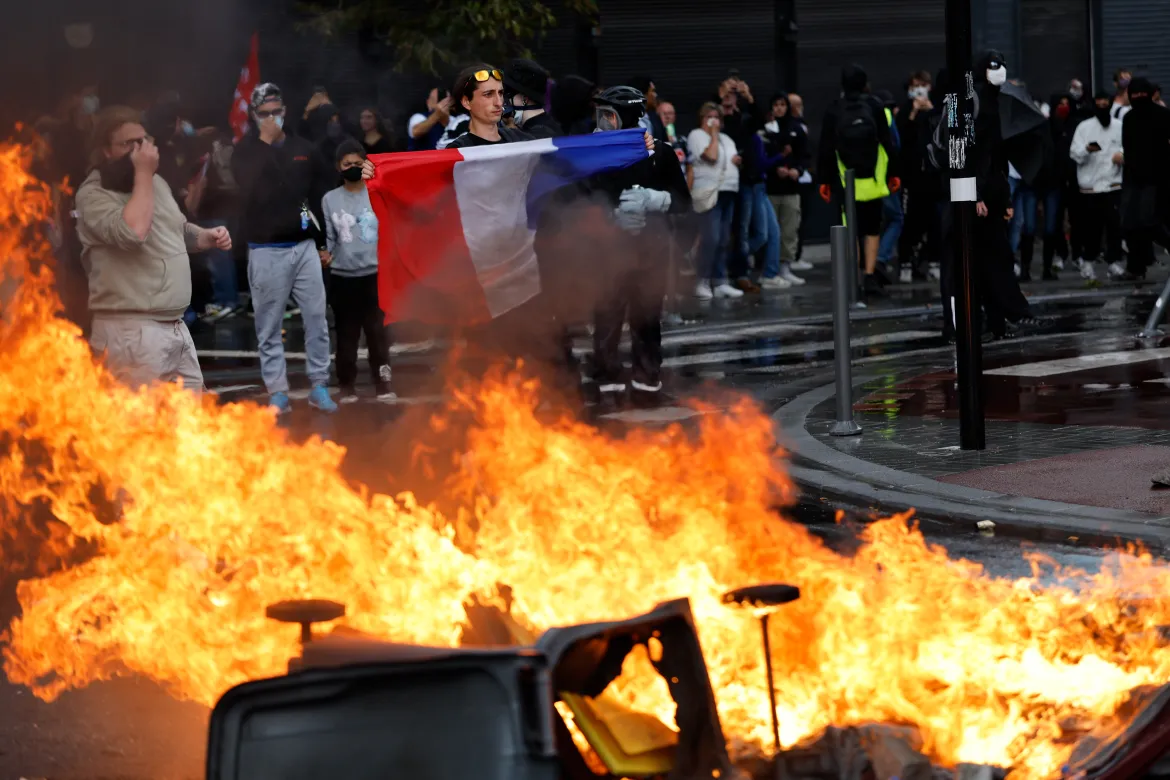
In a forceful and unified rebuke of government austerity plans, hundreds of thousands of workers across France have launched a massive, coordinated strike, bringing essential public services to a grinding halt and plunging the nation into a new political crisis. The nationwide demonstrations, fueled by frustration over budget cuts and economic inequality, have put immense pressure on the new prime minister, Sébastien Lecornu, as he attempts to navigate a deeply fractured political landscape.
The strike, heralded by unions as the largest day of protest in years, saw an estimated 600,000 to 900,000 people take to the streets in over 250 demonstrations across the country. In a rare show of unity, major trade unions brought together a diverse coalition of workers—from teachers and hospital staff to transport workers and pharmacists—who feel the burden of the government’s fiscal policies falls squarely on their shoulders.
“The anger is huge, and so is the determination,” declared Sophie Binet, the head of the powerful CGT union. “My message to Mr. Lecornu today is this: it’s the streets that must decide the budget.”
The public anger is a direct response to a proposed €44 billion budget squeeze aimed at tackling France’s ballooning public debt. The deeply unpopular austerity measures, which included a proposed freeze on welfare spending and cuts to public services, already cost Lecornu’s predecessor, François Bayrou, his job after he lost a no-confidence vote earlier this month. While Lecornu has vowed to scrap some of the most widely despised proposals, unions remain skeptical that he will reverse the core of the austerity plan.
The strike’s impact was immediate and widespread. Nearly half of all teachers in Paris walked off the job, with many schools closed and some high school entrances blockaded by students carrying signs that read, “Tax the rich.” In the transportation sector, regional trains and the Paris Metro were heavily disrupted, forcing commuters to find alternative routes. In a striking sign of discontent, up to nine out of 10 pharmacies were closed as pharmacists joined the protest.

The day of action serves as a brutal baptism of fire for Prime Minister Lecornu, who was appointed by President Emmanuel Macron just last week as the third head of government in less than a year. His position is precarious; with no absolute majority in parliament, he must try to find a compromise on the budget that appeases both the protesting masses and a divided legislature.
The protests, however, are not just about a single budget. They are a manifestation of a deeper crisis of public trust in Macron’s pro-business agenda. As one public sector worker put it, “France is one of the few countries that still has a proper social security system, but year after year it is being eroded by funding cuts. We’re being blamed for the high public debt when it’s Macron’s tax breaks to businesses that have damaged public finances.”
For now, the streets of France have delivered a powerful and unmistakable message. The coming weeks will be a test of whether the new government can find a way to compromise, or if the political chaos that has gripped the nation will continue, with the fate of the French economy hanging in the balance.