
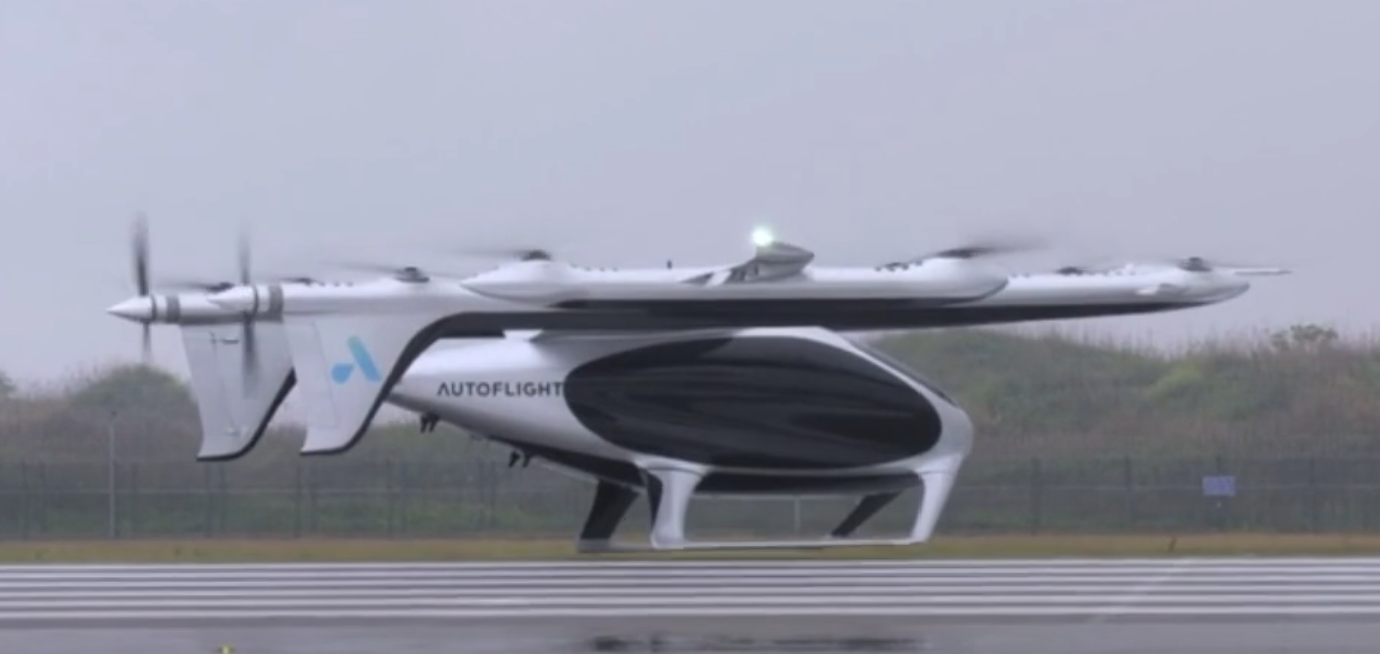
CHANGCHUN, CHINA – The thrilling promise of a new era of personal air travel was brought to a jarring halt on Tuesday, as two “flying cars” crashed into each other in a spectacular mid-air collision during a rehearsal for a major Chinese air show. While the crash resulted in no fatalities, it ignited a fire on one of the aircraft and cast a pall of uncertainty over an industry that has soared on a wave of ambition and hype.
The incident occurred at the Changchun Air Show in northeastern China, where two electric vertical takeoff and landing (eVTOL) vehicles, manufactured by Xpeng AeroHT, were practicing a close-formation drill. According to a company statement, the aircraft “came into contact due to insufficient clearance,” a miscalculation that sent one of the sleek vehicles spiraling to the ground. Footage from the scene, which circulated on Chinese social media, showed black smoke billowing from the wreckage as fire trucks rushed to extinguish the flames.
The accident is a sobering reality check for a burgeoning industry that has been aggressively promoted by Beijing as a key pillar of its “low-altitude economy.” Xpeng AeroHT, a subsidiary of the Chinese electric vehicle giant Xpeng, is a leading player in this field. The company has already amassed thousands of pre-orders for a modular flying car system priced at around $300,000, with plans for mass production and delivery to begin by 2026.
While the company quickly assured the public that “all personnel at the scene are safe,” conflicting reports emerged. Some sources, citing a company employee, stated that at least one pilot suffered minor injuries, highlighting the inherent dangers in a technology still in its infancy. For a sector that has long faced public skepticism over safety and regulation, the televised crash is a devastating setback.
Industry analysts are already warning that the incident will force a hard reset for the eVTOL industry, which has so far been focused on demonstration flights and ambitious production timelines. The crash serves as a powerful reminder that the path to a future of flying cars is not only a matter of engineering innovation but also of meticulous regulation and a meticulous attention to safety. For Xpeng and its competitors, the incident may ground some of their highest ambitions, proving that in the race to the skies, even a small mistake can have a catastrophic impact.