
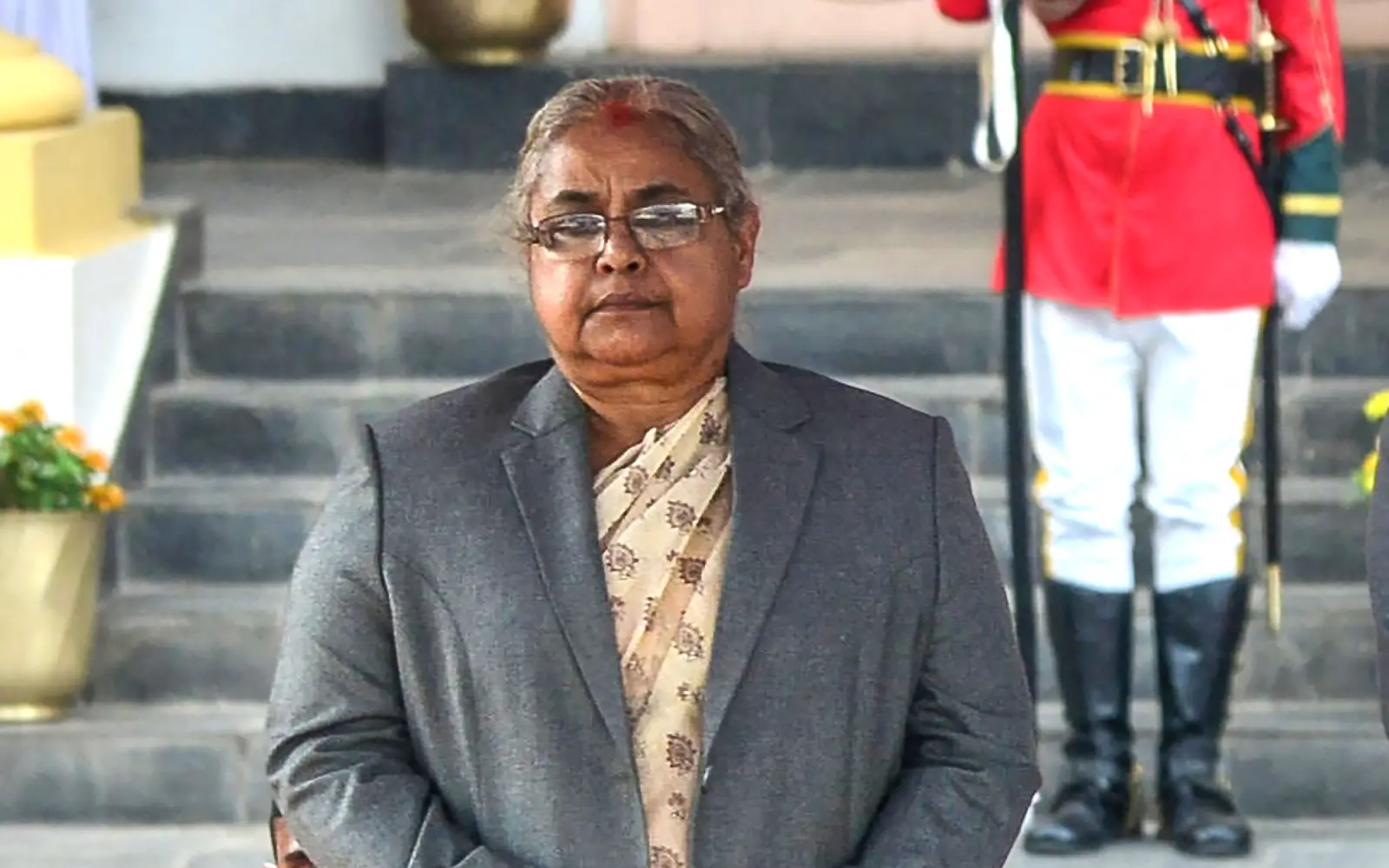
KATHMANDU — Nepal’s newly appointed interim Prime Minister, Sushila Karki, has pledged to hand over power within six months, setting a tight timeline for new elections that will test the country’s ability to navigate its current political crisis. The former Supreme Court Chief Justice, who made history as Nepal’s first female prime minister, now faces the daunting task of stabilizing a nation shattered by a week of deadly protests and political turmoil.
Karki’s appointment comes after a youth-led “Gen Z” uprising forced the resignation of her predecessor and the dissolution of parliament. The protests, initially sparked by a social media ban, quickly escalated into a broader rejection of political corruption and nepotism. The violence, which saw government buildings and politicians’ homes set on fire, left dozens dead and highlighted a deep-seated public fury with the country’s entrenched political class.
“I did not wish for this job. It was after voices from the streets that I was compelled to accept,” Karki said, speaking for the first time since being sworn into office on Friday. Her mandate is clear: to restore law and order, and to pave the way for a new government by holding fresh elections by March 5, 2026. The president’s office, in a formal notice, has given her a constitutional mandate to do so.
While Karki’s reputation as an independent and anti-corruption jurist has been widely welcomed by the protesters and the international community, the path to a stable democracy is fraught with challenges. The country’s political parties are already in an uproar over the dissolution of parliament, with many denouncing the move as “unconstitutional” and a “blow to democracy.”
For a nation that has seen over a dozen governments since 2008, the prospect of a swift, peaceful transition is far from guaranteed. The interim government will have to navigate deep political fissures, quell lingering public anger, and rebuild public trust in the electoral process—all within a six-month window. As Karki herself admitted, “We have to work according to the thinking of the Gen Z generation. What this group is demanding is the end of corruption, good governance and economic equality.”
The coming months will be a critical test for Nepal’s democracy. While Karki’s appointment represents a glimmer of hope and a promise of a new direction, her true legacy will be defined not by her time in power, but by her ability to successfully hand it over.