
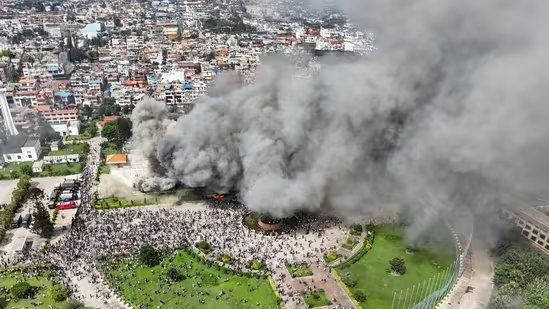
KATHMANDU, NEPAL – The symbols of Nepal’s fractured democracy have been set on fire by a youth movement of unprecedented scale. Hours after Prime Minister KP Sharma Oli resigned in the face of relentless nationwide protests, the federal parliament building and the Supreme Court were set ablaze, a fiery act of defiance that has plunged the Himalayan nation into a state of political turmoil and profound uncertainty.
The fiery end to a week of protest was the climax of what began as a digital outcry. What started as a “Gen Z” movement against a government ban on social media platforms quickly morphed into a furious, nationwide rebellion against deeply rooted corruption, political stagnation, and a ruling class widely seen as living in opulence while the country’s youth face a 20% unemployment rate.
The chaos reached a deadly crescendo on Monday, when security forces clashed with demonstrators in Kathmandu, leaving at least 19 dead and hundreds injured. The violence, described by eyewitnesses and human rights groups as a brutal crackdown, only fueled the public’s rage.
“It is not about the social media ban anymore,” said 23-year-old student activist Yujan Rajbhandari. “This is about justice for the 19 youths who were murdered by the state’s bullets. We are not leaving until we see accountability and an end to this corrupt regime.”
Faced with a nation in open revolt, Prime Minister Oli, a veteran politician who had served four terms, submitted his resignation on Tuesday, citing “extraordinary circumstances.” The announcement was initially met with cheers, but the jubilation was short-lived. In defiance of a city-wide curfew, protesters surged towards the main government complex, where they torched the parliament building and other key government and political offices. The home of the prime minister and other senior leaders were also set on fire, with protesters reportedly attacking and assaulting several ministers.
The inferno at the heart of Kathmandu is more than just a fire. It is a powerful metaphor for a generation’s complete loss of faith in a political system that was meant to bring stability after the end of the monarchy in 2008. The coming days will be a test of whether Nepal can find a new path forward—or if the fire of this fury will consume what is left of its fragile democracy.