
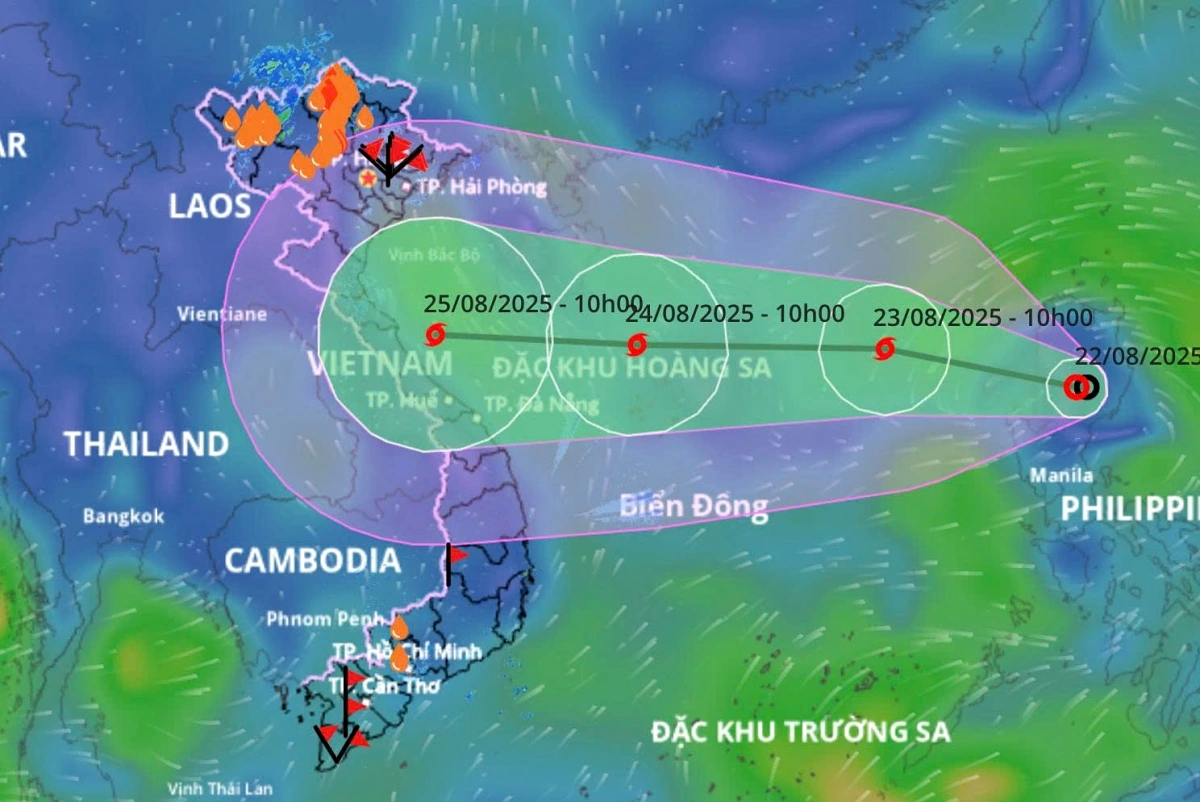
In a powerful and destructive show of force, Typhoon Kajiki, the most powerful storm to hit Vietnam this year, has made landfall on the central coast, unleashing torrential rains and winds that have forced the evacuation of over half a million people. The storm, which comes on the heels of several other destructive typhoons, has shut down airports, closed schools, and triggered a massive, government-led emergency response.
Kajiki, which had been building strength over the South China Sea, struck the coast of Nghe An and Ha Tinh provinces with wind speeds of up to 133 km/h (82 mph). While the winds have since begun to taper off, the threat is far from over. Vietnam’s weather agency has warned that rainfall could reach 500mm (nearly 20 inches) in some areas, a forecast that has prompted fears of widespread flooding and deadly landslides.
“It’s terrifying,” said Dang Xuan Phuong, a resident of the coastal town of Cua Lo, who described seeing waves “as tall as 2 meters” and roads completely submerged in water.
In a dramatic and coordinated effort, the Vietnamese government had ordered the evacuation of more than 586,000 people from central provinces. Prime Minister Pham Minh Chinh issued an urgent directive, calling for the immediate relocation of residents from dangerous coastal areas. In preparation for the storm’s arrival, more than 16,500 soldiers and 107,000 paramilitary personnel were mobilized to assist in the evacuation and stand by for search and rescue operations.
The storm’s impact has been immediate and severe. State media reports indicate that power has been cut in several areas, roofs have been blown off homes, and floating fish farms have been washed away. Two airports in Thanh Hoa and Quang Binh provinces were shut down, and both Vietnam Airlines and Vietjet canceled dozens of flights to and from the region.
The current typhoon is the fifth to hit the country this year, and government officials have warned that it could be as powerful as Typhoon Yagi, which last year killed hundreds and caused billions of dollars in damage. For a nation that is no stranger to destructive storms, the constant onslaught of severe weather has put a tremendous strain on its infrastructure and its people.
As Kajiki moves inland and weakens over Laos and northern Thailand, the focus for Vietnamese authorities will shift to the aftermath: providing aid to the displaced, restoring power and essential services, and preventing further casualties from the risk of floods and landslides. For the thousands of families now in temporary shelters, the long and difficult road to recovery has just begun.