
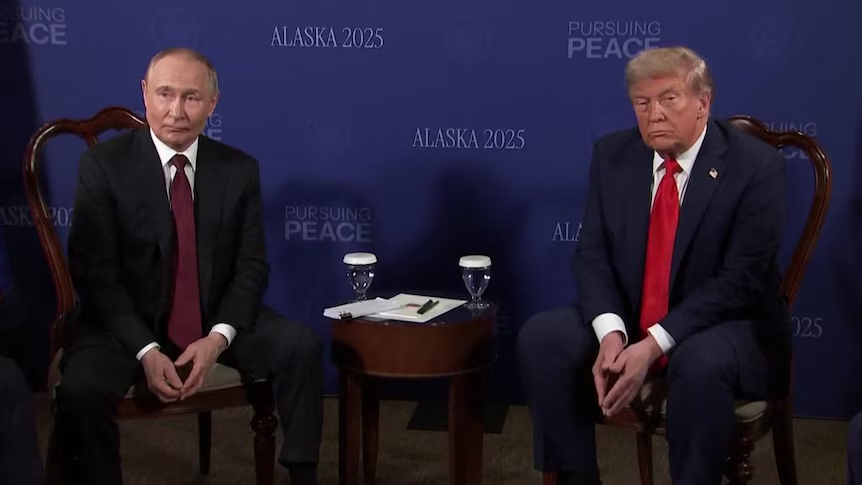
In the wake of a highly-anticipated summit with President Donald Trump in Alaska, Russian President Vladimir Putin has hailed the talks as “very useful” and a “constructive atmosphere of mutual respect.” The Russian leader’s positive assessment comes as President Trump has unexpectedly pivoted away from his pre-summit demand for an immediate ceasefire in Ukraine, instead now advocating for a direct “peace agreement,” a position that aligns more closely with Moscow’s long-held demands.
In a press conference following the three-hour meeting, Putin told reporters that the discussions, the first between the two leaders on U.S. soil since Russia’s full-scale invasion of Ukraine, had been “thorough” and that the two sides had reached a number of “agreements,” though he did not specify what they were. Putin also used the opportunity to suggest that their next meeting could be in Moscow, a proposal Trump called “interesting” but said would generate “a little heat” at home.
The most significant takeaway from the summit, however, was not in what was announced, but in the shift in the U.S. position. After previously stating that he “won’t be happy” if he left Alaska without a ceasefire, Trump took to his social media platform, Truth Social, to announce a new approach.
“It was determined by all that the best way to end the horrific war between Russia and Ukraine is to go directly to a Peace Agreement, which would end the war, and not a mere Ceasefire Agreement, which often times do not hold up,” Trump wrote.
The sudden pivot from a ceasefire—a temporary halt in fighting that has been a priority for Ukraine and its European allies—to a comprehensive peace agreement, which would require Kyiv to make difficult and potentially territorial concessions, has sent shockwaves through the diplomatic community. Analysts noted that this new stance falls in line with what Putin has been saying for months, that any lasting peace must address the conflict’s “root causes.”
While Trump called the talks “extremely productive” and said “many points” had been agreed to, he also conceded that “there’s no deal until there’s a deal,” and that one “most significant” issue remained unresolved.
The outcome of the summit is being viewed very differently in Washington and Moscow. For the Kremlin, the meeting was a major diplomatic victory, a reward for its aggression that has brought its leader back to the global stage after years of isolation. The optics of Putin being welcomed on American soil with a red-carpet reception and a ride in the presidential limousine has been a major boost for state media.
For Trump, the summit was a test of his “master dealmaker” reputation. While he left without a concrete agreement, his shift in strategy has now set the stage for his next move: a meeting with Ukrainian President Volodymyr Zelensky, who is scheduled to visit Washington on Monday. The world will be watching to see if a peace deal that satisfies both sides is possible, or if the diplomatic dance is merely providing cover for a conflict that shows no signs of slowing down.