
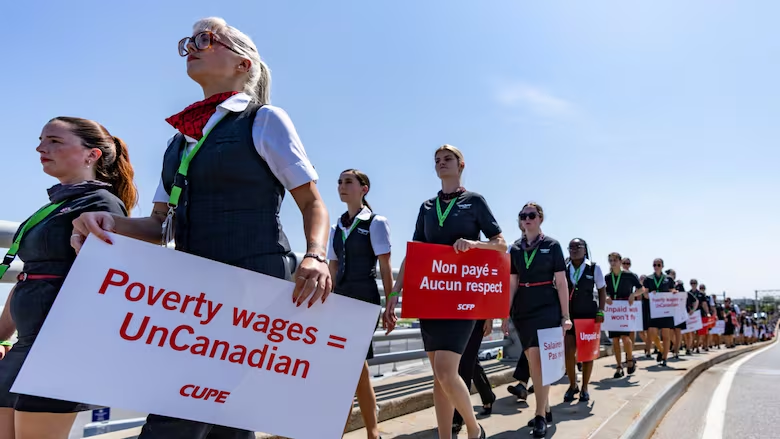
Air Canada’s operations have ground to a halt as a strike by more than 10,000 flight attendants entered its first full day, plunging peak summer travel into chaos and leaving thousands of passengers stranded across the globe. The work stoppage, which began at 1 a.m. EDT Saturday, follows the breakdown of months of contentious contract negotiations between the airline and the Canadian Union of Public Employees (CUPE).
The union, which represents flight attendants for both Air Canada and its low-cost subsidiary Air Canada Rouge, walked off the job after a deadline to reach a new agreement passed. In response, Air Canada announced it had suspended its entire schedule of approximately 700 daily flights, advising customers to “not to go to the airport” unless they had a confirmed booking on another carrier. The shutdown is affecting an estimated 130,000 customers per day, including a significant number of Canadians traveling abroad.
The core of the dispute centers on two key issues: wages and compensation for unpaid ground duties. While Air Canada has stated its latest offer included a 38% increase in total compensation over four years, the union has rejected the proposal, calling it “below inflation and below market value.” Flight attendants are also demanding pay for ground duties such as boarding and deplaning, which are currently uncompensated, a practice the union argues is unfair.
“We’re here to bargain a deal, not to go on strike,” said CUPE spokesman Hugh Pouliot, adding that the union wants a fair deal and has rejected requests from both the airline and the federal government to enter into binding arbitration.
The strike’s ripple effect has been felt worldwide. At major Canadian airports in Toronto, Montreal, and Vancouver, picket lines have formed, while frustrated passengers have been left scrambling to find alternative flights. For many, rebooking has been a near-impossible task, as alternative carriers are already operating at full capacity during the busy summer travel season.
“At this point, it’s just a waiting game,” said Alex Laroche, a Montreal resident whose long-planned European vacation is now in limbo. He initially was upset at the union, but after learning about the wage dispute, he said he “had a change of heart,” adding that the flight attendants’ wage is “barely livable.”
The strike’s duration is uncertain, but the impact will be severe. Air Canada’s Chief Operating Officer Mark Nasr has warned that even if a tentative deal is reached quickly, it could take up to a week to fully restart operations. With Canada’s economy heavily reliant on its national airline, there is a growing chorus of business leaders urging the federal government to intervene and force a resolution.
For now, travelers are being advised to check the airline’s website for updates, as the standoff continues with no new talks scheduled. The strike is not just a battle over pay and work conditions; it is a powerful demonstration of the fragile nature of air travel and the deep-seated grievances that can bring a major airline to a complete standstill.