
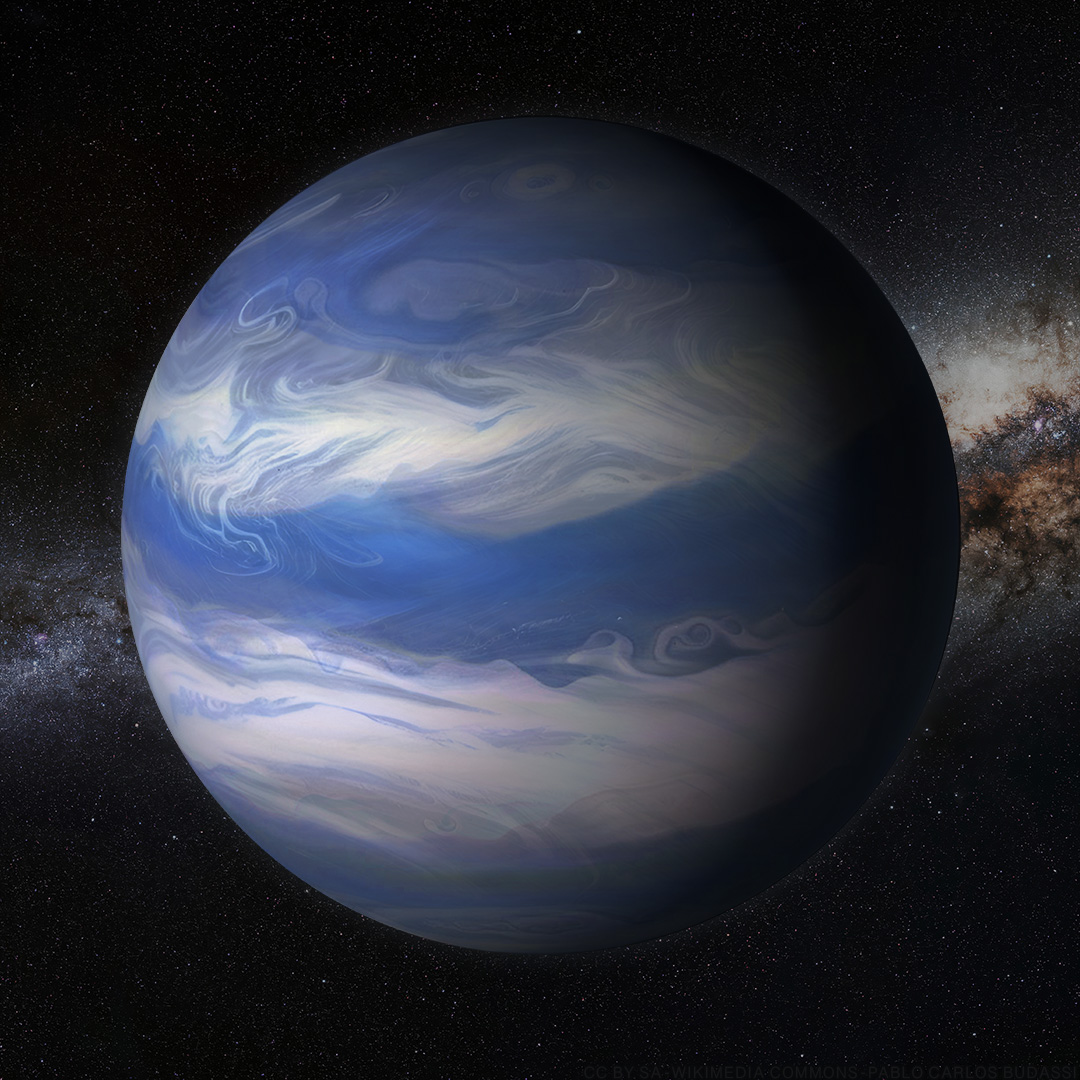
Astronomers using the powerful James Webb Space Telescope (JWST) have found the strongest evidence to date of a giant gas planet orbiting a star in the Alpha Centauri system, our closest stellar neighbor. The discovery, which places a potential Saturn-mass world just four light-years from Earth, is a landmark finding that brings a new level of detail to the ongoing search for exoplanets.
The new observations, detailed in a series of two papers accepted for publication in The Astrophysical Journal Letters, point to a potential gas giant orbiting Alpha Centauri A, one of two sun-like stars in the triple-star system. This is a monumental achievement, as the Alpha Centauri system’s proximity and brightness have long made it a challenging target for planet-hunting.
“If confirmed, the potential planet seen in the Webb image of Alpha Centauri A would mark a new milestone for exoplanet imaging efforts,” said Aniket Sanghi, a researcher at Caltech and co-lead author of the papers. “Of all the directly imaged planets, this would be the closest to its star seen so far. It’s also the most similar in temperature and age to the giant planets in our own solar system, and nearest to our home, Earth.”

The team used the JWST’s Mid-Infrared Instrument (MIRI) and its coronagraphic mask to block the overwhelming glare from Alpha Centauri A, allowing them to detect an object a stunning 10,000 times fainter. The candidate planet appears to be orbiting its star at a distance of about two astronomical units, or twice the distance between the Sun and Earth.
While the planet candidate lies within the star’s “habitable zone”—the region where liquid water could exist on a planet’s surface—researchers say that as a gas giant, it is highly unlikely to support life as we know it. The sheer size of the potential planet, estimated to be around the mass of Saturn, would likely prevent any smaller, rocky planets from surviving in stable orbits in the same region, much like Jupiter and Saturn shape our own solar system.
The initial detection was made in August 2024, but follow-up observations in early 2025 did not reveal the same object. However, Sanghi and his team ran millions of simulations to account for the planet’s orbit and found that the non-detection was not surprising. “We found that in half of the possible orbits simulated, the planet moved too close to the star and wouldn’t have been visible to Webb,” Sanghi said.
The discovery has generated excitement not just in the scientific community but also in popular culture. The Alpha Centauri system is famously the setting for the fictional moon Pandora in the Avatar films. The real-life detection of a potential gas giant in the system, even if it’s not a direct match to the film, underscores the rich scientific and cultural significance of our nearest stellar neighbors.
For now, the astronomers are calling for more observations to definitively confirm the planet’s existence. If confirmed, the finding would challenge our understanding of how planets form and survive in a chaotic, multi-star environment, and would offer a tantalizing glimpse into a new world right in our cosmic backyard.