
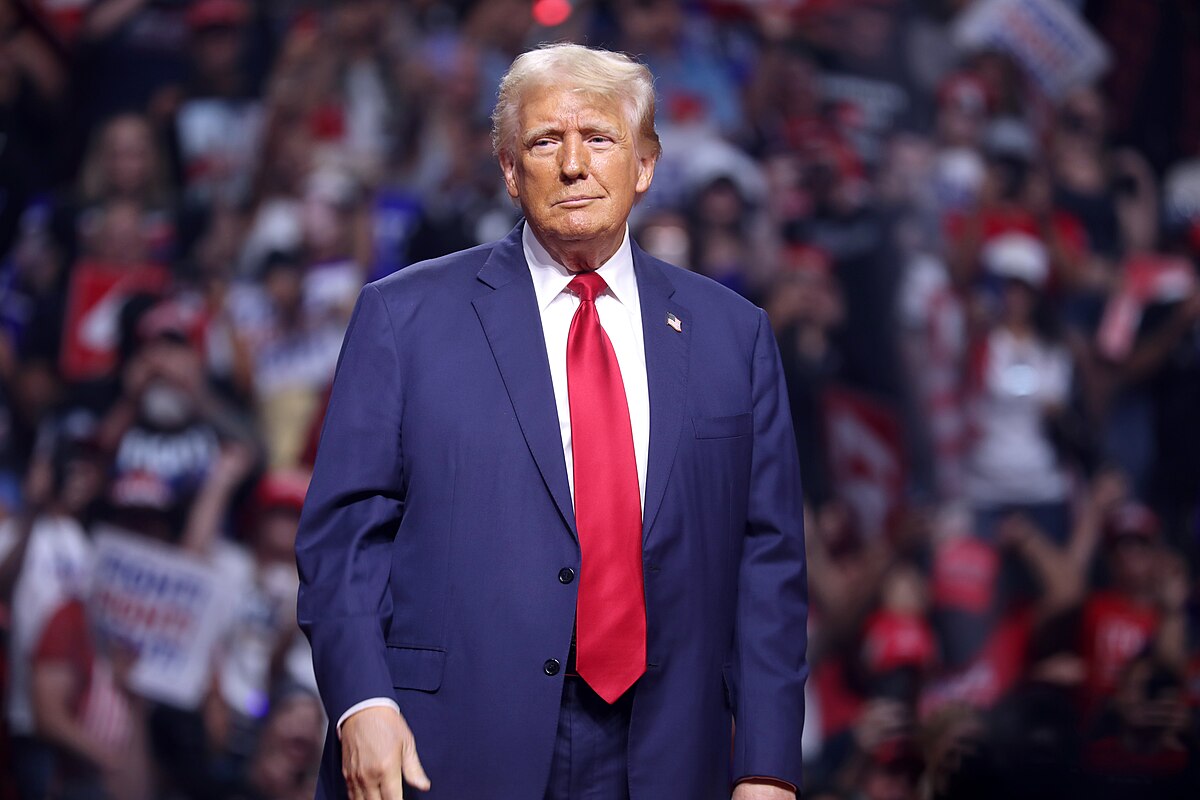
President Donald Trump today fired Erika McEntarfer, the head of the Bureau of Labor Statistics (BLS), just hours after a new jobs report showed a dramatic slowdown in hiring, a development that rattled global markets and fueled concerns about the economic impact of the administration’s new, sweeping tariffs. In a stunning move that has been widely condemned by economists and a bipartisan group of former officials, Trump accused McEntarfer, a holdover from the previous administration, of rigging the data for political purposes.
The July employment report, released this morning, was a significant disappointment. The BLS reported that the U.S. economy added just 73,000 jobs last month, far below analyst expectations. Compounding the bad news, the agency made significant downward revisions to the May and June numbers, revealing that 258,000 fewer jobs were created in those two months than had been previously estimated.
President Trump, in a post on his social media platform, responded with swift and unprecedented action. He claimed without evidence that the jobs numbers were “RIGGED” to make him look bad and that McEntarfer, who was appointed by his predecessor, was a “Biden Political Appointee” who should be immediately fired. Labor Secretary Lori Chavez-DeRemer later confirmed on X that McEntarfer was no longer leading the bureau.
The charge of data manipulation is a highly explosive one that strikes at the heart of the U.S. government’s economic data, long considered the “gold standard” of global economic measurement. Economists, Wall Street investors, and policymakers have for decades relied on this data as being free from political interference.
McEntarfer’s removal was met with a chorus of condemnation. A group calling itself “Friends of BLS,” which includes two former BLS commissioners (one appointed by Trump in his first term), issued a statement calling the rationale for the firing “without merit.” The group stated that the move “undermines the credibility of federal economic statistics that are a cornerstone of intelligent economic decision-making.”
The weak jobs report and the firing of the BLS chief came on a day when markets were already in turmoil. Wall Street had its worst day since May, with the S&P 500, Dow Jones Industrial Average, and Nasdaq all experiencing sharp drops. Analysts pointed to a “one-two punch” of the dismal jobs data and the economic uncertainty created by the administration’s new tariff policy, which recently imposed steep duties on imports from dozens of countries and trading blocs.
Economists have suggested that the slowing job growth and increasing inflation could be a direct result of these tariffs, which raise the cost of imported goods and create uncertainty for businesses, prompting them to slow hiring and investment. Morgan Stanley’s chief economic strategist, Ellen Zentner, noted that what “had looked like a Teflon labor market showed some scratches this morning, as tariffs continue to work their way through the economy.”
While the administration has argued that its policies are designed to protect American jobs and manufacturing, the immediate impact, according to analysts, appears to be a weakening economy and market volatility. The firing of the official responsible for the data that measures this economic health only adds a new and dangerous layer of uncertainty, threatening to erode trust in core American institutions and the very facts used to understand the nation’s economic condition.