
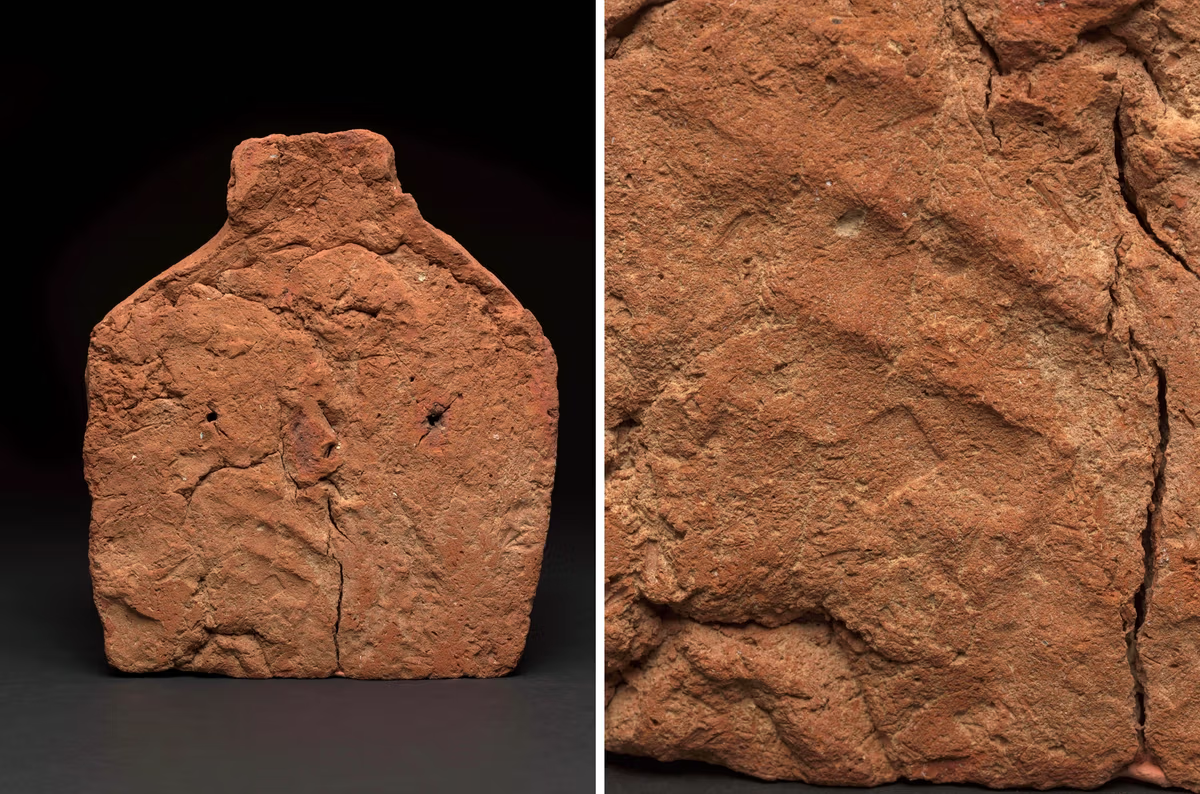
In a discovery that offers an extraordinary, intimate glimpse into the life of an ancient Egyptian artisan, researchers at the UK’s Fitzwilliam Museum have unveiled a remarkably preserved 4,000-year-old human handprint on a funerary object known as a “soul house.” The rare imprint, found during preparations for an upcoming exhibition, provides a tangible connection across millennia, directly linking us to the individual who crafted this intricate clay model.
The complete handprint was discovered on the underside of a “soul house,” a type of miniature clay building designed to be placed in ancient Egyptian burials. Dating back to approximately 2055–1650 BCE, during Egypt’s First Intermediate Period and Middle Kingdom, these objects typically featured an open front where offerings of food, like bread or an ox’s head, would be laid out. They were believed to serve as dwellings for the deceased’s soul or as places for mourners to leave sustenance.
Dr. Helen Strudwick, a senior Egyptologist and curator at the Fitzwilliam Museum, expressed her astonishment at the find. “We’ve spotted traces of fingerprints left in wet varnish or on a coffin in the decoration, but it is rare and exciting to find a complete handprint underneath this soul house,” she stated. “This was left by the maker who touched it before the clay dried. I have never seen such a complete handprint on an Egyptian object before. You can just imagine the person who made this, picking it up to move it out of the workshop to dry before firing.”
The meticulous analysis of the “soul house” by Fitzwilliam experts revealed its sophisticated construction. The potter first created a framework of wooden sticks, then coated it with wet clay to form a two-story building supported by pillars. Staircases were intricately formed by pinching the wet clay. During the firing process, the wooden framework would have burned away, leaving the hollow spaces seen in the finished artifact. The handprint was likely left when the still-wet clay model was carefully moved from the workshop to a drying area before being placed in a kiln.
This discovery is particularly significant because, unlike many other aspects of ancient Egyptian life documented through reliefs and papyri, relatively few details about the daily work and lives of ancient potters survive. The handprint offers a unique, direct link to one such individual. “Things like this take you directly to the moment when the object was made and to the person who made it, which is the focus of our exhibition,” Dr. Strudwick added.
While fingerprints have been found on other ancient artifacts, including some of the world’s oldest ceramics dating back 25,000 years, a complete and well-preserved palm print on an object of this age from Egypt is exceptionally rare. It underscores the potential for new discoveries even on long-held museum pieces, often overlooked in areas like the underside of an object.
The “soul house” featuring this extraordinary human imprint will be a centerpiece of the Fitzwilliam Museum’s forthcoming exhibition, “Made in Ancient Egypt,” which opens to the public on October 3, 2025. The exhibition aims to shed light on the lives and work of the countless, often anonymous, craftspeople who shaped the ancient Egyptian world. For visitors, this ancient handprint promises a deeply personal and poignant connection to a civilization thousands of years removed, yet momentarily brought to life by a single, accidental touch.