
In a significant shift aimed at addressing the escalating humanitarian catastrophe in the Gaza Strip, the Israeli military announced Sunday a daily “tactical pause” in its operations across key areas and the opening of new aid corridors. The move comes after months of intense international pressure and dire warnings from aid organizations that mass starvation is gripping the Palestinian enclave.
The Israel Defence Forces (IDF) stated that military activities would be suspended daily between 10 AM and 8 PM local time in three specific areas: Muwasi, Deir al-Balah, and Gaza City. This “tactical pause,” effective from Sunday until further notice, aims to “increase the scale of humanitarian aid” entering the besieged territory. While the military claimed it was not actively operating in these specific zones, recent weeks have witnessed combat activities and aerial strikes there.
Crucially, the IDF also announced the designation of “secure routes” that will operate permanently from 6 AM to 11 PM to facilitate aid organizations in delivering essential supplies to Gaza’s beleaguered population. The military emphasized its readiness to expand these humanitarian efforts “as required,” while reiterating that these measures would continue alongside its ongoing military campaign against Hamas and other militant organizations.
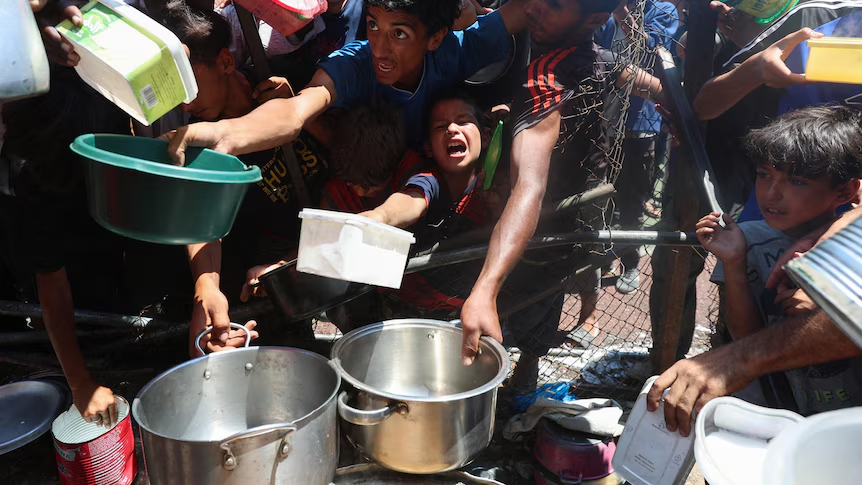
The decision follows prolonged and increasingly urgent warnings from humanitarian specialists about a looming famine, exacerbated by severe Israeli restrictions on aid. International criticism, including from close allies, has mounted in recent weeks, particularly after hundreds of Palestinians were reportedly killed while attempting to access food distribution points.
The humanitarian situation in Gaza is “unbearable and deteriorating sharply,” according to the Red Cross, with food supplies nearly exhausted, the medical system shattered, and an almost complete lack of humanitarian aid reaching those in need. The Gaza Health Ministry has reported that 127 people, including 85 children, have died due to malnutrition since the start of the conflict. The UN World Food Programme (WFP) recently warned that “nearly one in three people is not eating for days at a time.”
On Saturday, Israel had also confirmed its decision to reinstate aid airdrops into crisis-stricken Gaza, an effort coordinated with international aid organizations. These airdrops, along with the newly announced pauses and corridors, are intended to counter what Israel calls a “false campaign promoted by Hamas” regarding starvation in Gaza, arguing that the responsibility for distribution lies with the UN and other international aid groups.
However, UN agencies and humanitarian organizations have consistently countered these claims, stating that Israeli restrictions on aid entry and movement within Gaza have severely hampered their ability to distribute aid effectively. Philippe Lazzarini, head of the UN agency for Palestinian refugees (UNRWA), has described the hunger crisis as “man-made” and criticized aid airdrops as “expensive, inefficient and can even kill starving civilians.” He has urged Israel to “lift the siege, open the gates, and guarantee safe movement and dignified access to those in need.”
While the UN has yet to provide an immediate official response to the specific details of the latest Israeli announcement, it has previously welcomed humanitarian pauses as crucial for scaling up assistance. The true test of this “tactical pause” and the new aid corridors will be their tangible impact on the ground: whether more food, medicine, and essential supplies finally reach the millions of desperate civilians in Gaza, and whether the fighting truly ceases in the designated areas during the announced hours. For the population on the brink of famine, every hour of quiet and every truck of aid offers a desperately needed flicker of hope.