
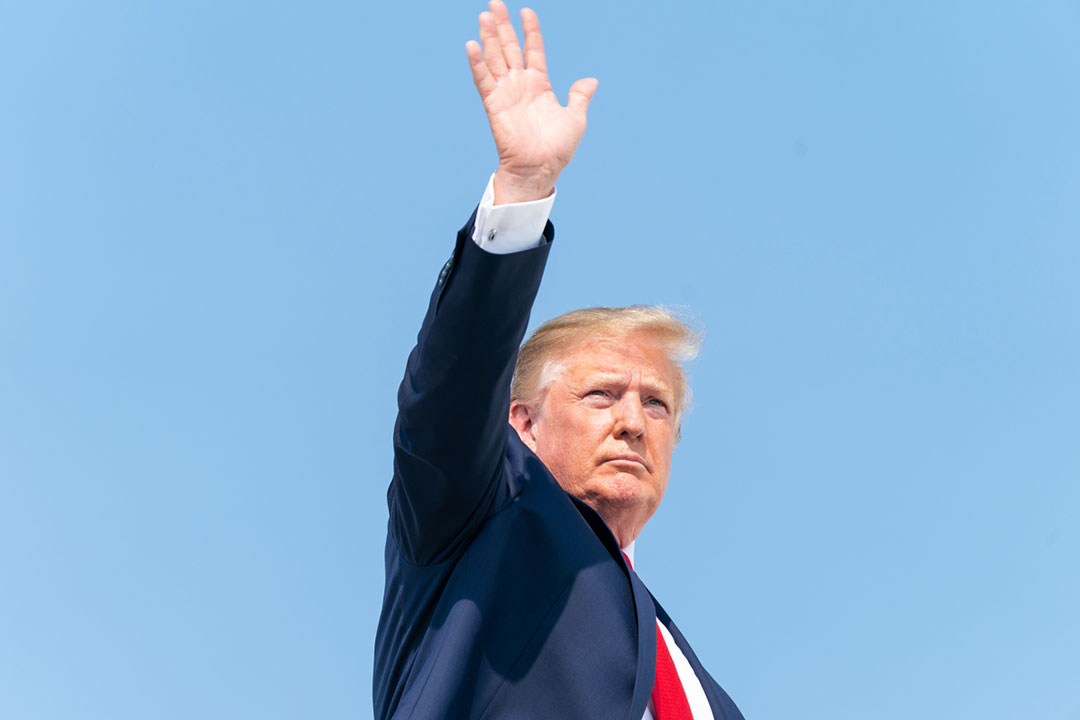
Amidst escalating deadly clashes on their shared border, Thailand and Cambodia have both publicly extended their gratitude to U.S. President Donald Trump for his direct mediation efforts, which saw him personally engage with their leaders. However, despite these diplomatic breakthroughs and stated openness to a ceasefire, the grim reality on the ground tells a different story: heavy shelling and fighting have persisted into a fourth consecutive day, casting a shadow over hopes for an immediate cessation of hostilities.
The unexpected intervention by President Trump, currently on a private visit to his golf resorts in Scotland, unfolded over the weekend. Utilizing his preferred platform, Truth Social, Trump announced that he had spoken to Cambodian Prime Minister Hun Manet and Thailand’s acting Prime Minister Phumtham Wechayachai. “They have agreed to immediately meet and quickly work out a Ceasefire and, ultimately, PEACE!” Trump posted on Saturday, expressing confidence in his “Honor to deal with both Countries.” He also leveraged existing trade negotiations, explicitly stating the U.S. would not pursue deals with either nation if the fighting continued.
Both Southeast Asian nations swiftly acknowledged and welcomed Trump’s involvement. Cambodian Prime Minister Hun Manet confirmed a phone conversation with President Trump, stating that Cambodia “fully agreed to a proposal for an immediate and unconditional ceasefire.” He tasked his foreign minister to coordinate directly with U.S. Secretary of State Marco Rubio and work with Thailand. “I would like to thank Honourable President Donald Trump for his initiative and mediation to find an immediate ceasefire and peace,” Hun Manet declared, adding he hopes Thailand will remain committed to the agreement.
Similarly, Thailand’s acting Prime Minister Phumtham Wechayachai confirmed his conversation with Trump, posting on X that Thailand “agrees in principle to have a ceasefire in place” and “would like to see sincere intention from the Cambodian side.” Phumtham further stated he had requested Trump “to convey to the Cambodian side that Thailand wants to convene a bilateral dialogue as soon as possible.”
However, despite these high-level diplomatic pronouncements, the sounds of war continued to echo across the disputed border regions. Early Sunday morning, AFP journalists in Samraong, Cambodia, near the conflict zone, reported hearing consistent artillery fire. Both sides continued to accuse each other of fresh attacks throughout Saturday and into Sunday.
Cambodia’s Ministry of Defense reported that 13 people, including eight civilians and five soldiers, had been killed on their side, with 71 injured. Thai officials updated their casualty figures, stating 13 civilians and seven soldiers had died in their territory since Thursday, bringing the total death toll to at least 33 across both nations. The conflict has forced massive displacement, with over 138,000 people fleeing border regions in Thailand and more than 35,000 displaced within Cambodia.
The fighting has now reportedly spread to coastal regions near the Gulf of Thailand, approximately 250 kilometers southwest of the main conflict zone around the ancient Preah Vihear temple. Cambodia accused Thailand of firing “five heavy artillery shells” into Pursat province and claimed Thai forces used cluster munitions, a charge Thailand denies. Thailand, in turn, alleged that Cambodia targeted civilian infrastructure, including a hospital.
While President Trump’s intervention has undoubtedly opened a diplomatic channel and secured commitments for talks, the continued shelling underscores the deep-seated nature of the territorial dispute and the difficulty of de-escalating entrenched military positions. The international community, including the UN Security Council, which held an emergency session on Friday, continues to urge an immediate cessation of hostilities and a return to peaceful dialogue.
For now, the thanks extended to President Trump represent a crucial step towards de-escalation, but the ongoing violence serves as a stark reminder that even presidential diplomacy faces immense challenges in halting a “raging war” fueled by decades of historical grievances and nationalist passions. The true test of the mediated peace will come when the guns finally fall silent.