
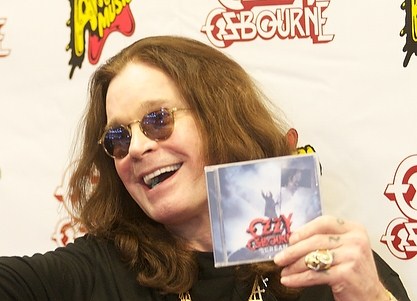
The world of heavy metal is in mourning today as it bids farewell to one of its most legendary and influential figures. Ozzy Osbourne, the iconic frontman of Black Sabbath and a trailblazing solo artist, has died in the UK at the age of 76. His family announced his passing on Tuesday morning, stating he was “with his family and surrounded by love.”
Osbourne’s death comes after a prolonged battle with various health issues, most notably Parkinson’s disease, which he publicly revealed in 2020 but had been living with for nearly six years. The news follows just weeks after what was billed as his final public performance with Black Sabbath, a poignant farewell concert at Villa Park in his hometown of Birmingham, England, that raised millions for charity.
Born John Michael Osbourne in Birmingham in December 1948, “Ozzy” rose to global prominence in the 1970s as the inimitable vocalist for Black Sabbath. Alongside Tony Iommi, Geezer Butler, and Bill Ward, he pioneered the sound of heavy metal, injecting it with a dark, brooding, and often unsettling sensibility that profoundly influenced generations of musicians. Albums like Paranoid, Master of Reality, and Black Sabbath became foundational texts for the genre, featuring iconic tracks like “Iron Man,” “War Pigs,” and “Sabbath Bloody Sabbath.”
Known as the “Prince of Darkness” and the “Godfather of Heavy Metal,” Osbourne’s stage persona was as notorious as his music. From his erratic behavior to the infamous bat-biting incident, he became synonymous with the raw, untamed spirit of rock and roll.
After his departure from Black Sabbath in the late 1970s, Osbourne embarked on a highly successful solo career, launching hits such as “Crazy Train,” “Mr. Crowley,” and “Mama, I’m Coming Home.” He continued to defy expectations, even achieving mainstream recognition and an unexpected level of domesticity with the hit MTV reality show “The Osbournes” in the early 2000s, which showcased his quirky family life with wife Sharon and children Kelly and Jack.
Despite a long history of health challenges, including injuries from a quad bike accident in 2003, multiple surgeries, and bouts with pneumonia, Osbourne continued to perform when physically able. His final performance with Black Sabbath earlier this month was a testament to his enduring spirit and the profound connection he had with his fans.
Tributes from across the music world have poured in, with fellow legends like Elton John, Rod Stewart, and Gene Simmons expressing their sorrow and admiration for Osbourne’s unparalleled impact. “He was a huge trailblazer who secured his place in the pantheon of rock gods — a true legend,” Elton John wrote.
Ozzy Osbourne’s legacy is immense. He was a two-time inductee into the Rock and Roll Hall of Fame (with Black Sabbath and as a solo artist) and a five-time Grammy winner. More than that, he was a cultural icon whose distinctive voice, charismatic stage presence, and tumultuous life story captivated millions.
The statement from his grieving family simply asked for privacy during this difficult time. As fans around the globe reflect on his extraordinary life and career, Ozzy Osbourne will undoubtedly be remembered not just as a musician, but as a force of nature who shaped heavy metal and left an indelible mark on popular culture. The world is a little less dark, and a lot less loud, without its Prince.