
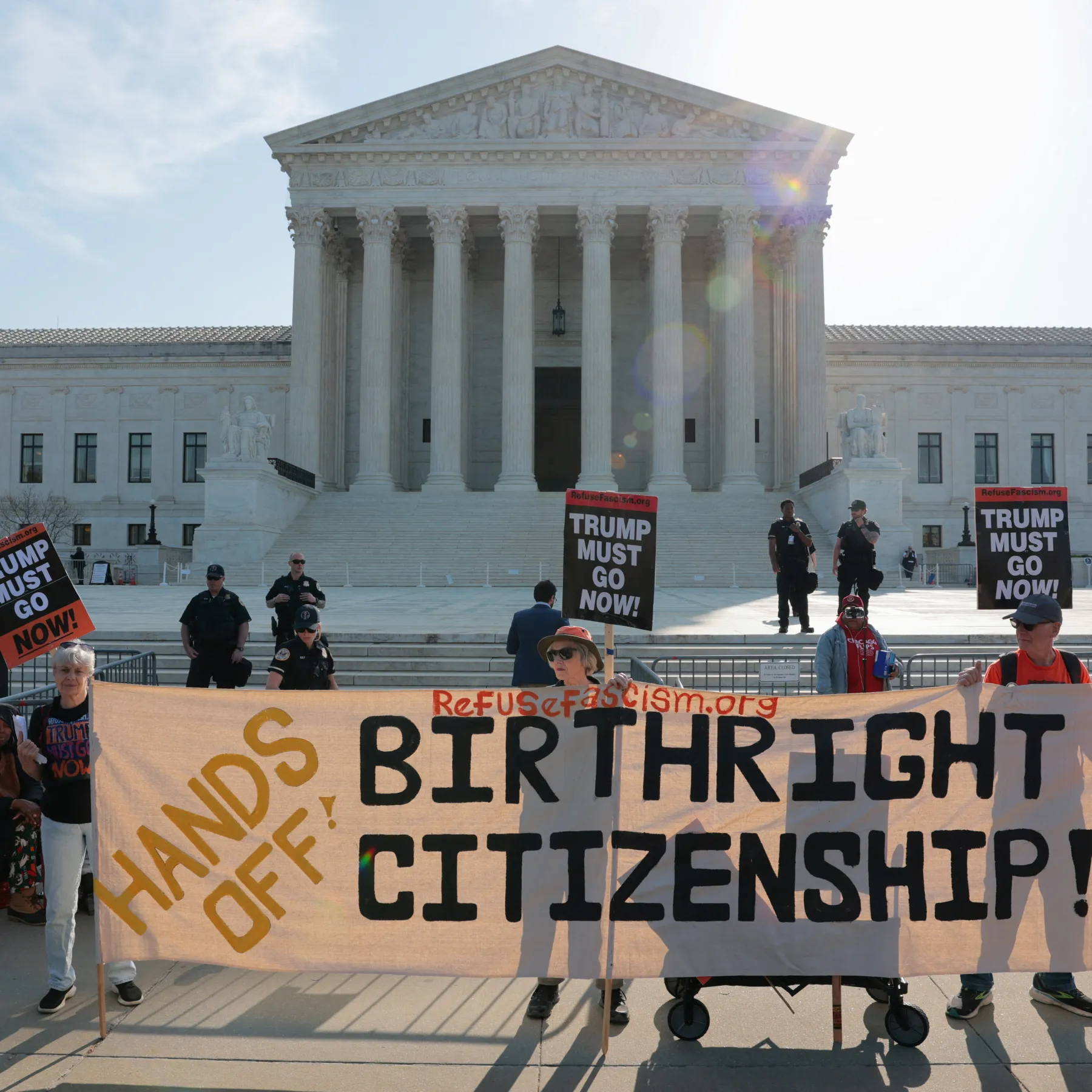
The U.S. Supreme Court appeared deeply reluctant on Wednesday to dismantle a century-and-a-half of legal precedent, as a majority of justices signaled profound skepticism toward a challenge to automatic birthright citizenship. During more than two hours of intense oral arguments, members of the Court’s conservative wing joined their liberal colleagues in questioning the legality of an executive order aimed at stripping citizenship from children born on U.S. soil to non-citizen parents.
The case, Trump v. Barbara, marks a historic intersection of executive power and constitutional identity. In a rare move, President
Donald Trump attended the proceedings in person, becoming the first sitting president to witness oral arguments in the chamber. Despite his presence, his administration’s legal team faced a barrage of probing questions that suggested the Court is unlikely to provide the “reinterpretation” of the 14th Amendment the White House seeks.
A “Quirky” Interpretation
The administration’s argument rests on the phrase “subject to the jurisdiction thereof” in the 14th Amendment, contending it was originally intended only for those with a permanent allegiance to the United States. However, Chief Justice
John Roberts led the charge in casting doubt on this narrow reading, at one point describing the government’s specific legal theory as “very quirky” and “idiosyncratic.”
In a notable exchange, Roberts pushed back against the idea that the country is now in a “different world” than when the amendment was ratified in 1868. “It’s the same Constitution,” the Chief Justice remarked, signaling a preference for adhering to the 1898 landmark ruling in United States v. Wong Kim Ark, which solidified birthright citizenship for the children of non-citizens.
Conservative Doubts
The skepticism was not limited to the Court’s traditional swing votes. Several of the President’s own appointees raised significant concerns:
- Textual Rigor: Justice Neil Gorsuch pressed the Solicitor General on how the administration’s new policy could be squared with the plain text of the amendment, which guarantees citizenship to “all persons born or naturalized” in the country.
- Procedural Authority: Justice Amy Coney Barrett questioned whether a president has the unilateral power to redefine citizenship via executive order, bypassing both Congress and established judicial precedent.
High Stakes and Human Impact
The legal battle stems from an executive order signed shortly after the President’s second inauguration in 2025. If upheld, the policy would create what legal experts describe as a “stateless” class of children, potentially denying citizenship to hundreds of thousands of infants born each year.
Lawyers for the American Civil Liberties Union (ACLU), representing the plaintiff “Barbara,” argued that the administration is attempting to create a “permanent racialized underclass” by stripping rights from those whom the Constitution explicitly protects. Outside the building, hundreds of demonstrators gathered, their chants occasionally audible within the marble hall as they played “Born in the U.S.A.”
What Lies Ahead
While the justices lobbed difficult questions at both sides, the overall tenor of the hearing suggested that a majority is inclined to protect the status quo. A ruling is expected by early summer. Should the Court rule against the administration, it would represent a significant setback for the President’s cornerstone immigration agenda and a reaffirmation of a principle that has defined American citizenship for 158 years.
For now, the 14th Amendment appears to remain on solid ground, though the final opinion will likely serve as a definitive statement on the limits of executive reach over the nation’s founding documents.