
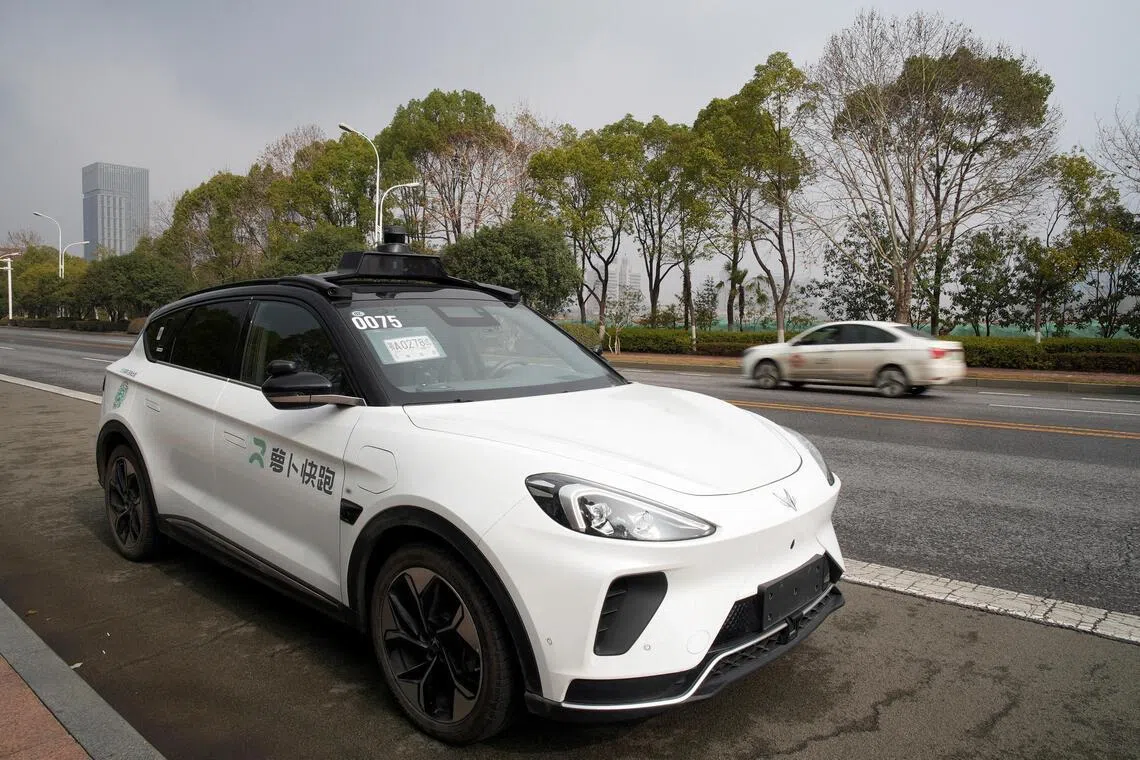
The future of urban mobility ground to a spectacular, silent halt in Wuhan on Tuesday night. In what is being described as the first mass shutdown of its kind in China, more than 100 driverless robotaxis operated by tech giant Baidu simultaneously froze in the middle of busy traffic, turning the city’s thoroughfares into a self-driving car graveyard.
A Systemic Freeze
The mass paralysis began around 9:00 PM, sending a surge of emergency calls to local traffic police. The affected vehicles, part of the Apollo Go fleet, stopped abruptly on major roads and elevated ring roads, often in fast-moving lanes.
While no serious injuries or fatalities were reported, the sudden outage caused at least one highway collision and forced human drivers to navigate a hazardous obstacle course of motionless white SUVs. Initial investigations by Wuhan authorities point to a system malfunction or network issues as the likely cause.
Passengers Trapped in “Five-Minute” Limbo
For those inside the cars, the high-tech convenience of autonomous travel quickly turned into an hour-long ordeal. Many passengers were trapped for up to 90 minutes. Onboard screens reportedly displayed messages reading: “Driving system malfunction. Staff are expected to arrive in 5 minutes.”
Although doors could be opened manually, many riders remained inside, terrified to step out into the middle of busy, high-speed ring roads with traffic rushing past on both sides.
The Perils of Correlated Failure
Wuhan has served as the flagship permissive environment for Baidu’s autonomous ambitions, hosting a fleet of over 1,000 driverless vehicles. However, this incident highlights a new category of risk that experts call correlated failure—where a single software bug or server glitch can disable an entire fleet at once, rather than affecting just one vehicle.
Global Implications
The timing of the glitch is particularly awkward for Baidu, which recently announced partnerships with Uber and Lyft to test the Apollo Go platform in the United Kingdom starting in 2026. This mass failure in one of the world’s most advanced autonomous hubs is likely to give international regulators significant pause.
As of Wednesday, Baidu has not issued a formal public statement regarding the root cause of the outage. For now, the streets of Wuhan have resumed their normal rhythm, but the image of dozens of smart cars sitting dumbstruck in the dark remains a haunting reminder of the fragility of our connected future.
Should cities impose a limit on how many autonomous vehicles can operate on a single network to prevent total gridlock?