
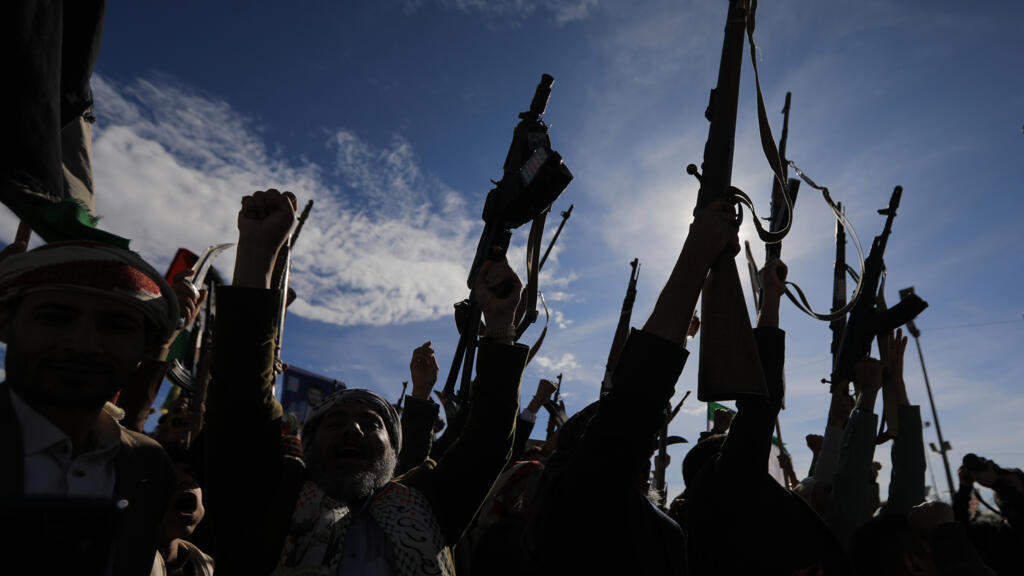
DUBAI / RIYADH — The fragile detente that has characterized the Persian Gulf’s energy security for the last two years evaporated overnight. In a coordinated wave of strikes that have sent global oil markets into a vertical climb, major industrial and logistics hubs across the United Arab Emirates and Saudi Arabia were struck by long-range suicide drones and ballistic missiles.
The attacks, claimed by the Ansar Allah (Houthi) movement in Yemen, represent a dramatic escalation of their vow to “punish the allies of the Zionist entity.” As Israel’s military operations in Gaza and Southern Lebanon continue unabated, the Houthis have effectively declared the entire Arabian Peninsula a legitimate theater of war.
Precision Strikes on the Energy Veins
The scale of the damage across the Gulf Cooperation Council (GCC) states suggests a level of intelligence and precision previously unseen in the decade-long Yemeni conflict.
In eastern Saudi Arabia, the Abqaiq processing facility—the world’s largest oil stabilization plant—reported a “significant fire” in its northern compressor hall. While Saudi Aramco officials stated that automated fire suppression systems prevented a total catastrophe, industry analysts estimate a temporary daily loss of 1.2 million barrels of crude processing capacity.
Simultaneously, in the UAE, the Mussafah industrial zone near Abu Dhabi was rocked by three distinct explosions. Local authorities confirmed that a fuel depot and a desalination power plant were hit, leading to localized blackouts and a temporary suspension of operations at the nearby Jebel Ali port, the region’s busiest maritime gateway.
The “Siege of Solidarity”
From the podium in a darkened hall in Sana’a, Houthi military spokesperson Yahya Saree announced that the “Fourth Phase” of their operations had begun.
“We warned the regimes that provide cover, land, and sea routes to the enemy,” Saree declared in a televised address. “As long as the siege on our brothers in Palestine continues, the infrastructure of the aggressors will remain under our fire. No airport, no refinery, and no bridge is out of reach.”
The rhetoric marks a pivot from attacking ships in the Red Sea to targeting the terrestrial “land bridge”—the trucking routes that have allowed goods to flow from Gulf ports across the desert to Israel, bypassing the dangerous Bab el-Mandeb Strait.
Global Markets in Freefall
The reaction from the West was swift and panicked. Brent Crude jumped $7.00 per barrel within two hours of the news, briefly touching $98, a price point not seen since the early days of the 2022 energy crisis.
For the global economy, the timing could not be worse. Most G7 nations are currently navigating a “fragile recovery” characterized by stubborn inflation. A sustained disruption to Gulf energy exports would act as a regressive tax on global manufacturing, potentially tipping the Eurozone back into a technical recession by the third quarter of 2026.
In Washington, the White House issued a “grave condemnation,” signaling that the U.S. Navy’s Operation Prosperity Guardian may be forced to expand its mandate from maritime escorting to “preemptive inland neutralization”—a move that critics fear will ignite a full-scale regional conflagration involving Iran.
A Region on the Brink
As emergency crews in Riyadh and Abu Dhabi sift through the charred remains of cooling towers and storage tanks, the geopolitical calculus of the Middle East has been reset. The “normalization” era, defined by the Abraham Accords and grand infrastructure projects like NEOM, is now facing its most rigorous stress test.
“The Houthis have proven they can bridge the gap between a local insurgency and a regional disruptor,” says Dr. Elena Vance, a senior fellow at the Middle East Institute. “They aren’t just fighting for Yemen anymore; they are successfully holding the world’s energy supply hostage to the politics of the Levant.”
With more “vows of fire” emanating from Sana’a and regional air defenses at maximum capacity, the question for the Gulf is no longer if another strike is coming, but whether the global economy can survive the smoke.