
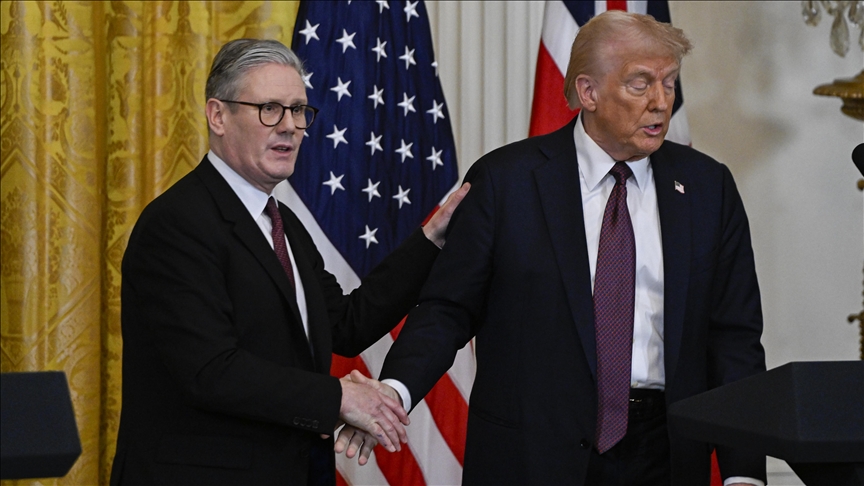
The “Special Relationship” between the United States and the United Kingdom faced its most public fracture in decades Tuesday, as President Donald Trump declared he is “not happy” with Prime Minister Keir Starmer’s refusal to commit British forces to the escalating conflict in Iran.
Speaking from the Oval Office on Monday evening, March 16, 2026, Trump voiced his frustration after Starmer used a Downing Street press conference to insist that while the UK would protect its interests, it “will not be drawn into a wider war.”
The President, who has spent the last 48 hours pressuring allies to help reopen the blockaded Strait of Hormuz, was blunt in his assessment of the British Prime Minister. “I was very surprised with the United Kingdom,” Trump told reporters. “I said, ‘Why don’t you send some ships over?’ and he really didn’t want to do it. This is not Winston Churchill that we’re dealing with.”
The ‘Lawyerly’ Divide
The rift centers on Starmer’s “deliberate” decision to deny the U.S. full offensive use of British bases, such as RAF Fairford and Diego Garcia, during the initial strikes on February 28. While Starmer eventually relented for “limited defensive purposes,” the delay forced U.S. aircraft to fly “many extra hours,” according to White House officials.
The Starmer Doctrine:
- Lessons of Iraq: In his address, Starmer pointedly referenced the 2003 invasion of Iraq, stating that British decisions must be based on a “legal basis” and a “thought-through plan.”
- Defensive Only: The UK has deployed Typhoon and F-35 jets to intercept Iranian drones over Iraq and Jordan, but Starmer has categorically refused to join “Operation Epic Fury” offensive sorties.
- Economic Shielding: Starmer framed his caution as a domestic necessity, announcing a £53 million aid package for British families struggling with the “Aviation and Oil shock” caused by the war.
‘We Don’t Need You’: Trump’s Social Media Broadside
Trump’s displeasure quickly migrated to social media, where he mocked the UK’s eventual offer to send aircraft carriers to the region.
“The United Kingdom, our once Great Ally… is finally giving serious thought to sending two aircraft carriers,” Trump posted on Truth Social. “That’s OK, We don’t need people that join Wars after we’ve already won!”
Despite the rhetoric, the U.S. continues to push for a “team effort” to break the Iranian blockade of the Strait. Trump warned that NATO faces a “very bad future” if its members do not step up, specifically naming South Korea, Japan, and the UK as nations that should be doing more to secure the global oil supply.
The State of the Alliance
| Metric | Current US-UK Status (March 17, 2026) |
| Military Status | UK providing “defensive cover” only; no offensive strikes. |
| Diplomatic Tone | “Strained” / Trump cites lack of “personal chemistry.” |
| Intelligence Sharing | Continues, but restricted regarding specific Iranian targets. |
| Public Opinion | 60% of Britons oppose joining the war (YouGov). |
A Cold Front in the Atlantic
The fallout marks a seismic shift in UK foreign policy. For decades, the UK has been Washington’s “junior partner” in Middle Eastern interventions. Starmer’s refusal to follow Trump “headlong into this war” has been praised by his allies as the “making of his leadership,” but critics in the Conservative and Reform parties argue it has left Britain isolated.
As U.S. Marines and the USS Tripoli strike group enter the Persian Gulf, the absence of the Royal Navy’s most significant assets is a visual testament to a relationship that Trump claims is “obviously not what it used to be.”