
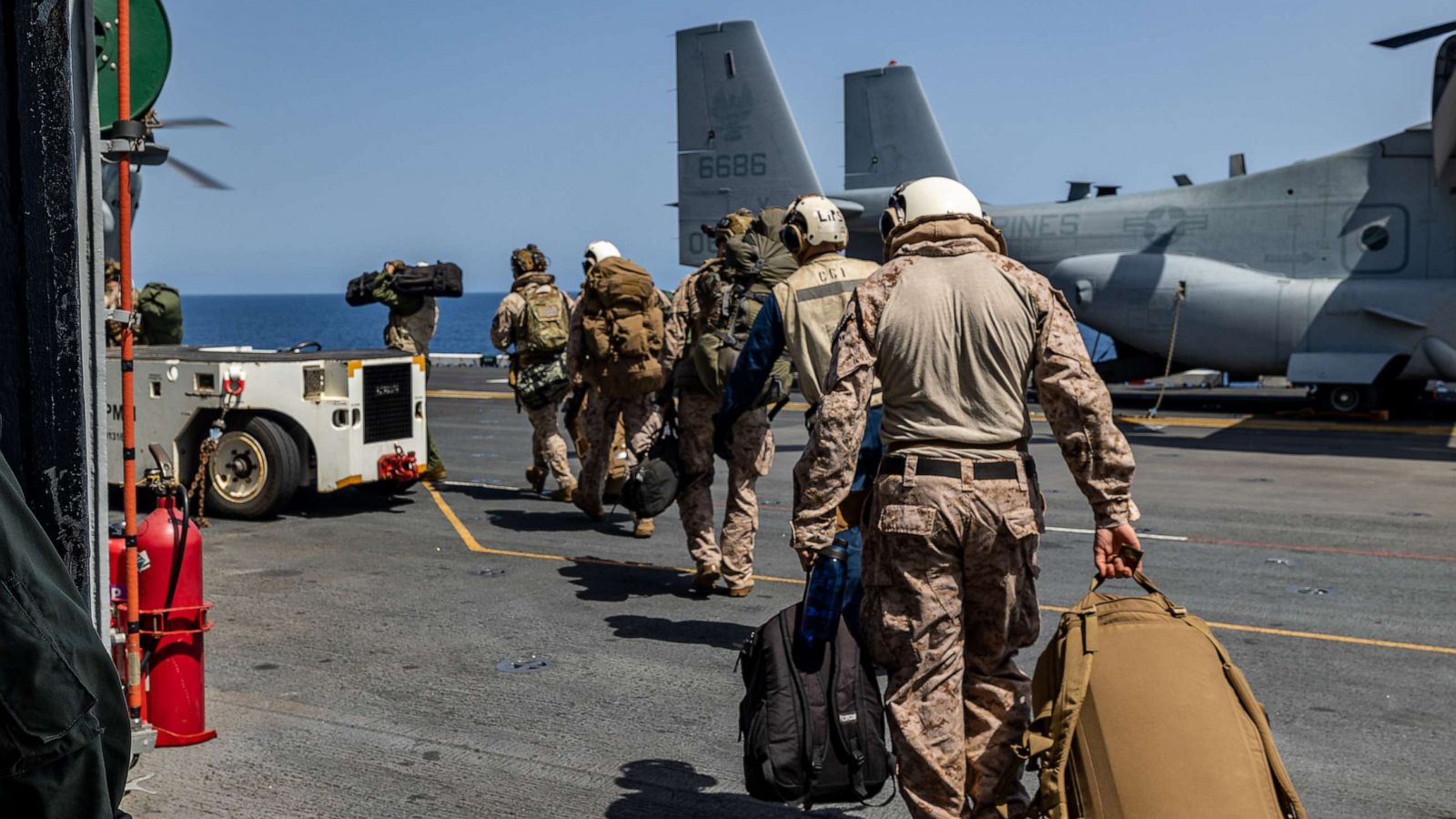
In the most significant expansion of American ground and naval power in the Persian Gulf in a generation, the Pentagon has ordered thousands of U.S. Marines and a specialized naval strike group to the Middle East to break the Iranian regime’s blockade of the world’s most critical energy artery.
On Friday, March 13, 2026, Secretary of War Pete Hegseth approved an emergency request from U.S. Central Command (CENTCOM) to deploy the 31st Marine Expeditionary Unit (MEU) and the USS Tripoli Amphibious Ready Group. The move, which sends approximately 5,000 personnel and a flotilla of advanced warships toward the Iranian coast, signals that the Trump administration is preparing for a new, “kinetic” phase of Operation Epic Fury—one that could involve direct amphibious operations.
“The Iranian regime has been exercising sheer desperation in the Strait of Hormuz,” Hegseth told reporters at the Pentagon. “We have a plan for every option here. We are not going to allow that strait to remain contested or see a disruption in the flow of commercial goods.”
The ‘Steel Rain’ Force: What’s Moving
The deployment is centered around the USS Tripoli (LHA-7), an America-class amphibious assault ship currently surging from its homeport in Sasebo, Japan. Unlike traditional carriers, the Tripoli is a “lightning carrier” optimized for fifth-generation warfare.
The Reinforcement Package Includes:
- The 31st MEU: A “Swiss Army Knife” of combat power, including a Battalion Landing Team of 1,100 Marines, attack helicopters (AH-1Z Vipers), and a combat logistics element capable of sustaining inland operations for 15 days.
- F-35B Stealth Jets: Vertical-takeoff fighters that can strike deep inside Iranian territory from the decks of the amphibious ships.
- Surface Combatants: The Tripoli is escorted by the USS New Orleans and USS San Diego, San Antonio-class transport docks designed to push Marines and heavy equipment onto contested shores.
- Aerial Firepower: The deployment coincides with the arrival of three additional B-52H Stratofortress bombers at RAF Fairford, bringing the total heavy bomber count in the theater to 18.
The Mission: Breaking the Hormuz Blockade
The primary objective of the new task force is to reopen the Strait of Hormuz, which has remained effectively paralyzed by Iranian “swarm” tactics, sea mines, and shore-based missile batteries.
With oil prices hovering near $120 a barrel, President Trump has authorized the U.S. Navy to begin “active escort” missions for commercial tankers. The Marines of the 31st MEU are uniquely trained for “Visit, Board, Search, and Seizure” (VBSS) operations and the seizure of offshore platforms—capabilities that could be used to clear Iranian IRGC “spy ships” and mine-laying vessels currently clogging the waterway.
“The mission is laser-focused,” Hegseth said. “Destroy Iranian offensive missiles, destroy their navy, and ensure they never have nuclear weapons. We’re ahead of schedule.”
Escalation Amid Mounting Casualties
The decision to send “boots near the ground” comes at a somber moment for the American military. On Thursday, March 12, a KC-135 refueling aircraft crashed in western Iraq, killing all six U.S. service members on board and bringing the total U.S. death toll in the conflict to 13.
While CENTCOM maintains the crash was not due to hostile fire, the incident has highlighted the immense strain on U.S. air assets. The arrival of the Tripoli Group is intended to alleviate this pressure, providing a mobile, sea-based airfield that does not rely on land bases in increasingly volatile host nations like Iraq or Jordan.
The Global Stakes
As the 31st MEU nears the Gulf, the international community remains on a knife-edge.
- Tehran’s Defiance: Iran’s new leader, Mojtaba Khamenei, has ordered his forces to “inflict maximum pain” on any vessel entering the Strait without regime permission.
- The Israeli Front: The IDF continues its “intensifying” campaign in Lebanon and Iran, striking targets in Shiraz and Ahvaz as part of the broader effort to dismantle the “Axis of Resistance.”
For the Marines aboard the USS Tripoli, the mission is clear: the transition from “containment” to “submission” has begun. In the “Year of the Fire Horse,” the United States is no longer just striking from 30,000 feet—it is preparing to meet the Iranian regime at the water’s edge.