
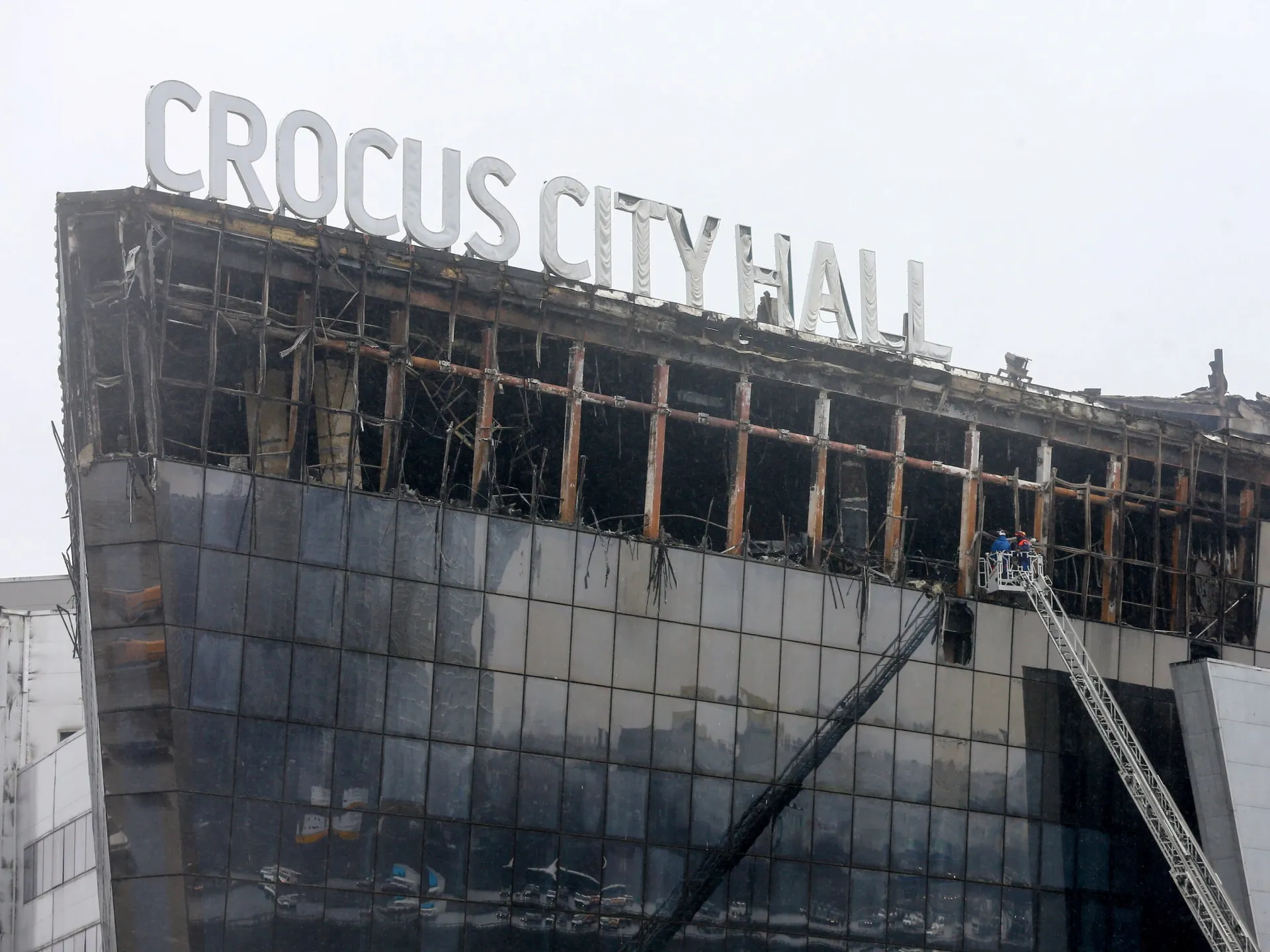
MOSCOW — Nearly two years after the smoke cleared from the ruins of Crocus City Hall, a Russian military court has delivered a sweeping verdict in one of the deadliest terror trials in the nation’s history.
On Thursday, March 12, 2026, judges sentenced 19 defendants for their roles in the March 2024 massacre that killed 149 people and left more than 600 wounded. In a stark display of judicial force, 15 of the men were handed life sentences, to be served in “special regime” penal colonies—the harshest tier of the Russian prison system.
The defendants, many of whom appeared in court behind reinforced glass cages, remained largely silent as the lead judge read the sentences for crimes ranging from active participation in a terrorist act to providing the logistics that made the slaughter possible.
The Verdict: Life Behind Bars
The trial, which began in August 2025 and was held largely behind closed doors, concluded with a decisive rejection of the defense’s pleas for leniency.
- The Primary Perpetrators: The four gunmen identified as the direct executioners of the attack—Dalerdzhon Mirzoyev, Saidakrami Rachabalizoda, Shamsidin Fariduni, and Muhammadsobir Fayzov—all received life sentences.
- The Accomplices: Eleven others were also sentenced to life for aiding and abetting, including those accused of transporting weapons and financing the operation.
- The Logistical Chain: Four remaining defendants, who provided the car used in the escape and the apartment where the gunmen stayed, received sentences ranging from 19 years and 11 months to 22.5 years.
In addition to prison time, the court ordered the 19 men to pay massive fines and civil compensation to the victims’ families, totaling millions of rubles.
A Lingering Global Mystery
While the courtroom proceedings focused on the 19 men in the dock, the geopolitical ripples of the Crocus City Hall attack remain a point of intense international friction.
- The ISIS-K Claim: Shortly after the 2024 attack, the Islamic State-Khorasan (ISIS-K) claimed responsibility, releasing body-cam footage of the shooting to verify their involvement.
- The Ukraine Allegation: Throughout the trial, Russian state prosecutors and the Investigative Committee maintained that the attack was “planned and carried out in the interests of Ukraine.” Despite these claims, no concrete evidence was presented in the public portion of the trial to support a link to Kyiv, which has consistently and vehemently denied any involvement.
- Torture Allegations: The trial was shadowed by persistent reports from human rights groups and relatives in Tajikistan—the home country of the four gunmen—alleging that confessions were extracted through severe beatings and torture.
‘Like Yesterday’ for the Victims
Outside the Moscow court, the mood among the survivors and relatives of the deceased was one of somber closure mixed with lingering trauma.
“For us, it’s like it happened yesterday,” said one survivor who attended the sentencing. “No sentence will bring back the people we lost, but the world needs to see that those who pull the trigger and those who help them will never see the sun again.”
The sentencing effectively closes the primary chapter of the legal response to the tragedy, though the Investigative Committee noted that six additional suspects remain on an international wanted list.
As the 19 men are transported to the remote, high-security colonies that will become their permanent homes, Russia marks a grim milestone in its “Year of the Fire Horse”—a period defined by internal mourning and external conflict.