
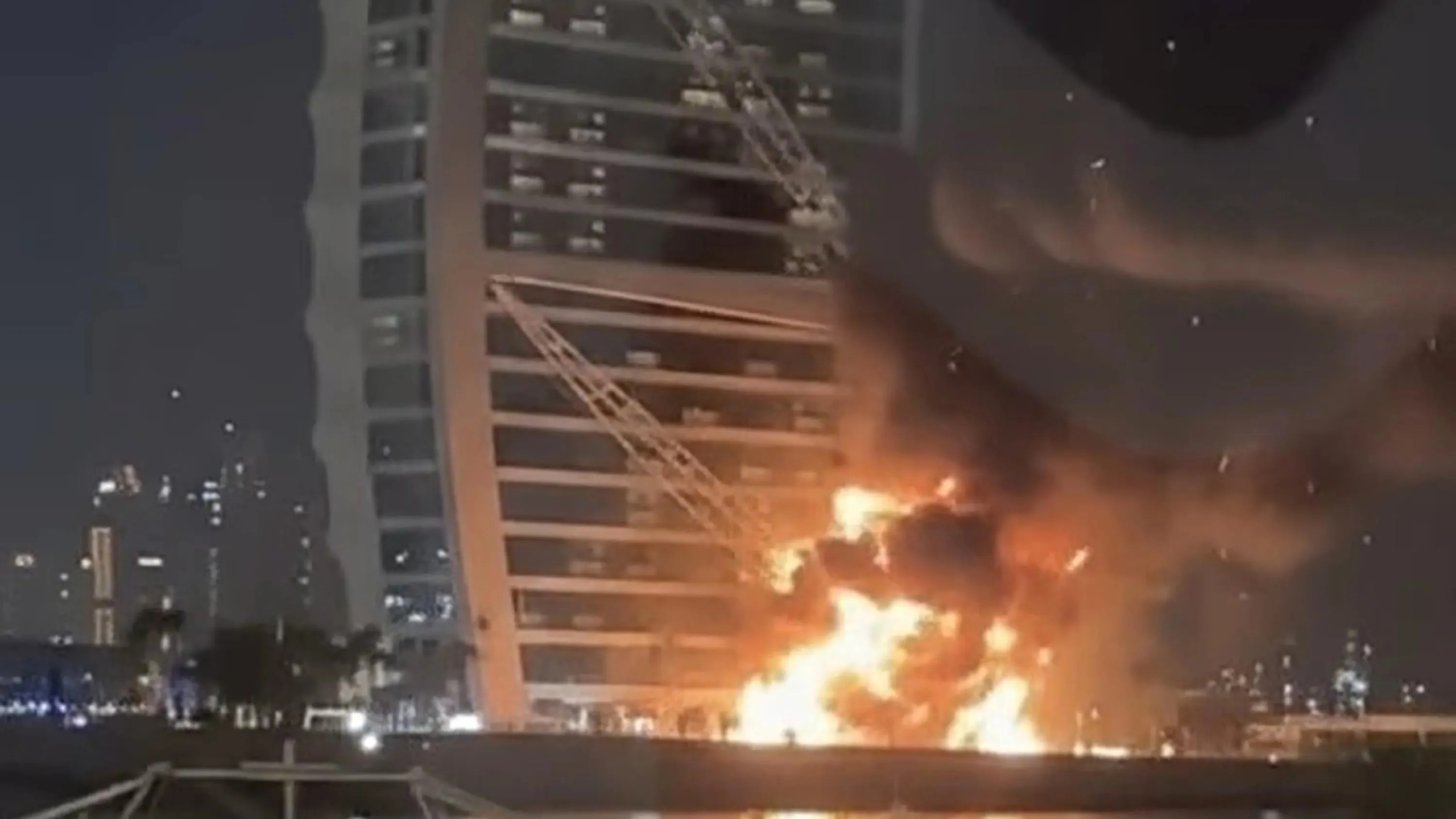
DUBAI — The glittering façade of Dubai’s world-famous luxury tourism sector was pierced Sunday, March 1, as the city became an unexpected battleground in the escalating war between Iran and the U.S.-Israeli coalition.
In a night of unprecedented chaos, falling missile debris and drone strikes ignited fires at two of the world’s most iconic hotels—the Burj Al Arab and the Fairmont The Palm. The strikes were part of a massive Iranian retaliatory barrage involving over 300 missiles and drones launched across the Persian Gulf following the “Operation Epic Fury” decapitation strikes in Tehran.
While the UAE’s sophisticated air defense systems intercepted the vast majority of incoming threats, the “shrapnel rain” over densely populated civilian areas has shattered the long-held image of the Emirates as a sanctuary of stability.
Fire on the Palm: The Fairmont Breach
The most dramatic incident occurred at Fairmont The Palm, a five-star resort situated on the trunk of Dubai’s man-made archipelago. At approximately 2:15 a.m., witnesses reported a deafening explosion followed by a “fireball” descending toward the hotel’s entrance.
- The Impact: Debris from an intercepted ballistic missile struck a commercial building adjacent to the Fairmont, sparking a blaze that sent thick plumes of black smoke billowing over the Arabian Gulf.
- The Toll: Dubai Civil Defence confirmed that four people were injured in the fire. They were treated at the scene before being transported to local hospitals.
- The Scene: Guests, many in pajamas and evening wear, were evacuated to the beach as emergency sirens wailed across the Palm Jumeirah.
“It sounded like the sky was tearing open,” said one British tourist staying at a neighboring villa. “Then there was a rumble, and the horizon just lit up orange.”
The ‘Sail’ Singed: Burj Al Arab Drone Strike
Across the water, the Burj Al Arab—often called the world’s only seven-star hotel—suffered what authorities described as a “limited fire” on its distinctive sail-shaped exterior.
According to the Dubai Media Office, a kamikaze drone was successfully neutralized by interceptors directly above the hotel. However, the resulting shrapnel struck the building’s white fabric façade, igniting a vertical streak of flames. While no injuries were reported at the Burj Al Arab, the image of the burning landmark has become a viral symbol of the region’s sudden vulnerability.
A Regional ‘Siege’ of Aviation
The hotel strikes were part of a broader, coordinated Iranian attempt to paralyze the Gulf’s economic engines.
- Dubai International (DXB): One of the world’s busiest hubs was forced to suspend all operations after a concourse sustained “minor damage” from an incident. Flights for Emirates and flydubai remain grounded, leaving thousands of transit passengers stranded.
- Abu Dhabi Crisis: At Zayed International Airport, the situation was deadlier. Authorities confirmed one fatality—an Asian national—and seven injuries following a drone strike on a terminal annex.
- The ‘Iron Dome’ of the Gulf: The UAE Ministry of Defence stated it intercepted “multiple ballistic missiles” with high efficiency, preventing what could have been a catastrophic loss of life in the city’s high-rise districts.
The Geopolitical Shockwave
The targeting of Dubai and Abu Dhabi—cities that host thousands of U.S. troops but have largely avoided direct conflict for decades—marks a staggering escalation. Iran’s Foreign Ministry defended the strikes as “legal acts of self-defense” in response to the killing of Supreme Leader Ali Khamenei, warning that any nation hosting U.S. bases is now a legitimate target.
In response, President Donald Trump issued a stern warning from Washington: “The targeting of civilian hotels and airports is a war crime. Iran is making a very big mistake—the biggest mistake they’ve ever made.”
As the sun rises over a smoke-hazed Dubai today, the city’s legendary “Year of the Fire Horse” celebrations have been replaced by the grim reality of a regional war. The “Gold City” remains open, but for the first time in its modern history, its guests are looking to the skies with fear rather than wonder.