
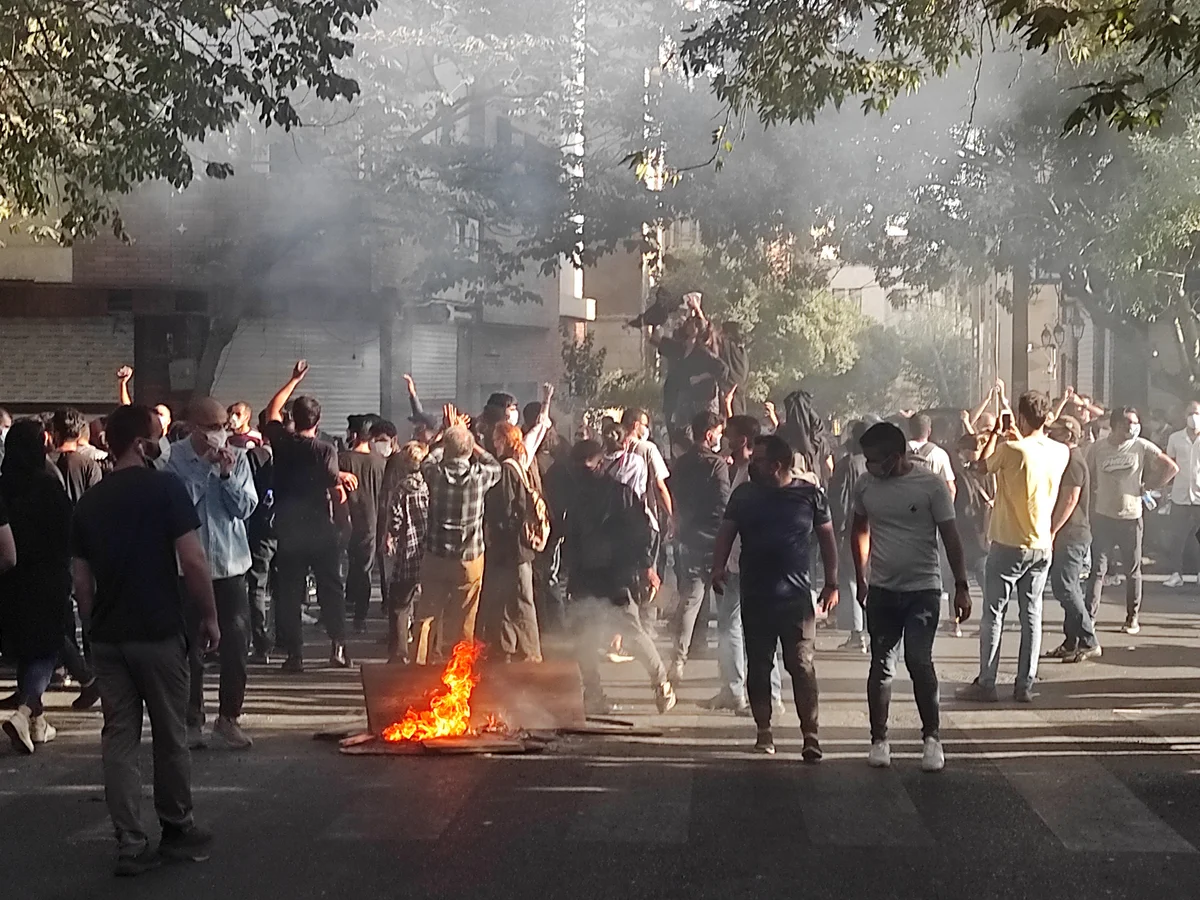
TEHRAN — In a direct challenge to the clerical establishment’s claim that it has successfully “suppressed” the winter uprising, thousands of Iranian students returned to the streets on Saturday, transforming the reopening of universities into a theater of anti-government defiance.
The demonstrations, occurring today, February 21, 2026, coincide with the 40th-day memorial—a traditional period of mourning in Shiite culture—for the thousands of protesters killed during the peak of the “January Uprising.” From the gates of Sharif University of Technology to the campuses of Amirkabir and Mashhad, the air was thick with the scent of burning tires and the roar of a new generation that refuses to be silenced by the gallows.
“This homeland will not be a homeland until the mullahs are buried,” students at Sharif University chanted, according to geolocated footage and reports from the National Council of Resistance of Iran (NCRI).
The ‘January Massacre’ Remembered
Today’s protests are a visceral response to what human rights organizations are calling the deadliest period of state repression in Iranian history. While the government officially acknowledges approximately 3,000 deaths since the unrest began on December 28, 2025, independent monitors tell a far darker story:
- The Death Toll: The Human Rights Activists News Agency (HRANA) has documented over 7,000 verified deaths, with some medical sources suggesting the true figure could exceed 20,000.
- The ‘Black Box’ Sites: Reports have surfaced of thousands of detainees being held in unofficial “black box” detention centers, where they are denied access to lawyers and families.
- Expedited Executions: At least 30 individuals, including two 17-year-olds, are currently facing the death penalty in “fast-tracked” trials that Amnesty International has described as a “conveyor belt for executions.”
Clashes on Campus
The university reopening was intended by the state to project a return to normalcy. Instead, it ignited a series of violent scuffles. At Sharif University, Basij paramilitaries reportedly attacked peaceful student sit-ins, leading to hand-to-hand combat in the hallways.
Videos show students chanting “Bi sharaf!” (Disgraceful) at security forces, a slogan that has become the anthem of the 2026 movement. In a desperate attempt to regain control, the president of Sharif University has already threatened to return classes to an online-only format—a move critics say is designed purely to prevent the physical assembly of “defiant youths.”
“We did not offer martyrs to compromise,” a female student was heard shouting during a rally at Amirkabir University. “This is the year of blood; Seyyed Ali [Khamenei] will be overthrown.”
The Shadow of Global Escalation
The domestic turmoil unfolds against a backdrop of unprecedented international tension. U.S. President Donald Trump has significantly bolstered the American military presence in the Persian Gulf, deploying the USS Gerald R. Ford and the USS Abraham Lincoln in what officials describe as the largest build-up since the Second Gulf War.
While Washington frames the build-up as leverage for nuclear negotiations, the Iranian leadership has used the “foreign threat” to justify its internal brutality, accusing the U.S. and Israel of orchestrating the “riots.”
A Fragile Stasis
Despite the mass arrests and the “extraordinary scale” of the January crackdown, the resilience of the student body suggests that the Islamic Republic is facing a crisis it cannot simply kill its way out of.
The 40th-day memorials have traditionally served as a catalyst for Iranian revolutions—each cycle of mourning providing the fuel for the next wave of anger. As night falls over Tehran, the heavy presence of motorbike-riding security personnel in cities like Sanandaj and Ilam indicates that while the state holds the guns, the students now hold the momentum.