
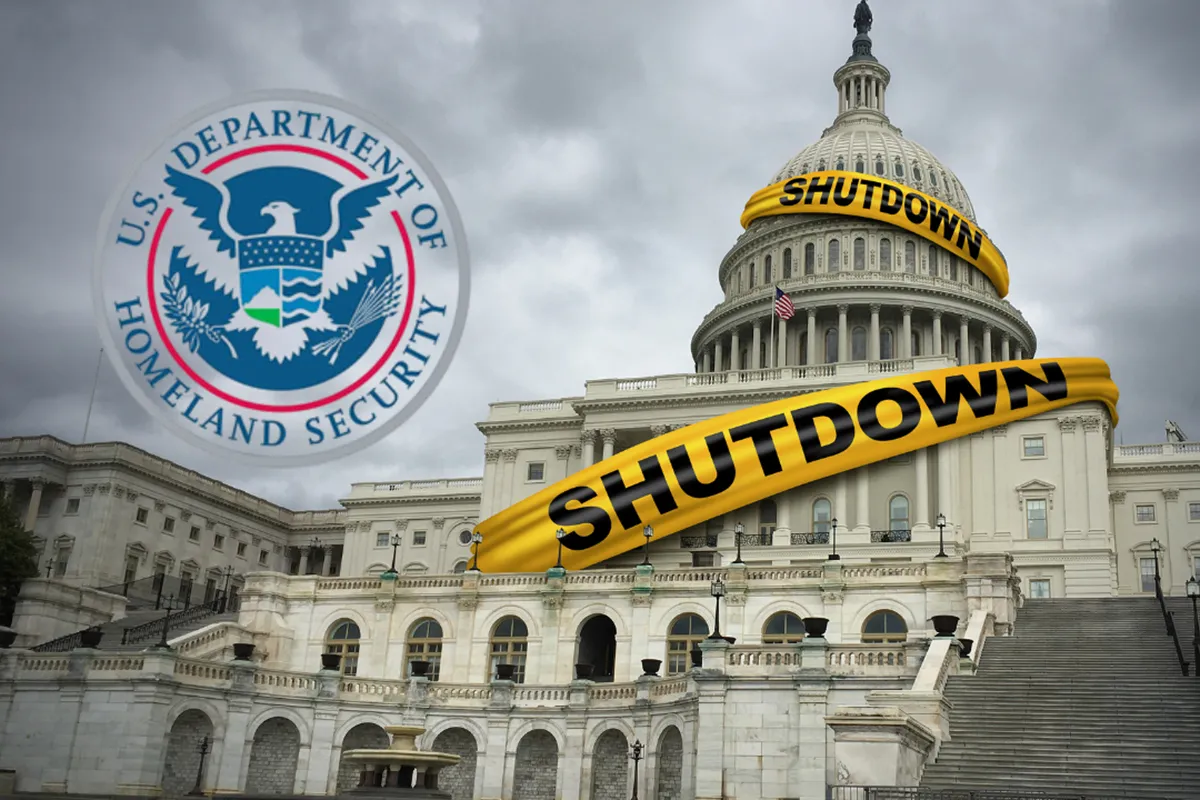
As the clock ticks toward a midnight Friday deadline, the U.S. travel industry is sounding a frantic alarm: a second partial government shutdown in as many months could turn the nation’s airports into a “pressure cooker” just as the busy spring break season begins.
Unlike the four-day broad government freeze that ended on February 3, this looming lapse is targeted squarely at the Department of Homeland Security (DHS). If Congress remains deadlocked over a bitter partisan dispute regarding federal immigration enforcement, approximately 61,000 Transportation Security Administration (TSA) employees and thousands of Customs and Border Protection (CBP) officers will be forced to work without pay starting Saturday.+1
“Travelers and the U.S. economy cannot afford to have essential TSA personnel working without pay,” a coalition of major carriers and travel groups, including Airlines for America and the U.S. Travel Association, warned in a joint statement. “The risk of unscheduled absences and call-outs will lead to higher wait times and missed flights.”+1
The ‘Essential’ Burden
Under federal law, roughly 95% of the TSA workforce is deemed essential. While these officers are legally required to show up at security checkpoints, the “human toll” of working for an IOU has historically led to a spike in “sick-outs” as lower-paid frontline workers struggle to cover commuting costs and childcare without an active paycheck.+1
The acting head of the TSA, Ha Nguyen McNeill, told a House subcommittee this week that the agency “does not have the luxury of time.” She noted that many workers are still reeling from the financial impact of the record 43-day shutdown last fall and the brief four-day lapse earlier this February.+1
The Potential Travel Disruptions:
- Checkpoint Closures: Major hubs like Philadelphia and Miami saw security lanes shuttered during past protracted shutdowns as staffing levels plummeted.
- CBP Bottlenecks: International travelers could face multi-hour waits at customs as officers are diverted to border operations or hampered by personnel shortages.
- Technology Delays: The deployment of new, faster scanners and prep for the June FIFA World Cup are expected to stall without active DHS funding.
A Political Impasse over ‘Alex Pretti’
The current standoff is rooted in a fierce legislative battle over President Trump’s aggressive immigration agenda. Democrats have vowed to block DHS funding until new “code of conduct” restrictions are placed on federal agents, citing the fatal shooting of Alex Pretti in Minneapolis last month.
Republicans, led by Senate Leader John Thune, have accused Democrats of “playing chicken” with national security and the travel plans of millions of Americans. Thune warned Friday that there is a “very good chance we could see more travel problems” similar to the chaos seen during the 2018-2019 shutdown.+1
What Travelers Need to Know
While air traffic controllers—who are funded under the Department of Transportation—will not be affected by this specific DHS-only lapse, the ground-level experience at the airport will change almost immediately.
- Immediate Impact: Minimal. TSA screeners will not actually miss a full paycheck until mid-March, meaning the “mood” at checkpoints may sour before the actual lines grow.
- The Long Tail: If the shutdown drags into its second or third week, travel experts warn that major hubs could see the return of “ghost shifts” and closed terminals.
- Global Entry/PreCheck: While online applications are still being accepted, Global Entry interviews and background check processing are expected to be suspended indefinitely.
As the midnight hour approaches, the halls of the U.S. Capitol are quiet, but the atmosphere at the nation’s 430 commercial airports is anything but. For a travel industry still recovering from a volatile winter, the message is clear: when the government stops paying its gatekeepers, the whole world slows down.