
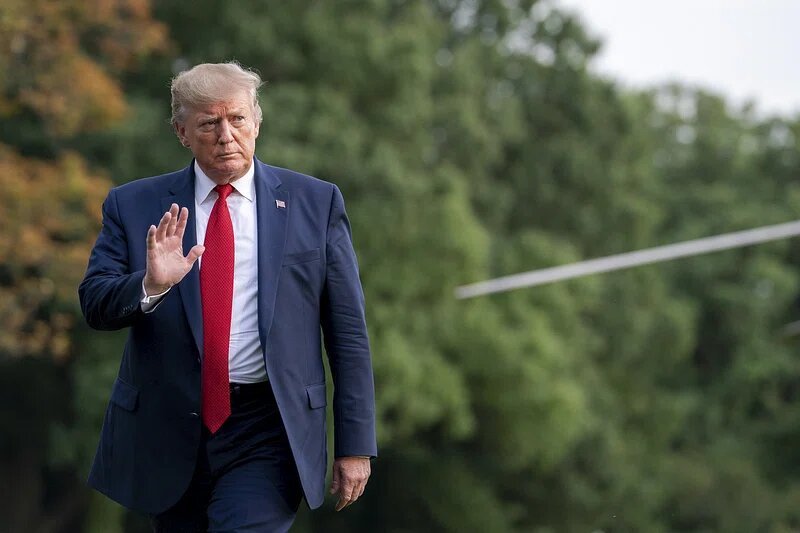
The escalating feud between North America’s two largest economies turned explosive on Saturday, as President Donald Trump threatened to impose a sweeping 100 percent tariff on all Canadian goods if Ottawa proceeds with a newly announced trade pact with Beijing.
In a blistering series of social media posts that shattered the fragile truce between the two neighbors, the President explicitly accused Canadian Prime Minister Mark Carney of economic betrayal, warning that Canada was positioning itself as a “Trojan Horse” for Chinese industry to infiltrate the American market.
“If Governor Carney thinks he is going to make Canada a ‘Drop Off Port’ for China to send goods and products into the United States, he is sorely mistaken,” Trump wrote on Truth Social. “China will eat Canada alive, completely devour it… If Canada makes a deal with China, it will immediately be hit with a 100% Tariff against all Canadian goods.”
The Trigger: EVs for Canola
The President’s ultimatum is a direct response to the “Beijing Break” agreement announced last week during Carney’s state visit to China. Under the terms of the deal—which Carney framed as a necessary diversification of Canadian trade—Beijing agreed to slash tariffs on Canadian canola and seafood in exchange for Canada allowing an annual quota of 49,000 Chinese electric vehicles to enter the country at a standard 6.1% tariff rate, bypassing the punitive barriers erected by the U.S.
To the White House, this quota is a breach of the continental security perimeter. Administration officials view the influx of Chinese EVs, potentially laden with subsidized technology, as a direct threat to the U.S. auto industry, which is deeply integrated with Canadian manufacturing.
‘Governor Carney’ and the 51st State
The President’s rhetoric on Saturday marked a personal escalation against the Canadian Prime Minister. By repeatedly referring to the head of a G7 nation as “Governor Carney,” Trump revived a provocation he has used to suggest Canada is effectively a dependency of the United States—or, as he has hinted in previous rallies, a future “51st state.”
“Canada lives because of the United States,” Trump wrote, referencing a tense exchange between the two leaders at the World Economic Forum in Davos earlier this week. “Remember that, Mark, the next time you make your statements.”
Carney, who used his Davos address to warn of a “rupture” in the global order caused by “great power coercion,” shot back late Saturday from Ottawa.
“Canada doesn’t live because of the United States. Canada thrives because we are Canadian,” Carney told reporters. “We are a sovereign nation that will trade with the world on our own terms, not on instructions from a foreign capital.”
Economic Mutually Assured Destruction
Trade experts warn that a 100 percent tariff on Canadian goods would be an “economic nuclear strike” with devastating fallout on both sides of the border. Canada is the top export destination for 36 U.S. states, and the two nations trade roughly $2.7 billion in goods every single day.
“You cannot wall off Canada without shutting down Detroit,” said Flavio Volpe, president of the Automotive Parts Manufacturers’ Association. “Parts cross this border seven times before a car is finished. A 100% tariff isn’t a penalty; it’s a suicide pact for the American auto industry.”
A Relationship on the Brink
The tariff threat is the latest shock in a month that has seen U.S.-Canada relations deteriorate at record speed.
- Jan 17: Trump threatens tariffs on European allies over Greenland, a move Carney publicly criticized.
- Jan 20: Carney announces the EV-for-agriculture deal with Xi Jinping.
- Jan 21: Trump revokes Carney’s invitation to join the global “Board of Peace.”
- Jan 24: The 100% tariff threat is issued.
As of Saturday night, the White House has given no timeline for when the tariffs might be implemented, leaving businesses from automakers to lumber mills in a state of paralysis. For Mark Carney, the gamble of pivoting to China has yielded an immediate and ferocious response from the south, forcing Canada to decide whether to blink or brace for the biggest trade war in its history.