
In the gilded setting of the White House East Room, President Donald Trump sat before a table of the world’s most powerful energy titans on Friday, dangling the ultimate prize: the world’s largest oil reserves.
His pitch was as ambitious as it was blunt. Following the recent U.S. military operation that led to the capture of Nicolás Maduro, the President called for American oil majors to commit at least $100 billion in private capital to rebuild Venezuela’s shattered infrastructure. The goal? To flood the global market, slash U.S. gas prices to $50 a barrel, and “rebuild a country that has been raped and pillaged.”
“American companies will have the opportunity to eventually increase oil production to levels never seen before,” Trump told the room, flanked by executives from Chevron, ExxonMobil, and ConocoPhillips. “We’re going to be making the decision as to which companies go in. If you don’t want to go, let me know—I’ve got 25 others waiting to take your place.”
But for the man leading the world’s largest publicly traded oil company, the math—and the history—do not yet align with the rhetoric.
‘Twice Bitten’: The Exxon Reality Check
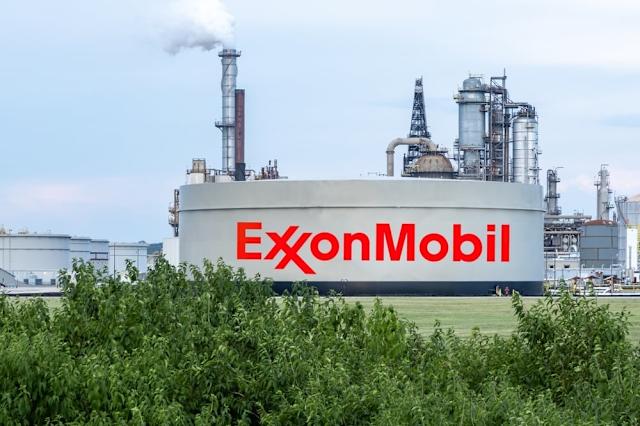
While the President spoke of “total security” and immediate wealth, ExxonMobil Chairman and CEO Darren Woods provided a stark, reality-based counterpoint.
“If we look at the legal and commercial constructs and frameworks in place today in Venezuela, it’s uninvestable,” Woods said, looking directly at the President.
Woods’ skepticism is rooted in a bitter corporate memory. ExxonMobil has seen its assets in Venezuela seized twice—first by the nationalizations of the 1970s and again by the Hugo Chávez regime in 2007. For a company that thinks in decades rather than election cycles, a “third time lucky” approach requires more than just a military presence.
“To re-enter a third time would require some pretty significant changes,” Woods added. “There has to be durable investment protections and a change to the hydrocarbon laws.”
A Divided Industry Response
The meeting revealed a spectrum of corporate appetite for what is being called the “Western Hemisphere’s Marshall Plan.”
| Company | Stance | Key Commitment / Constraint |
| Chevron | Bullish | Already has 3,000 employees on the ground; pledged to increase production by 50% within 18–24 months. |
| ExxonMobil | Cautious | Will send a “technical team” to assess damage but insists the country remains “uninvestable” without legal reform. |
| ConocoPhillips | Legalistic | Focused on recovering $12 billion in outstanding debt from previous expropriations before committing new capital. |
| Shell | Incremental | Prepared to scale up existing 45,000 barrel-per-day operations if the “proper framework” is established. |
The “Uninvestable” Obstacles
Reclaiming Venezuela’s oil throne is not merely a matter of turning on a tap. Decades of “petro-socialism” have left the industry in a state of advanced decay.
- Infrastructure Collapse: Pipelines are corroded, refineries are rusted shells, and many of the country’s “super-giant” fields have suffered irreversible reservoir damage due to mismanagement.
- Economic Math: Experts from Wood Mackenzie suggest that with heavy Venezuelan crude, companies need prices near $80 per barrel to break even on new projects. With Trump pushing for $50 oil, the profit margins for private investors may vanish.
- Security Risks: Despite the fall of the Maduro regime, the interior of the country remains a patchwork of paramilitary groups. Trump’s promise of “total safety” likely requires a prolonged U.S. military footprint that many executives fear is politically fragile.
The White House Counter-Offensive
The Trump administration is not waiting for a consensus. Following the meeting, the President signed an Executive Order declaring a national emergency to “safeguard” Venezuelan oil revenue held in U.S. Treasury accounts, ensuring the money is used for “stability” and not seized by the country’s thousands of creditors.
“They don’t need government money; they need government protection,” Trump insisted. He dismissed the need for a financial “backstop” for the companies, stating that the giants sitting around his table “know the risks.”
As the technical teams from Irving and San Ramon prepare to land in Caracas, the world is watching to see if Venezuela will become the greatest comeback story in energy history—or a $100 billion graveyard for American capital.