
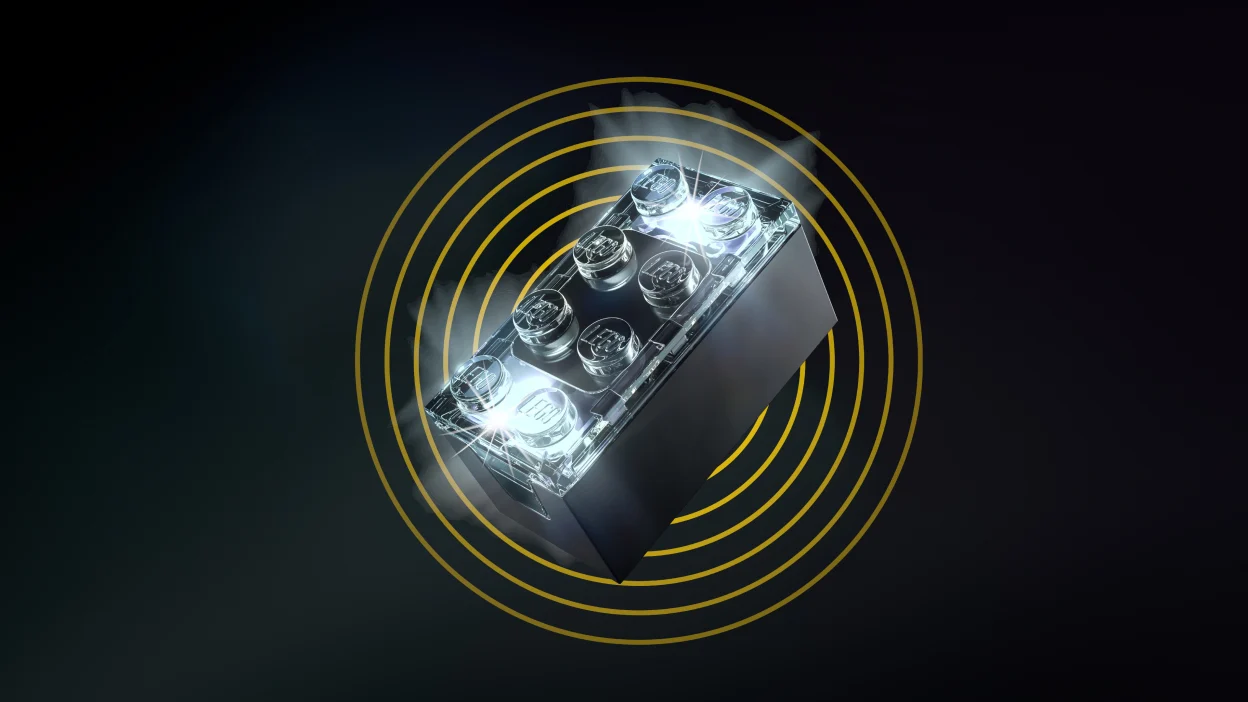
For nearly a century, the humble 2×4 plastic brick has relied on a singular power source: the child’s imagination. But at this week’s Consumer Electronics Show (CES) 2026, the LEGO Group unveiled a radical evolution that aims to “play back,” sparking both wonder and a growing chorus of unease among child development experts.
The Danish toy giant’s new “Smart Play” system centers on the LEGO Smart Brick—a standard-sized piece packed with more sensors than a modern smartphone. While the company bills it as a screen-free way to bridge the physical and digital worlds, critics worry that by giving the bricks a “brain,” LEGO may be taking the “mind” out of playtime.
The Tech Inside: A Computer in Every Stud
The Smart Brick is a masterpiece of miniaturization. Beneath the familiar plastic pips lies a custom-designed ASIC chip smaller than a single LEGO stud. This “Play Engine” transforms a static model into a reactive, spatially aware entity.
- The Senses: Each brick contains an accelerometer, an ambient light sensor, and a microphone. It can detect if it is being flown, crashed, or even if a child “blows” on it to extinguish a fire.
- The Mesh: Using a proprietary “BrickNet” Bluetooth protocol and near-field magnetic coils, the bricks are aware of each other’s 3D orientation. Two Star Wars ships don’t just sit on a shelf; they “know” when they are facing off, triggering synchronized laser sounds and engine roars.
- The Soundscape: Eschewing tinny recordings, an onboard synthesizer generates real-time audio. When a Smart Minifigure like Darth Vader is placed near the brick, it recognizes his “personality,” triggering the iconic breathing or the “Imperial March.”
‘Scripted’ vs. ‘Spontaneous’: The Expert Backlash
While tech enthusiasts at CES have hailed the Smart Brick as the “biggest innovation since the Minifigure,” child advocacy groups and play experts are raising red flags.
“The magic of LEGO has always been its silence,” says Dr. Helena Rossi, a developmental psychologist specializing in creative play. “When a child moves a plastic plane, they make the ‘whoosh’ sound. They decide if it’s a jet, a dragon, or a time machine. When the brick does the ‘whooshing’ for them, it shifts from an open-ended tool to a scripted experience.”
The advocacy group Fairplay issued a statement calling the tech “completely unnecessary,” arguing that providing pre-programmed responses could stifle the very “perseverance and problem-solving” that LEGO prides itself on fostering.
The March 1 Launch
LEGO is leaning heavily into its most powerful franchise for the platform’s debut. Three “All-in-One” Star Wars sets will launch on March 1, 2026, with prices reflecting the high-tech interior:
| Set | Pieces | Smart Features | Price |
| Darth Vader’s TIE Fighter | 473 | 1 Smart Brick, 1 Smart Figure, Engine Roar | $70 |
| Luke’s Red Five X-Wing | 584 | 1 Smart Brick, 2 Smart Figures, 5 Tags | $100 |
| Throne Room Duel & A-Wing | 962 | 2 Smart Bricks, 3 Smart Figures, Music | $160 |
The ‘Screen-Free’ Defense
LEGO’s Chief Product Officer, Julia Goldin, defended the move, emphasizing that the system is entirely screen-free. “We wanted to enhance the magic without pulling kids into digital worlds,” she told reporters. “There is no camera, no voice recording, and no AI. It is purely about making the physical model feel alive in the child’s hand.”
However, with rumors already swirling of LEGO Pokémon sets utilizing the technology later this summer, the toy industry is watching closely. If the Smart Brick succeeds, it could redefine “the system in play” for the next century. If it fails, it may be remembered as the moment the world’s most famous toy tried too hard to be “smart” for its own good.