
As the sun rises over the Manhattan skyline this Monday morning, the most high-profile prisoner in the world is preparing for a journey under heavy guard from a Brooklyn detention cell to the Southern District of New York. Nicolás Maduro, the deposed leader of Venezuela, is scheduled to make his initial appearance in federal court today—a moment that marks a staggering escalation in American foreign policy.
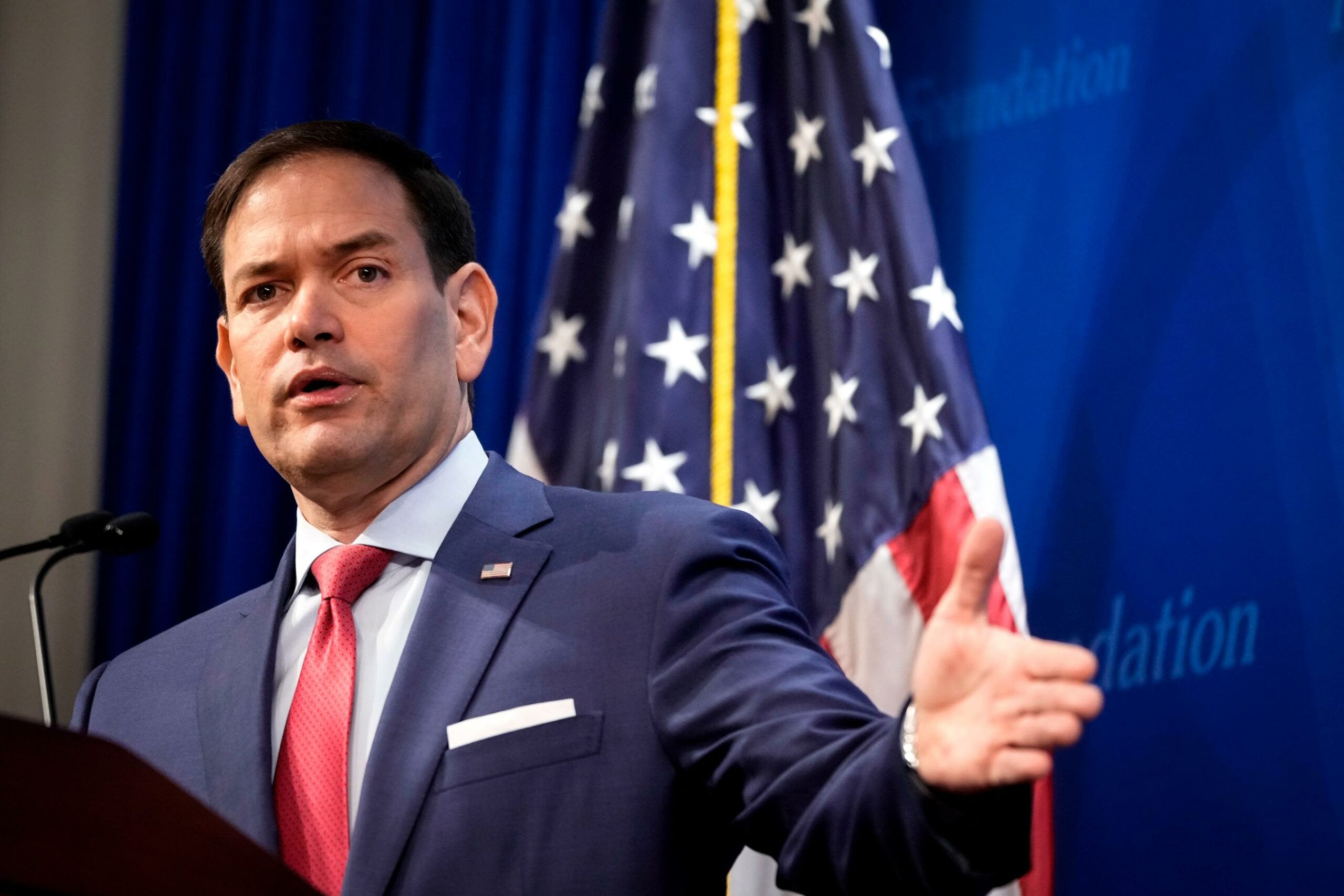
Seeking to define the legal boundaries of the weekend’s lightning raid, Secretary of State Marco Rubio launched a multi-network diplomatic offensive Sunday, insisting that the United States is not “at war” with Venezuela. His comments appeared aimed at walking back President Trump’s earlier, more expansive vow that the U.S. would “run” the oil-rich nation.
The ‘Narcotics’ Defense
Appearing on NBC’s Meet the Press and ABC’s This Week, Rubio framed the military operation that snatched Maduro from Caracas not as an act of international aggression, but as a domestic law enforcement mission targeting a criminal organization.
- “Not a War”: Rubio emphasized that the mission was a surgical “capture and arrest” based on a 2020 narco-terrorism indictment. “We are at war against drug trafficking organizations,” Rubio said. “We are not at war against the people of Venezuela.”
- No Troops on the Ground: The Secretary of State clarified that while special forces conducted the two-hour raid, there are currently “no U.S. forces on the ground” occupying Venezuelan cities.
- The “Oil Quarantine”: Instead of a military occupation, Rubio described a policy of “maximum leverage” through a naval blockade. “It’s running policy,” he told NBC, explaining that the U.S. will use its “oil quarantine” to force the remaining leadership in Caracas—now led by interim President Delcy Rodríguez—to expel Iranian and Hezbollah influence.
Manhattan Under Siege: The Monday Arraignment
Across the river in Manhattan, the Foley Square courthouse has been transformed into a fortress. Maduro, who arrived at the Metropolitan Detention Center (MDC) in Brooklyn late Saturday, is expected to be formally charged with conspiracy to commit narco-terrorism and cocaine importation.
- The Charges: The unsealed indictment alleges Maduro headed the “Cartel of the Suns,” a criminal organization that used the Venezuelan state apparatus to flood the U.S. with cocaine as a “weapon” against the American people.
- The Security: NYPD and U.S. Marshals have cordoned off several blocks around the courthouse. Snipers have been spotted on rooftops, and NYPD divers are reportedly patrolling the East River—a level of security usually reserved for the UN General Assembly.
- The “Happy New Year” Defiance: Maduro remains defiant. Upon landing in New York, he reportedly looked at cameras and muttered, “Good night, happy new year,” a surreal greeting from a man facing life in a U.S. prison.
The Domestic Backlash
While Republican hawks like Senator Tom Cotton have praised the “decisive action,” the White House is facing a firestorm of criticism from Congressional Democrats and constitutional scholars.
“Maduro is a tyrant, but Trump has placed American servicemembers at risk with an unauthorized attack. The President does not have a ‘blank check’ to launch invasions without the People’s House.” — Senator Tim Kaine (D-VA)
Rubio dismissed these concerns Sunday, arguing that the President “retains optionality” to act against “imminent and urgent threats.” He signaled that the U.S. will give the remaining Venezuelan military “time to make the right decision” before considering further military action.
A High-Stakes Gavel
When the gavel falls in Manhattan later today, it will be the first time in history a former head of state has been forcibly brought to the U.S. to face criminal charges while his government remains—at least partially—in power.
The world will be watching to see if Maduro enters a plea or uses the courtroom as a platform to denounce “Yankee imperialism.” For the Trump administration, the goal is simple: transform a geopolitical rival into a common criminal.