
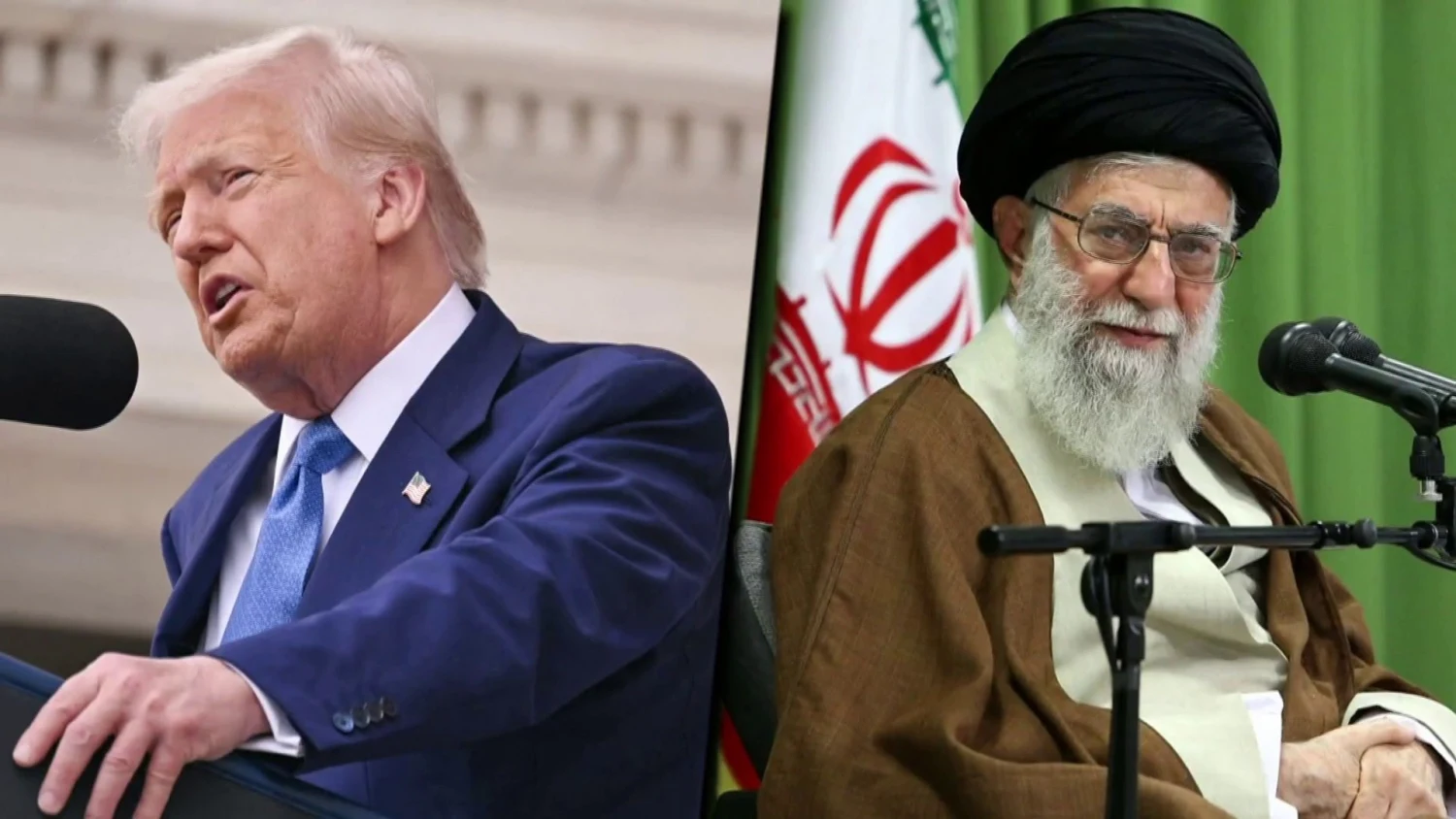
In a pre-dawn ultimatum that has pushed the Middle East to a hair-trigger, President Donald Trump warned Friday that the United States is “locked and loaded” to intervene in Iran if the Islamic Republic’s security forces continue to use lethal force against a burgeoning nationwide protest movement.
The warning, delivered via Truth Social at approximately 3:00 AM Eastern Time, marks the first time the 47th President has explicitly threatened military action on behalf of Iranian demonstrators. “If Iran shoots and violently kills peaceful protesters, which is their custom, the United States of America will come to their rescue,” Trump wrote. “We are locked and loaded and ready to go.”
A Week of Fire and Fury
The President’s remarks come as Iran enters its sixth consecutive day of unrest—the largest wave of demonstrations since the “Woman, Life, Freedom” movement of 2022. What began as a strike by shopkeepers in Tehran over the collapse of the rial has transformed into a sweeping political rebellion.
- The Death Toll: At least seven protesters have been confirmed killed by security forces since Thursday. Reports of live fire have emerged from the cities of Lordegan, Azna, and Qom, the latter a traditional clerical stronghold.
- The Economic Catalyst: The Iranian rial plummeted to a record low of 1.4 million to the US dollar on Sunday, effectively vaporizing the savings of the middle class and triggering hyperinflation.
- The Nuclear Backdrop: Tensions were already at a boiling point following a meeting last Sunday between Trump and Israeli Prime Minister Benjamin Netanyahu. Trump warned that any attempt by Tehran to rebuild its nuclear facilities—which were struck by U.S. and Israeli forces in June 2025—would be met with “obliteration.”
‘Any Hand Will Be Cut Off’: Tehran Strikes Back
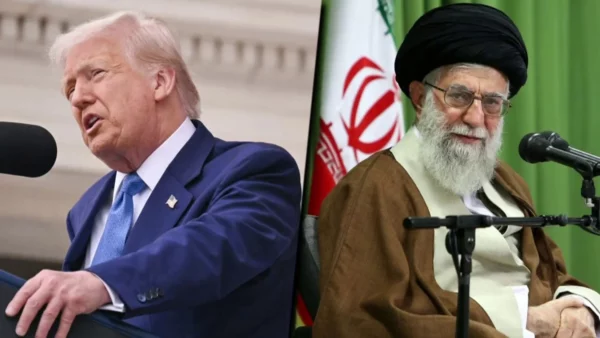
The response from the Islamic Republic was swift and characteristically defiant. Within hours of Trump’s post, Ali Larijani, the secretary of Iran’s Supreme National Security Council, warned that American interference would “mean destabilizing the entire region.”
“Trump should know that U.S. interference… will lead to the destruction of America’s interests. The American people should be mindful of their soldiers’ safety.” — Ali Larijani, Secretary of Iran’s National Security Council
Iranian military commanders echoed this sentiment, declaring that U.S. bases in Qatar, Bahrain, and the UAE—already within range of Iran’s ballistic missile arsenal—are now “legitimate targets.” Ali Shamkhani, a top adviser to Supreme Leader Ayatollah Ali Khamenei, added that any “interfering hand” that nears Iran’s security “will be cut off with a response that induces regret.”
A Policy of ‘Maximum Support’
Unlike past U.S. administrations that hesitated to back Iranian activists for fear of delegitimizing them as “Western puppets,” the current White House appears to have embraced a policy of total, public alignment with the streets.
- UN Pressure: Mike Waltz, the U.S. Ambassador to the UN, reiterated that Washington “stands with Iranians in the streets” against a “radical regime that has brought them nothing but economic downturn and war.”
- No Troop Movement (Yet): Despite the “locked and loaded” rhetoric, Pentagon officials confirmed Friday that there have been no major changes to U.S. troop levels in the region. However, the Navy’s 5th Fleet remains on high alert in the Persian Gulf.
- The Digital Battle: The State Department has reportedly authorized the deployment of additional satellite internet terminals to help protesters bypass Tehran’s periodic internet blackouts.
The ‘Red Line’ in the Sand
As burials for those killed in the Lorestan and Isfahan provinces began on Friday, they quickly morphed into fresh anti-government marches. The central question now is whether Trump’s threat will act as a deterrent or a catalyst.
Security analysts warn that if the Iranian Revolutionary Guard Corps (IRGC) interprets Trump’s tweet as a sign that a U.S.-led regime change is imminent, they may opt for a “Tiananmen-style” suppression to crush the movement before foreign intervention can materialize.
For the people of Iran, the “rescue” promised by Washington is a high-stakes gamble. For the world, it is a reminder that the “Maximum Pressure” campaign has entered its most volatile chapter yet.