
A high-stakes legal battle has erupted over the identity of America’s premier cultural landmark, as a Democratic board member filed a federal lawsuit Monday to forcibly remove President Donald Trump’s name from the John F. Kennedy Center for the Performing Arts.
The lawsuit, filed by Rep. Joyce Beatty (D-Ohio), alleges that a recent board vote to rename the institution the “Trump-Kennedy Center” was a “flagrant violation of the rule of law.” The complaint paints a chilling picture of corporate theatre, claiming that Beatty—an ex officio trustee—was digitally muted during the virtual meeting to prevent her from voicing opposition to a “predetermined” outcome.
The ‘Silence’ Heard Round the District
The controversy stems from a December 18 board meeting where the White House claimed a “unanimous” decision was reached to add the 47th President’s name to the storied hall. However, Beatty’s court filing tells a different story: one of active censorship.
- The Muting: Beatty, who dialed into the meeting virtually, claims she repeatedly attempted to speak but found her microphone disabled by administrators. When she messaged to protest, she reportedly received a written reply stating she “would not be unmuted.”
- The ‘Unanimous’ Claim: Despite Beatty’s attempts to intervene, the board’s leadership—now largely comprised of Trump appointees—declared the vote unanimous. “It was not by consensus; it was by censorship,” Beatty told reporters.
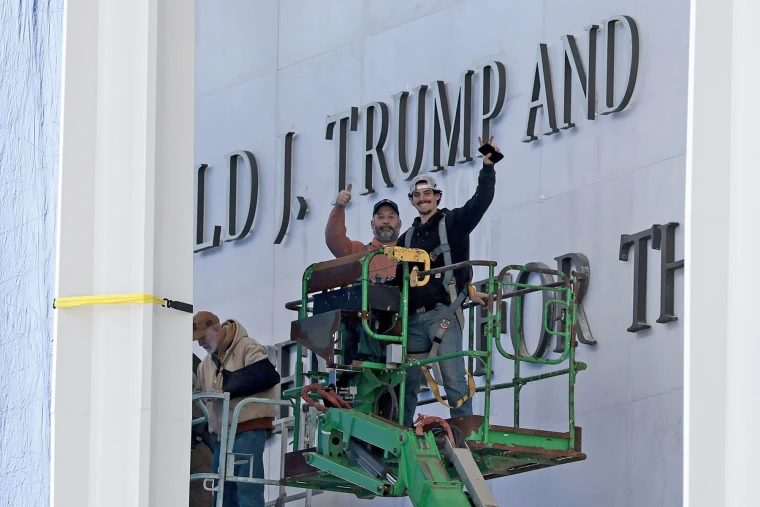
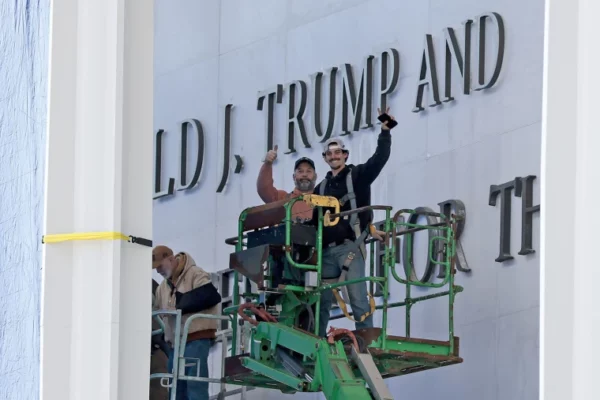
- The Facade: Within 24 hours of the vote, workers were already on scaffolding outside the center, affixing “The Donald J. Trump” in gold lettering above the original name of the assassinated 35th president.
The Legal Argument: Who Owns a Legacy?
At the heart of Beatty’s lawsuit, filed in the U.S. District Court for the District of Columbia, is a fundamental question of constitutional authority.
“Because Congress named the center by statute, changing the Kennedy Center’s name requires an act of Congress.” — Extract from the lawsuit filed by Rep. Joyce Beatty
The legal team, led by former White House ethics counsel Norman Eisen, argues that the 1964 act designating the center as a “sole national memorial” to John F. Kennedy cannot be amended by a board of trustees. Legal experts suggest the board’s move may have “exceeded its statutory authority,” as the institution’s name is codified in federal law.
‘We Saved It’: The White House Defense
The Trump administration has remained defiant, dismissing the lawsuit as a partisan attack on a “rescue mission.” White House Assistant Press Secretary Liz Huston stated that the President had “stepped up and saved the old Kennedy Center” from years of deferred maintenance and financial decay.
- The Financial Argument: Spokespeople for the center, including VP of Public Relations Roma Daravi, argued that the renaming honors Trump’s role in securing $250 million for critical infrastructure needs.
- The Bipartisan Frame: Kennedy Center President Richard Grenell defended the change as creating a “bipartisan space,” though members of the Kennedy family—including Maria Shriver and Joe Kennedy III—have reacted with public dismay, comparing the move to “renaming the Lincoln Memorial.”
A Cultural Tug-of-War
As the case moves through the courts, the Kennedy Center remains draped in a literal and metaphorical identity crisis. The “Trump-Kennedy” branding has already been integrated into the center’s digital platforms and physical signage, even as protesters gather outside the Hall of Nations.
For Beatty and her supporters, the lawsuit is about more than just a sign; it is a battle over the “duty of loyalty” that trustees owe to the institution’s original mission. For the administration, it is a marker of a new era of “restored grandeur.”