
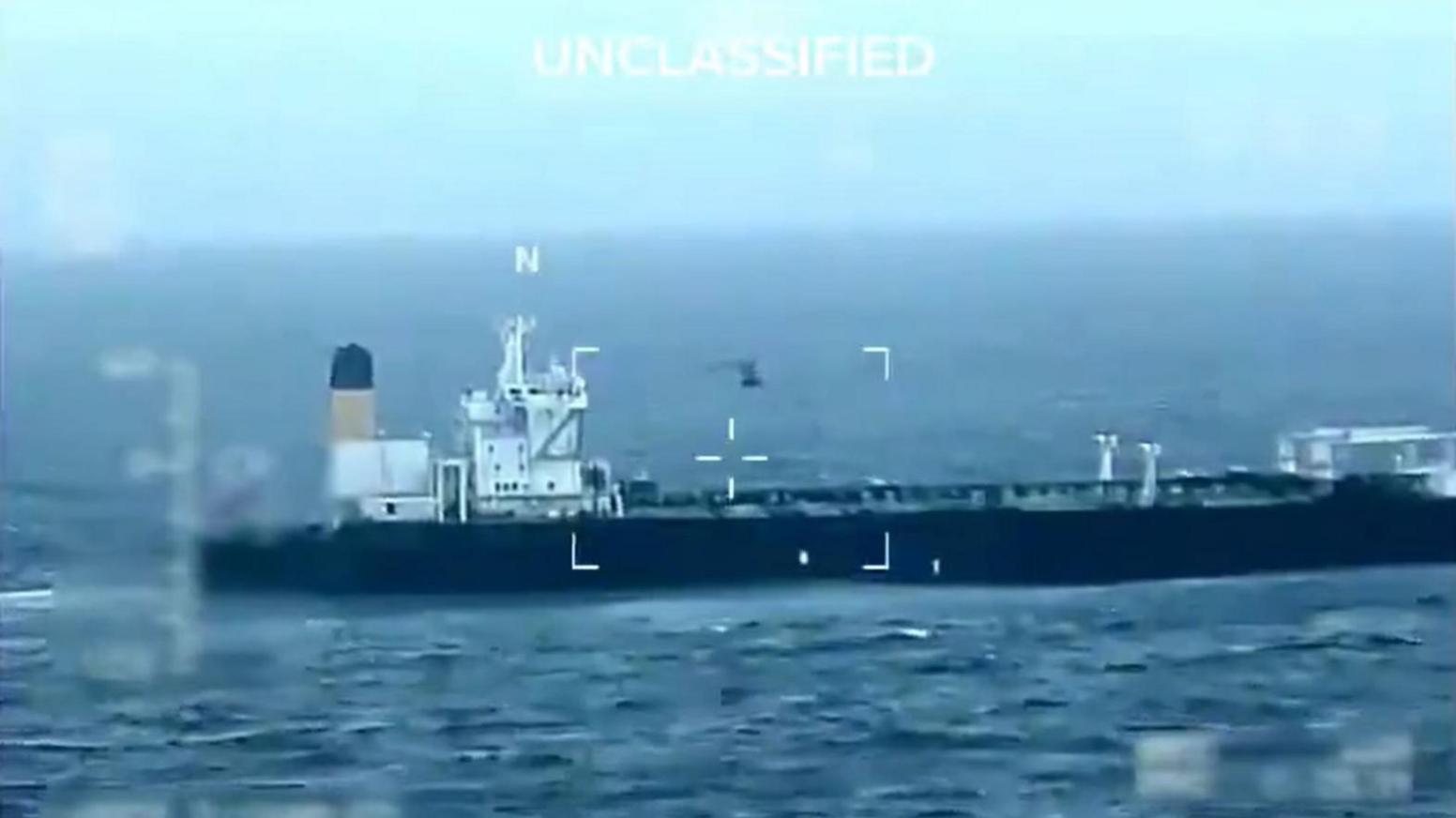
In a pre-dawn operation that signals a major escalation of the American naval blockade, the U.S. Coast Guard has intercepted and seized a second oil tanker off the coast of Venezuela. The “lightning strike” operation, confirmed Saturday by Homeland Security Secretary Kristi Noem, comes just days after President Donald Trump ordered a “total and complete” blockade of sanctioned vessels entering or leaving the country.
The vessel, identified as the Panama-flagged M/T Centuries, was intercepted in international waters east of Barbados. Video footage released by the administration shows a U.S. helicopter landing specialized tactical personnel on the deck of the ship as it traveled toward Asia, reportedly carrying approximately 1.8 million barrels of heavy crude oil.
Expanding the Net: The ‘Centuries’ Seizure
The seizure of the Centuries follows the December 10 capture of the tanker Skipper and marks a pivotal shift in U.S. strategy. While the Skipper was already under U.S. sanctions, early reports suggest the Centuries may not have been on the official sanctions list—a move legal experts say represents a significant expansion of the blockade’s enforcement.
- The Operation: Secretary Noem characterized the boarding as a “consented boarding,” noting the tanker stopped voluntarily. The operation involved a specialized Coast Guard tactical team with support from the Department of War (formerly the Department of Defense).
- The Allegation: The U.S. claims the vessel is part of a “dark fleet” used to move sanctioned oil under false names—reportedly using the alias “Crag”—to fund what the administration labels “narco-terrorism” in the region.
- The Cargo: Internal documents suggest the oil was bound for China, one of the few remaining major buyers of Venezuelan crude.
“The United States will continue to pursue the illicit movement of sanctioned oil,” Noem wrote on social media. “We will find you, and we will stop you.”
‘International Piracy’ vs. ‘Maximum Pressure’
The reaction from Caracas was swift and furious. Venezuelan Vice President Delcy Rodríguez condemned the seizure as “theft and kidnapping,” promising that those responsible would “answer to justice and history for their criminal conduct.” The Maduro government has vowed to take the matter to the UN Security Council, labeling the U.S. actions as acts of “maritime piracy.”
In Washington, the administration remains undeterred. Defense Secretary Pete Hegseth reaffirmed that the blockade will remain in “full force” until the Maduro regime returns every American asset it has seized over the decades.
- The Economic Toll: Since the first seizure on Dec. 10, Venezuelan oil exports have plummeted. Many tankers are now lingering in Venezuelan waters, unwilling to risk the “largest Armada ever assembled in South America.”
- Global Impact: Oil market participants warn that a prolonged blockade could drive global prices up by as much as $5 to $8 a barrel if the supply gap isn’t filled by other producers.
A Region on Edge
The seizure comes amid a massive military buildup that has seen the U.S. aircraft carrier USS Gerald R. Ford and nearly a dozen other warships enter Latin American waters. The administration has justified the naval pressure as part of a broader “armed conflict” with drug cartels, but critics in Congress, including Rep. Joaquin Castro (D-TX), have called the blockade an “unauthorized act of war.”
With the Centuries now in U.S. custody and President Trump vowing to “keep blowing boats up” until Maduro yields, the Caribbean has become the frontline of the most significant geopolitical standoff in the Western Hemisphere in generations.