
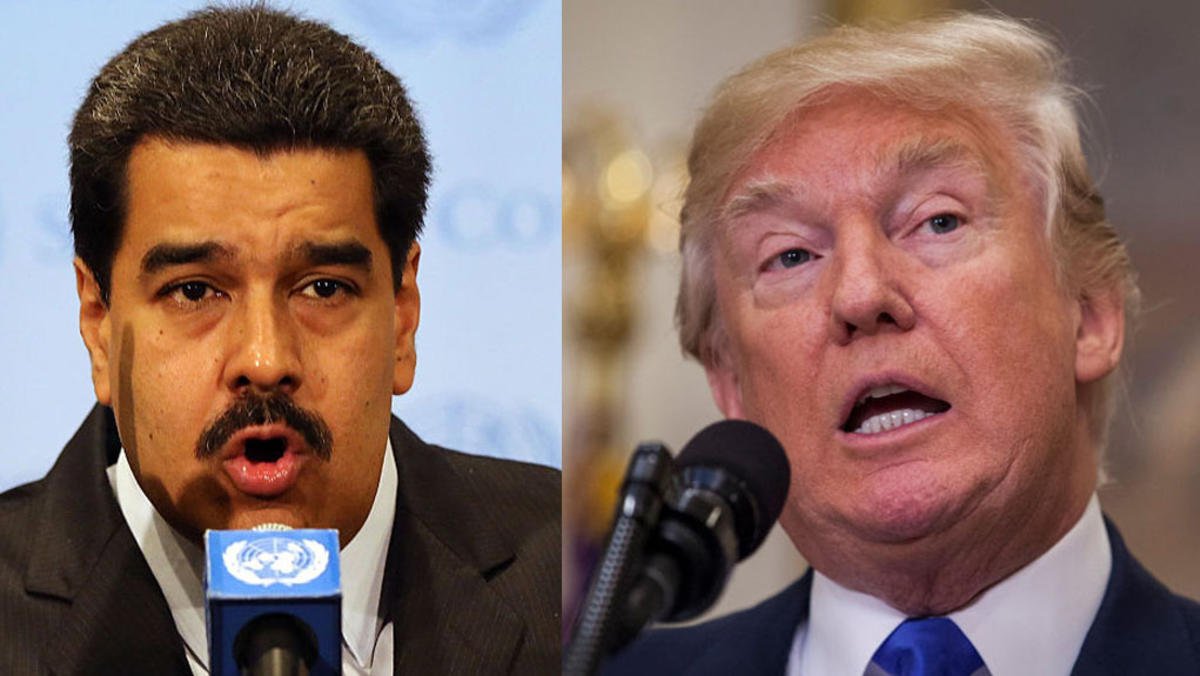
In a massive escalation that push-starts a potential maritime confrontation, President Donald Trump has ordered a “total and complete” naval blockade of all sanctioned oil tankers entering or leaving Venezuela. The directive, announced Tuesday night via social media, marks the boldest attempt yet by the White House to decapitate the financial lifeblood of President Nicolás Maduro’s government.
Citing national security concerns, the President declared the Venezuelan regime a “Foreign Terrorist Organization,” alleging that the country’s oil revenues are being used to fund “drug terrorism, human trafficking, and murder.” The move effectively transforms a long-standing sanctions regime into a physical military operation, with the U.S. Navy and Coast Guard now authorized to interdict and seize vessels in international waters.
‘The Largest Armada in History’
The blockade is backed by a formidable military presence that the President has dubbed “the largest Armada ever assembled in the History of South America.” The deployment reportedly includes nearly a dozen warships, an aircraft carrier, and thousands of U.S. troops stationed off the Venezuelan coast.
- The Mandate: The order targets any tanker currently under U.S. sanctions, a list that includes dozens of vessels involved in the “ghost fleet” that transports Venezuelan crude to markets in Asia, primarily China.
- The Ultimatum: Trump signaled that the blockade would remain in place until Maduro returns “all of the Oil, Land, and other Assets” that he claims were “stolen” from the United States, referring to the nationalization of oil interests decades ago.
- A “Foreign Terrorist Organization” Designation: By labeling the regime a FTO, the administration provides a new legal framework for the military to treat state-affiliated vessels as assets of a terrorist entity, significantly lowering the threshold for the use of force.
Economic Warfare and Market Shock
The announcement sent immediate ripples through the global energy sector. U.S. crude futures jumped over 1% following the news, as traders braced for the potential removal of nearly one million barrels of daily production from the global market.
While some companies like Chevron operate under special licenses that may exempt them for now, the vast majority of Venezuela’s exports are now in the crosshairs. Experts warn that a sustained blockade could trigger a catastrophic economic collapse within Venezuela, which relies on oil for over 90% of its export earnings.
“Imposing a naval blockade is unquestionably an act of war,” said Representative Joaquin Castro (D-TX), echoing concerns from several lawmakers that the President is overstepping his constitutional authority without a formal declaration from Congress.
Caracas Vows Resistance
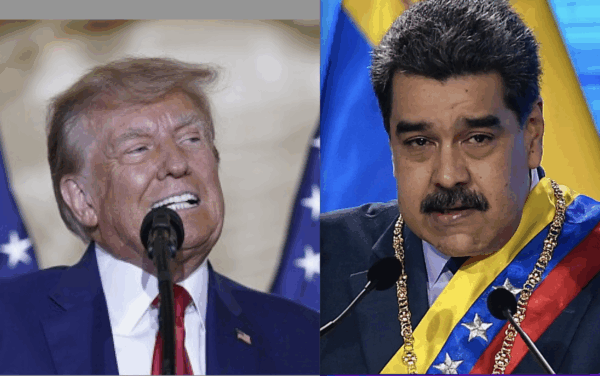
In Caracas, the Maduro government slammed the move as “international piracy” and a “grotesque threat” to global free trade. In a televised address, Maduro urged his supporters to remain vigilant, accusing the U.S. of attempting to “colonize” the nation to seize its mineral wealth.
“We have taken the oath to defend our homeland,” Maduro said. “Imperialism wants to take over our oil, gas, and gold, but in Venezuela, peace will triumph.”
The blockade follows a series of lethal U.S. strikes in the Caribbean that have killed at least 95 people since September—attacks the Pentagon justifies as part of a “war on drugs” but which critics view as a pretext for regime change. As the U.S. Armada tightens its circle around the Caribbean, the world now watches to see if a cornered Maduro will blink or if the region is headed toward its most significant military conflict in generations.