

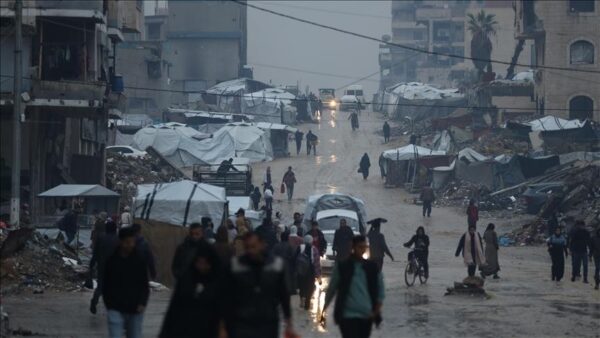
GAZA CITY, PALESTINE—A catastrophic convergence of severe winter weather and devastated infrastructure has plunged the Gaza Strip into a fresh humanitarian nightmare this week. Storm Byron, a powerful low-pressure system, has unleashed torrential rains and biting winds across the enclave, killing at least 16 people and leaving hundreds of thousands of displaced Palestinians shivering in flooded, makeshift shelters.
The United Nations and human rights organizations issued a blistering warning Wednesday, describing the scene as an “utterly preventable tragedy” fueled by a persistent lack of winterization supplies. As sewage overflows and tents collapse under the weight of the deluge, officials warn that infants and the elderly are now at “high danger” of hypothermia and infectious disease.
A Winter of Desperation
For the nearly 1.3 million people in need of urgent shelter assistance, the arrival of December’s rains has transformed already dire living conditions into a fight for survival.
- Death Under the Rubble: In Gaza City and the Jabalia refugee camp, the rain proved fatal even for those who thought they were sheltered. At least 13 weakened buildings, previously damaged by two years of conflict, collapsed under the saturation of the storm. One such collapse on Dec. 12 claimed the lives of nine people, including teenagers and a child with a disability.
- The Flooded Shoreline: In the Al-Mawasi area and the “Chalet” district west of Gaza City, hundreds of tents were swept away or submerged. Families were seen wading through waist-deep water, desperately lifting mattresses and sparse belongings above the rising tide of mud and untreated sewage.
- The Scale of Risk: The UN’s Site Management Cluster reports that over 800,000 people remain at heightened risk of flooding across 760 displacement sites. Already, 61 sites have been officially declared “impacted,” affecting some 30,000 people in the last 48 hours alone.
The Aid Bottleneck: ‘Supplies are Waiting’
The humanitarian fallout has ignited a fierce debate over the restricted flow of aid. UNRWA Commissioner-General Philippe Lazzarini warned that while “people are freezing to death,” critical supplies—including waterproof tents, thermal blankets, and heavy machinery for drainage—have been “waiting for months” to enter the Strip.
- Deprioritized Relief: OCHA spokesperson Olga Cherevko noted on Monday that humanitarian cargo is frequently “deprioritized” in favor of commercial goods at border crossings. This delay has left aid agencies unable to meet the pace of the disaster.
- Infrastructure Collapse: Local mayors in northern Gaza warn that without fuel to operate pumping stations and heavy equipment to clear rubble from drainage channels, the flooding is effectively unmanageable. “Our streets are not streets; they are rivers of waste,” said one local official.
- Health Crisis: The World Health Organization (WHO) cautioned that the exposure to extreme cold and stagnant water is triggering a spike in acute respiratory infections, hepatitis, and diarrheal diseases, particularly among the roughly 79,000 people crammed into UNRWA schools-turned-shelters.
Efforts Amid the Storm
Despite the obstacles, aid teams are working in what they describe as “emergency flood mitigation” mode.
- Sandbags and Trenches: Partners have deployed sandbags to 41 high-risk sites and are using cash-for-work teams to dig makeshift drainage trenches.
- Winter Kits: UNICEF has increased its distribution of winter clothing for children, aiming to reach 8,000 kits per day, while 1,500 “high-performance” family tents were recently distributed to the most vulnerable households.
- Education Disrupted: The storm has even reached the “Temporary Learning Spaces” (TLS) set up for children; at least 25 of these makeshift schools were flooded this week, disrupting classes for over 4,000 students.
As Storm Byron continues to lash the coast, the “death of dignity”—as UNICEF has termed it—is becoming a visceral reality for millions. The international community now faces intensifying pressure to ensure that the “preventable” does not become “permanent” as the deepest months of winter approach.