
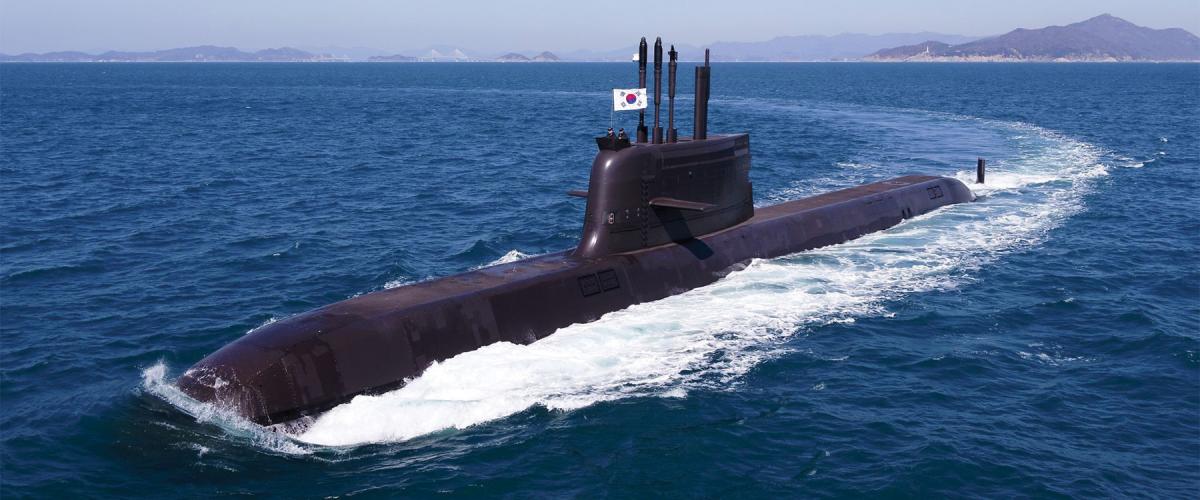
SEOUL, SOUTH KOREA—The United States has given its final, unprecedented approval for South Korea to construct nuclear-powered attack submarines (SSNs), agreeing to provide crucial technological assistance and cooperation on fuel sourcing in a deal that fundamentally shifts the military balance of power in the Indo-Pacific.
The historic commitment, which elevates South Korea to an elite group of nations possessing nuclear-propelled naval capabilities, was finalized as part of a sweeping trade and security agreement between U.S. President Donald Trump and South Korean President Lee Jae-myung. The move is a clear strategic signal aimed at increasing deterrence against North Korea and bolstering the regional posture against an expansionist China.
A Decades-Old Dream Realized
For South Korea, the agreement delivers on a long-sought military ambition. Unlike conventional diesel-electric boats, nuclear-powered attack submarines can operate submerged for months at a time, providing unparalleled stealth and endurance critical for tracking North Korea’s missile submarine fleet and projecting influence across the region.
The White House, in a joint fact sheet released Friday, confirmed the explicit approval: “The U.S. has approved for the Republic of Korea to build nuclear-powered attack submarines. The U.S. will work closely with South Korea to advance requirements for this shipbuilding project, including avenues to source fuel.”
- Fuel Cooperation: Securing the necessary enriched uranium for the submarine reactors has been the central obstacle for Seoul. The U.S. has now committed to cooperating on fuel supply and supports a process that could lead to South Korea’s civil uranium enrichment for peaceful uses, albeit under strict non-proliferation safeguards and U.S. legal requirements.
- Building Location Debate: The agreement has seen some initial public confusion over where the vessels will be constructed. While President Trump initially suggested on social media that they would be built in U.S. facilities—namely the South Korean-owned Hanwha Philly Shipyard—South Korean officials later clarified that the vessels are intended to be built domestically in South Korean shipyards, with U.S. technical assistance.
The Trade-Off: $350 Billion Investment
The military concession is inextricably linked to a massive economic package benefitting the American economy, a key feature of President Trump’s “America First” foreign policy.
In exchange for the nuclear submarine green light and a reduction of U.S. tariffs on South Korean goods (from 25% down to 15%), South Korea has pledged a staggering $350 billion in investments in the United States. This includes:
- $150 Billion into the U.S. shipbuilding sector.
- $200 Billion for investment into other strategic sectors under a Memorandum of Understanding.
The overall agreement also sees South Korea pledge to significantly increase its defense spending and purchase an additional $25 billion in U.S. military equipment by 2030, reinforcing the mutual defense alliance.
🇨🇳 Regional Repercussions and Proliferation Risks
The U.S. decision, which echoes the AUKUS deal with Australia, has already drawn sharp warnings from Beijing. China’s ambassador to South Korea voiced serious concern, stating the issue is directly related to the international nuclear non-proliferation regime and could impact regional stability.
For South Korea, the focus on nuclear propulsion technology comes with heightened scrutiny. Non-proliferation watchdogs are monitoring the deal closely, given the technology’s proximity to weapons-grade capabilities, though the agreement specifies non-weapon uses and includes U.S. oversight on fuel cycles.
Ultimately, the pact signals Washington’s deep commitment to an integrated defense strategy in the Pacific, providing Seoul with a vital strategic asset while simultaneously leveraging its defense goals to secure massive U.S. industrial investment.