
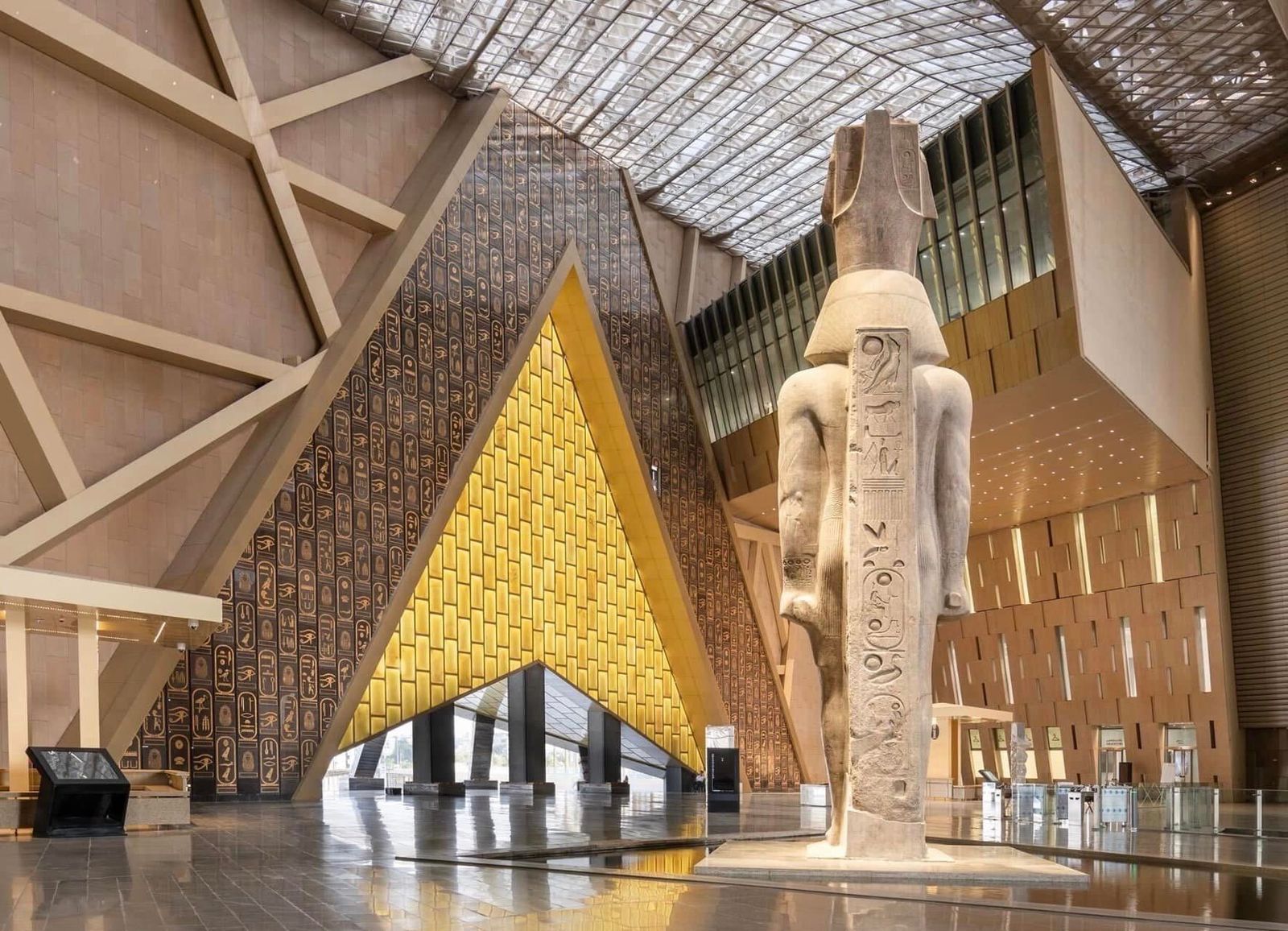
GIZA, EGYPT—In a spectacular ceremony watched by dignitaries from around the globe, Egypt officially inaugurated the Grand Egyptian Museum (GEM) this weekend, a colossal, long-awaited monument to the nation’s 5,000 years of civilization. Situated on the Giza Plateau, the $1.2 billion complex not only redefines museum architecture but, most significantly, achieves a monumental archaeological feat: the full, unified display of the treasures from King Tutankhamun’s tomb for the first time since their discovery over a century ago.
After more than two decades of construction, delays, and immense anticipation, the world’s largest museum dedicated to a single civilization is open, promising to fundamentally reshape global tourism and Egypt’s economy.
The Boy King’s Golden Collection, Reunited
The indisputable star of the 500,000-square-meter facility is the complete collection of artifacts from the tomb of the “Boy King,” Tutankhamun. Since British archaeologist Howard Carter discovered the nearly intact tomb in 1922, its more than 5,000 exquisite objects—including the iconic golden death mask, ceremonial chariots, and the pharaoh’s ornate furniture—have been scattered, stored, or partially displayed in the cramped, aging Egyptian Museum in Tahrir Square.
At the GEM, two dedicated halls, spanning 7,500 square meters, have been set aside to house the entirety of the treasure.
- The Full Narrative: Visitors will now experience a display designed to recreate the historical and burial context of the objects, offering a complete narrative of the 18th Dynasty pharaoh’s life and journey to the afterlife.
- The Crown Jewel: The famous Gold Funerary Mask, along with his sarcophagus and gilded shrine, are showcased in state-of-the-art, climate-controlled vitrines, ensuring their preservation for future generations.
“This moment is a testament to the ingenuity of the ancient Egyptians and the resilience of modern Egypt,” stated a government official at the lavish opening ceremony, attended by heads of state and royalty.
An Architectural and Economic Marvel
Designed by Irish architectural firm Heneghan Peng, the GEM is a striking architectural blend of ancient inspiration and contemporary engineering.
- Pyramid Gateway: The museum’s exterior features a towering, translucent alabaster facade that subtly references the triangular geometry of the nearby pyramids, which are visible through the building’s vast internal spaces.
- The Grand Colossus: Greeting visitors in the immense atrium is a colossal, 3,200-year-old statue of Pharaoh Ramses II, which was moved from a central Cairo traffic circle to stand as the museum’s symbolic guardian.
- A Tourism Engine: Beyond its cultural significance, the GEM is a cornerstone of Egypt’s strategy to revitalise its tourism sector, a critical source of foreign currency. Officials project the museum will attract up to 5 million visitors annually, driving economic growth and cementing Egypt’s place as a premier cultural destination.
The GEM officially opened its doors to the public on Tuesday, November 4, marking the 103rd anniversary of the day Carter first discovered the steps leading to Tutankhamun’s tomb—finally fulfilling a century-old promise to display the boy king’s treasures to the world in all their glory.